She Wired $2,847 to Bury Her Sister
Her Brother-in-Law Paid His Truck Note with the Casket Money
Elena wired $2,847 to a Paylink account her brother-in-law texted her from the parking lot where her sister's body was still on a gurney. Weeks later, a bank fraud analyst told her the same account ending in 3324 had received six transfers from different families, each within seventy-two hours of an obituary posting in the Tulsa metro area. Elena found the proof in a cropped screenshot: a pixel row of half-letters the crop was supposed to erase, spelling not the funeral home's name but Alejandro's. The episode ends at her mother's dinner table, her hand on a doorknob, the funeral director's seven-word reply on her phone: 'No ma'am. We don't take Paylink.'
The Number He Gave Me
Four digits. That's what I remember first. Not her face on the gurney, not the motel room number the officer read off his clipboard, not the way the coroner said 'ma'am' three times before I heard him. Four digits: three, three, two, four.
Alejandro texted them to me from the parking lot. I could see him through the windshield — crouched against the rear tire of his truck, phone in both hands, his shoulders doing that thing grief does to a man's body when he thinks no one is watching. The text came through at nine forty-seven p.m. A Paylink account number. A dollar amount: two thousand, eight hundred and forty-seven dollars. The name of the funeral home — Restrepo & Sons, he wrote, they only take Paylink, something about a processing hold on their card reader.
I didn't call the funeral home. I didn't Google the account. I didn't do anything a person with twenty minutes of distance from her sister's death would have done, because I didn't have twenty minutes. I had the length of time between reading the text and my thumb hitting 'send,' which was maybe four seconds. Maybe three.
Two thousand, eight hundred and forty-seven dollars. I watched the little green checkmark appear on the screen and I thought: at least this I can do. At least the casket will be real. At least my sister will have a box with satin lining and brass handles and her name spelled right on the card, and I will have done that for her because I could not do the other thing.
Three, three, two, four. I will know those numbers longer than I knew her.
The Service
The week is a list. I make the list because lists are what I know how to do when grief is too large to fit inside a Tuesday.
The list: Choose a photo. The one from Thanksgiving, two years ago, before the last relapse, when her face still looked like her face. Write the obituary because Mom can't hold the pen and Alejandro says he'll do it but then doesn't, and I tell myself that's grief too, that's just what it looks like when a man loses his wife and can't find the words. Call the woman at the flower shop who asks 'open or closed casket' the way a waitress asks 'sparkling or still.'
The casket arrives and it's real. That's the thought I have standing in the chapel the morning of the service — it's a real casket, dark walnut, brass handles, satin lining the color of cream. I paid for this. The money went where it was supposed to go. My sister is inside something beautiful and I feel an obscene wave of relief that I will spend months being ashamed of.
Alejandro works the room. He accepts casseroles in foil pans. He squeezes shoulders. He tells a story about Marisol and the stray cat she fed for three years that turned out to be the neighbor's, and people laugh and cry at the same time, and I watch him and think: he is good at this. He is good at the specific performance of a man in pain.
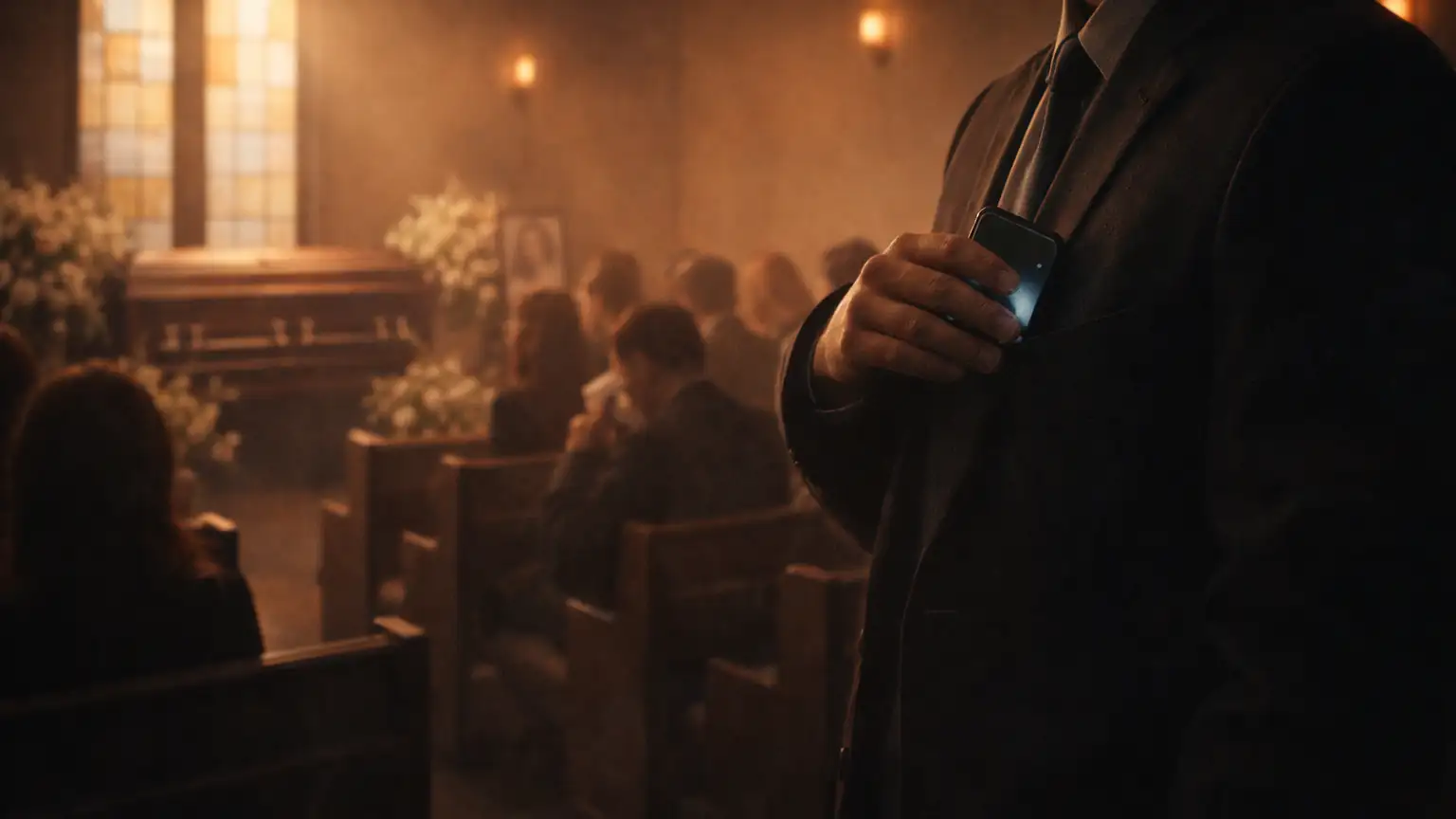
During the eulogy — Pastor Muñoz, who baptized both of us, who is saying something about sparrows — I see Alejandro check his phone. It's fast. Thumb to screen, screen to pocket, three seconds. I notice because I notice everything now. I file it in the part of my brain that files things and I tell myself: grief does strange things to people.
I tell myself that for three more weeks.
The New Truck
Three weeks after the service, I drive to Alejandro's house to drop off Marisol's jewelry box. It's the cedar box Dad carved her, the one she kept on her nightstand. The officers handed it to me in a plastic bag.
I pull into the driveway and the truck is there.
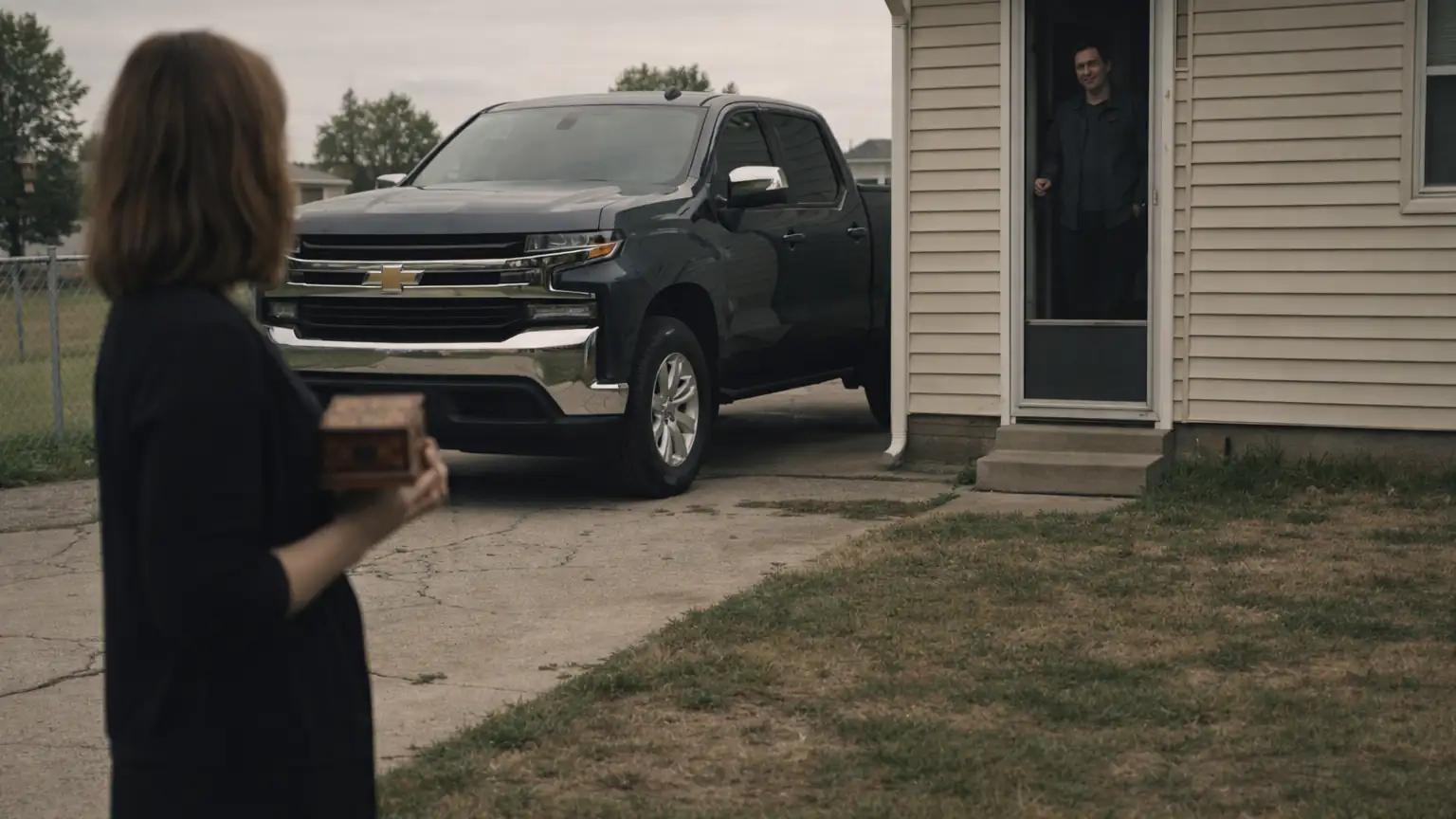
Not the old one — the blue F-150 with the cracked taillight and the payment he was always behind on. This one is dark gray, dealer-clean, a Silverado with temporary plates. I sit in my car for maybe ten seconds looking at it before I get out.
Alejandro comes to the screen door. He's smiling the way people smile three weeks after a funeral, which is to say with effort, with the muscles around the mouth but not the ones around the eyes. I hand him the jewelry box and he holds it like it means something and I ask about the truck.
'Oh — that.' He says it too fast. 'Insurance settlement came through. Plus a buddy of mine was selling it under book value and the timing just — it worked out.'
I nod. I say that's good, that's lucky. But my brain is doing arithmetic in the driveway and the numbers are wrong. The insurance on Marisol's policy was small — I know because I helped her fill out the paperwork two years ago. And 'under book value' still has a book value.
I drive home and I don't think about it for four days. And then I do.
The Bank Called
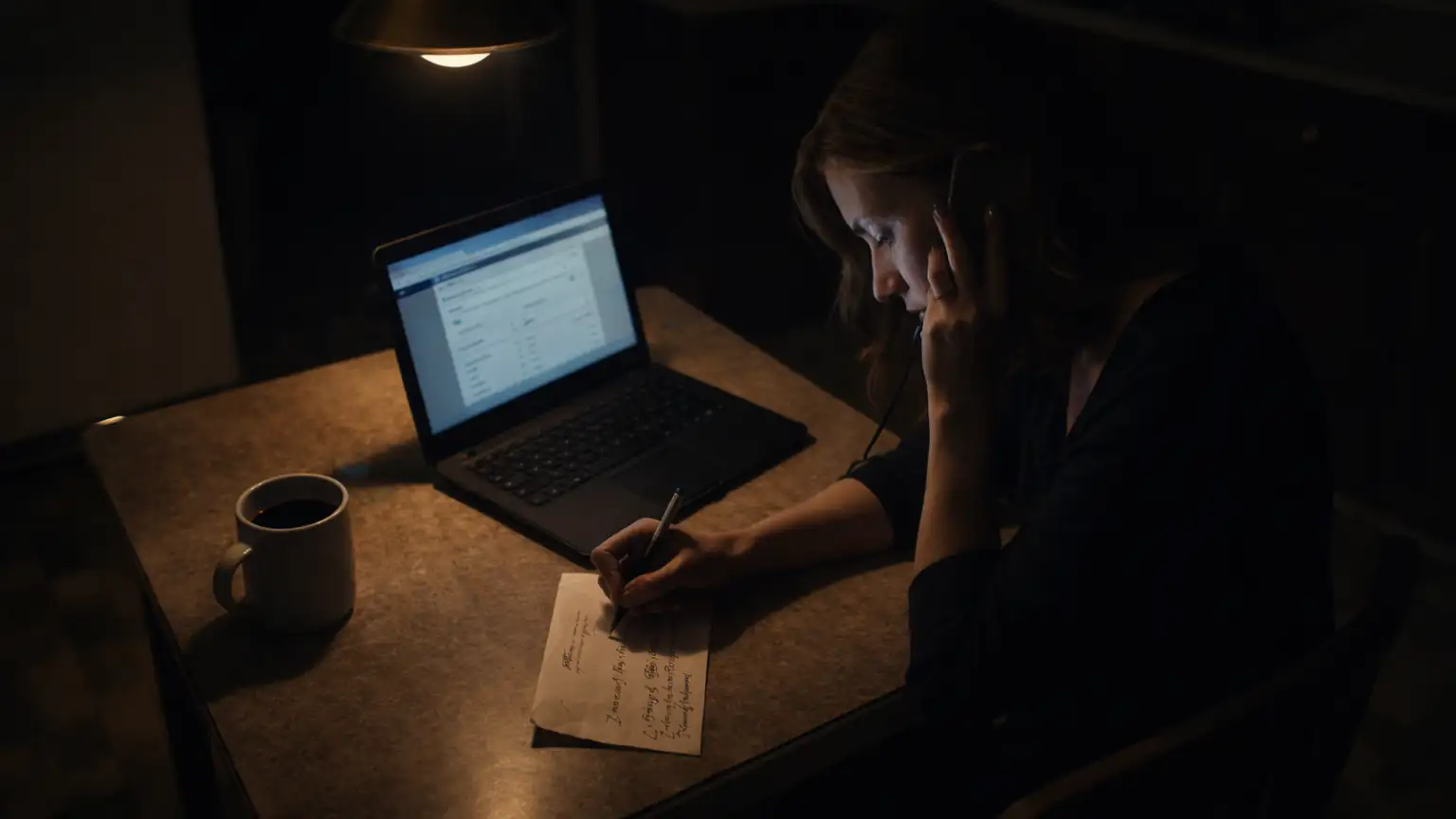
The woman from the bank's fraud department calls on a Tuesday in October when I'm cleaning the stovetop and thinking about whether to cancel Marisol's gym membership or let it lapse.
She says her name is Danielle. She says she's calling about a transfer I made on August fourteenth to an account ending in three-three-two-four. She asks if I authorized it. I say yes. She asks if I know the account holder personally.
I say it's a funeral home. She goes quiet for two seconds — I count them — and then she says: 'Ma'am, this account has received six transfers of similar amounts over the past eighteen months. All from different senders. All within seventy-two hours of an obituary posting in the Tulsa metro area.'
She says this the way a weather forecaster says 'chance of rain.' Routine. She has done this before.
I sit down. I pull an envelope off the counter — a gas bill, already paid — and I say: 'Can you give me the dates?'
She gives me the dates. She gives me the amounts. She cannot give me the names, she says, but she can confirm the transfers were flagged as part of a pattern consistent with — she uses the phrase — 'funeral-adjacent payment fraud.' I write the dates on the back of the envelope. The amounts. The seventy-two-hour windows.
Then she gives me one more thing. She says the most recent transfer before mine came from a woman whose last name she can't disclose but whose account was opened at a credit union branch in Broken Arrow. And I know. I know before she finishes the sentence because there is only one family I know in Broken Arrow who buried someone this year, and it's a cousin of a cousin, a family from Marisol's church, a woman named Delia whose husband died of a heart attack in April and whose service I almost attended but didn't because I was covering a shift.
The fraud is not a stranger. The fraud has a congregation.
I thank Danielle. I hang up. My handwriting gets worse line by line.
The coffee is cold. The refrigerator hums. I don't cry. This is not the kind of thing that ends in crying.

The Pixel Row
I go back to the text thread.
August fourteenth. Nine forty-three p.m. The message from Alejandro: the account number, the amount, the name of the funeral home. And below it, the screenshot — the Paylink confirmation he sent four minutes later.
I've looked at it before. The night she died. The next morning. The casket day. I thought: the system worked.
I zoom in.
Not because I'm suspicious yet. Because Danielle said 'pattern,' and patterns have edges.
The screenshot is cropped. Not dramatically — just a little too tight at the top, the way a person crops out a timestamp. The kind of crop you wouldn't notice unless you were looking. I am looking.
Along the top edge, in a single row of pixels maybe two pixels tall, I can see the ghost of text. The bottom halves of letters the crop was supposed to erase. Not the serif of 'Restrepo.' Something shorter. A curve that could be an 'a.' A descender that could be a 'j.' A letter I stare at until my eyes water — the bottom of a capital 'A.'
Alejandro.
The recipient was not the funeral home. It was his first name. He cropped it in the parking lot where my sister died and sent it anyway, because grief was his cover story and he didn't check the crop.
I screenshot the screenshot. I zoom the screenshot of the screenshot. The half-letters are still there. They will always be there.
I set the phone face-down on the table. I press my palms flat against the laminate. I breathe.
He didn't steal from a stranger. He stole from me. He stole from Delia. He stole from six families. He stole from my sister's death.
He paid his truck note.
I don't call him. Not yet. The knowledge settles in me like a new bone. Hard, permanent, mine.
The Others
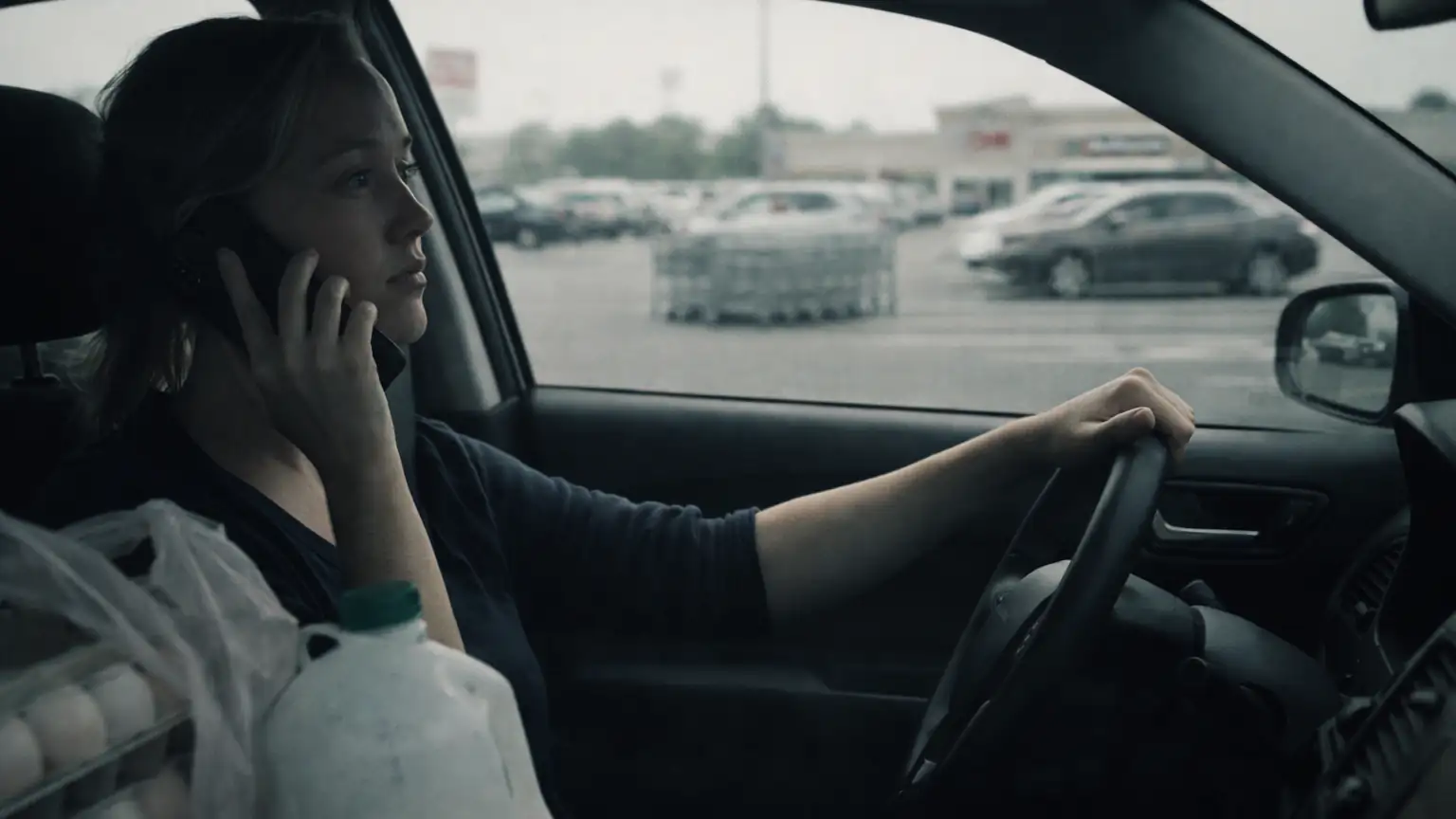
I call Delia from the parking lot of a Reasor's on Seventy-First.
I don't plan it. I'm loading groceries — eggs, milk, the coffee Marisol liked that I still buy — and I sit down behind the wheel and don't start the car. I pull up the church directory on my phone. I find Delia's number. I call.
She picks up on the third ring. Her voice has the texture of a woman who has answered a lot of calls from people checking on her, a voice worn smooth by the words 'I'm doing okay.'
I don't tell her what I know. Not yet. I tell her I'm thinking about her. I tell her I'm sorry I missed Rubén's service. And then I ask — as casually as I can manage, which is not very — how the arrangements went. How the payment worked.
Delia says a nice man from the funeral home called her the day after Rubén died. He said there was an issue with their card processing and asked if she could Paylink the deposit directly. She remembers the amount: three thousand two hundred. She remembers the account number ended in — she pauses, she's looking it up — three-three-two-four.
Three. Three. Two. Four.
I thank her. I tell her Rubén was a good man. I tell her I'll bring food this weekend. I hang up.
I sit in the Reasor's parking lot for forty minutes. The milk sweats through the bag. The eggs get warm. A man in a reflective vest collects carts fifteen feet from my bumper and does not look at me.
Six families. Eighteen months. A man who calls within seventy-two hours of an obituary, who speaks gently, who gives a number ending in four digits that belong to him. A man who sits at the same table at Thanksgiving. A man who cut the turkey last year with my father's carving knife.
I close my eyes and I see him at the motel — the coroner's van, both hands on the phone, his shoulders doing the grief shape — and I understand now: the phone was not grief. The phone was work.
What to Do with What She Knows
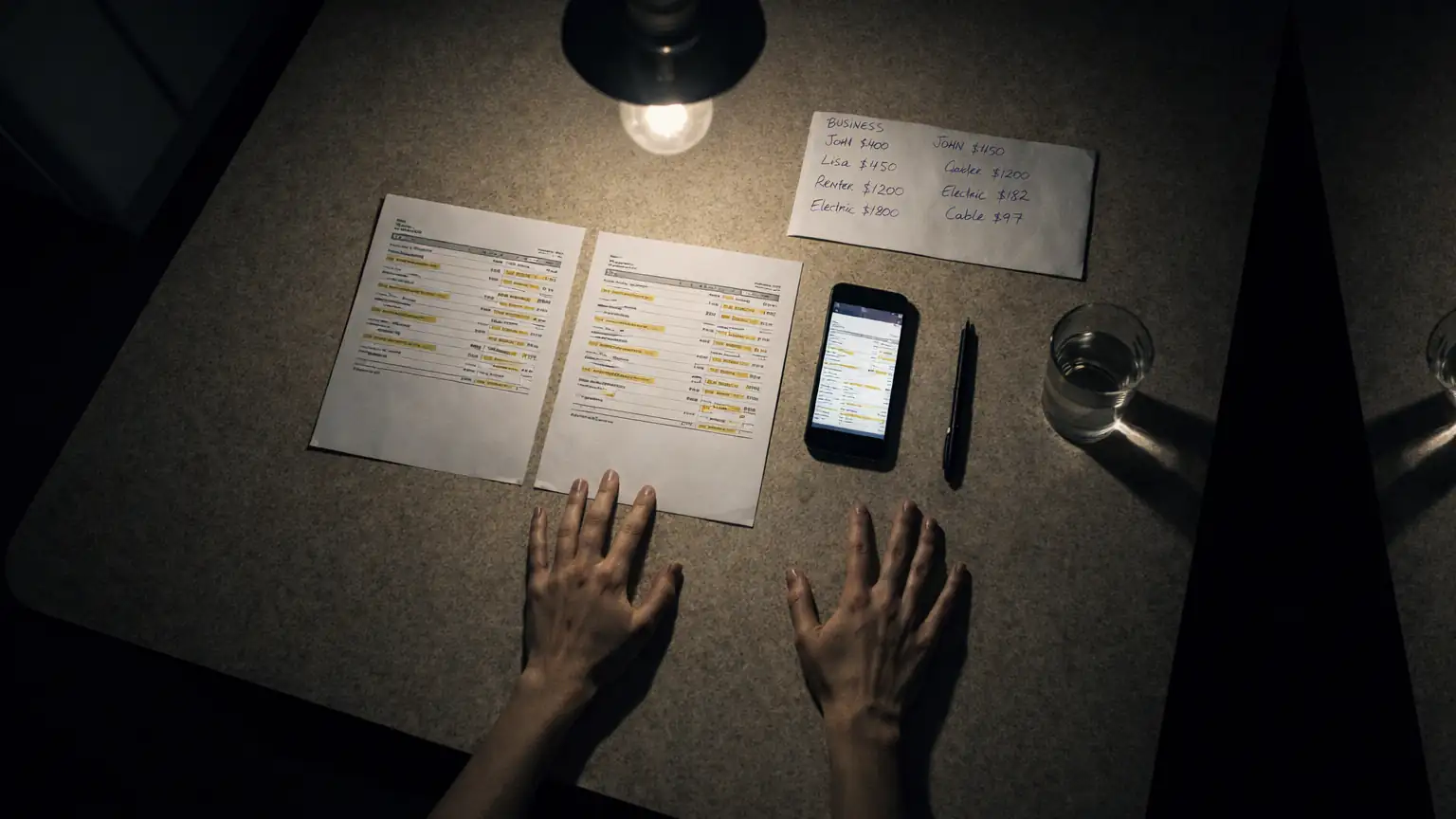
I lay it out on the table.
The bank statement with the transfer dated August fourteenth. The six names Danielle gave me, written in my handwriting on the back of a gas bill. The screenshot of the screenshot — the pixel row, the half-letters, the ghost of his name at the top of a confirmation that was supposed to prove the money went to a funeral home.
Earlier this week I called Restrepo and Sons. Said I was a cousin in California asking what a service costs. The director was patient. He said a basic package runs twenty-two hundred. He said it twice, gentle, the way you say a number to someone who can't afford to hear it.
I wired Alejandro twenty-eight forty-seven. The casket was real because he paid the real bill — in cash, the day after she died, with my money — and pocketed the difference. Six hundred and change. From me.
From Delia, the gap between thirty-two hundred and whatever Rubén's service actually cost. Multiplied across six families. He didn't steal a fortune. He stole a truck.
I have options. I talk through them out loud because there is no one else in this kitchen and because the sound of my own voice is the only thing keeping me in the room.
Option one: I call the FBI wire-fraud tip line. The fraud analyst at the bank already gave me the number. I report. The federal government takes nine months to file, two years to sentence. Alejandro eats Thanksgiving at my mother's table the whole time.
Option two: I call Restrepo and Sons directly. I tell the funeral director that someone has been using his business name to collect payments from grieving families via Paylink. He files a complaint. The families get contacted. Alejandro's name comes out in the wash. My mother finds out from a detective or a news crew or a cousin who heard it from another cousin.
Option three: I tell the families myself. Delia. The others. I call them one by one and I say: the man who texted you from the parking lot was not from the funeral home, and the account you wired money to belonged to your friend's husband, and I'm sorry.
Option four: I tell my mother. My mother who buried her husband four years ago and her daughter three weeks ago and who hugged Alejandro at the graveside and called him 'mijo' and told him he was family forever. My mother who cannot survive learning that the man she held at the cemetery paid his truck note with the money that was supposed to bury her child.
Every option costs something. Every option breaks something that cannot be reassembled in the same shape. None of them bring Marisol back.
I press my hands flat against the table. The laminate is cool. The light buzzes.
I am not devastated anymore. I am something colder and more specific. I am a woman with evidence on a kitchen table and a decision that belongs only to me.
He Comes to Dinner
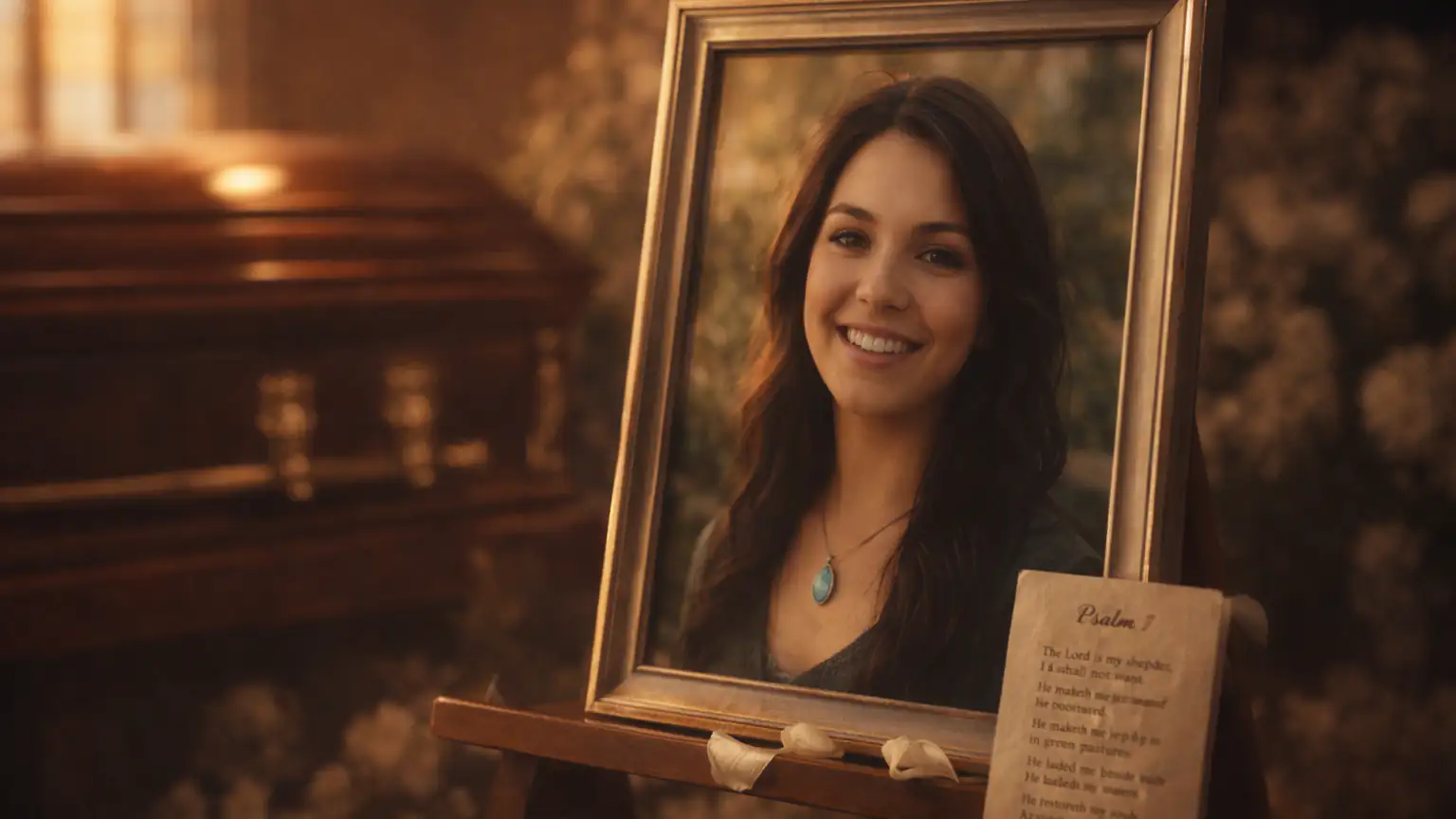
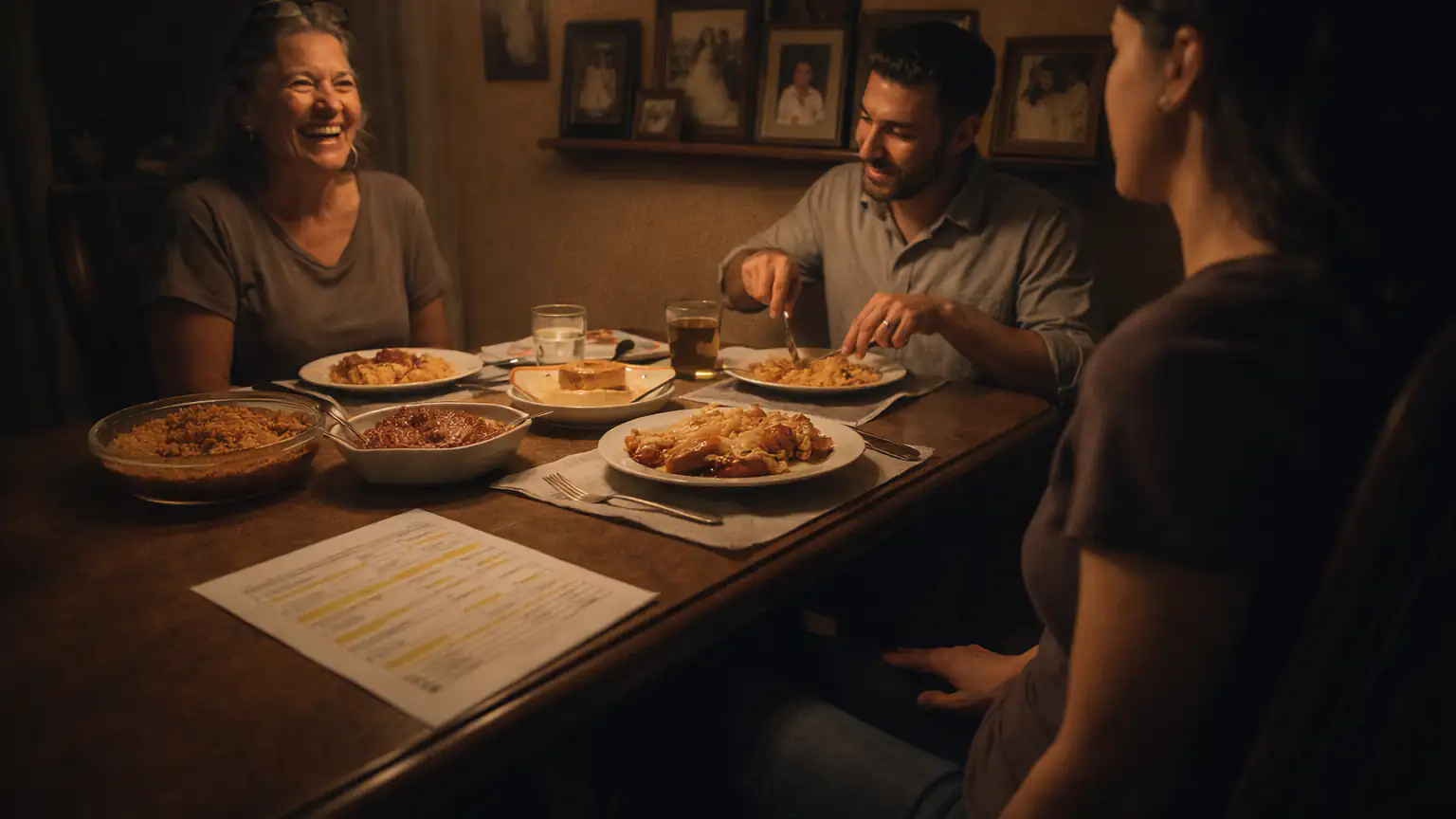
My mother sets the table for four because she has always set the table for four, even now that there are only three. The fourth plate sits at Marisol's spot with a single white candle and a photo leaned against the water glass — the Thanksgiving photo, two years ago, the one I chose for the obituary.
Alejandro brings wine. He carries it in with both hands like an offering. He kisses my mother on the cheek and she holds his face and calls him 'mijo' and I watch his expression accept the word the way a lock accepts a key — smooth, practiced, a mechanism he has used before.
Dinner. He tells a story about Marisol and the neighbor's cat — the same one from the funeral, rephrased, given new details I didn't catch the first time. My mother laughs until she cries. Alejandro ducks his head in a gesture I have catalogued as grief but now recognize as something else: the lowered gaze of a man checking whether his performance is landing.
I have the bank's pattern report folded in my lap. Printed this morning. Six transfers in yellow highlighter. I can feel the paper through my dress.
I watch his hands. He cuts the enchilada in clean, even strokes — no sawing, no hesitation. The hands of a man who is not nervous. The hands of a man who has sat at this table for seven years and has never once been the person everyone at the table should be afraid of.
He asks my mother about the garden. She tells him the tomatoes came in late. He nods like it matters. He asks if she needs the fence repaired and she says Rubén used to do it — Rubén, Delia's husband, dead of a heart attack in April, buried with money that went to account three-three-two-four — and Alejandro says he'll come by Saturday with his tools.
With his tools. In his truck. The truck.
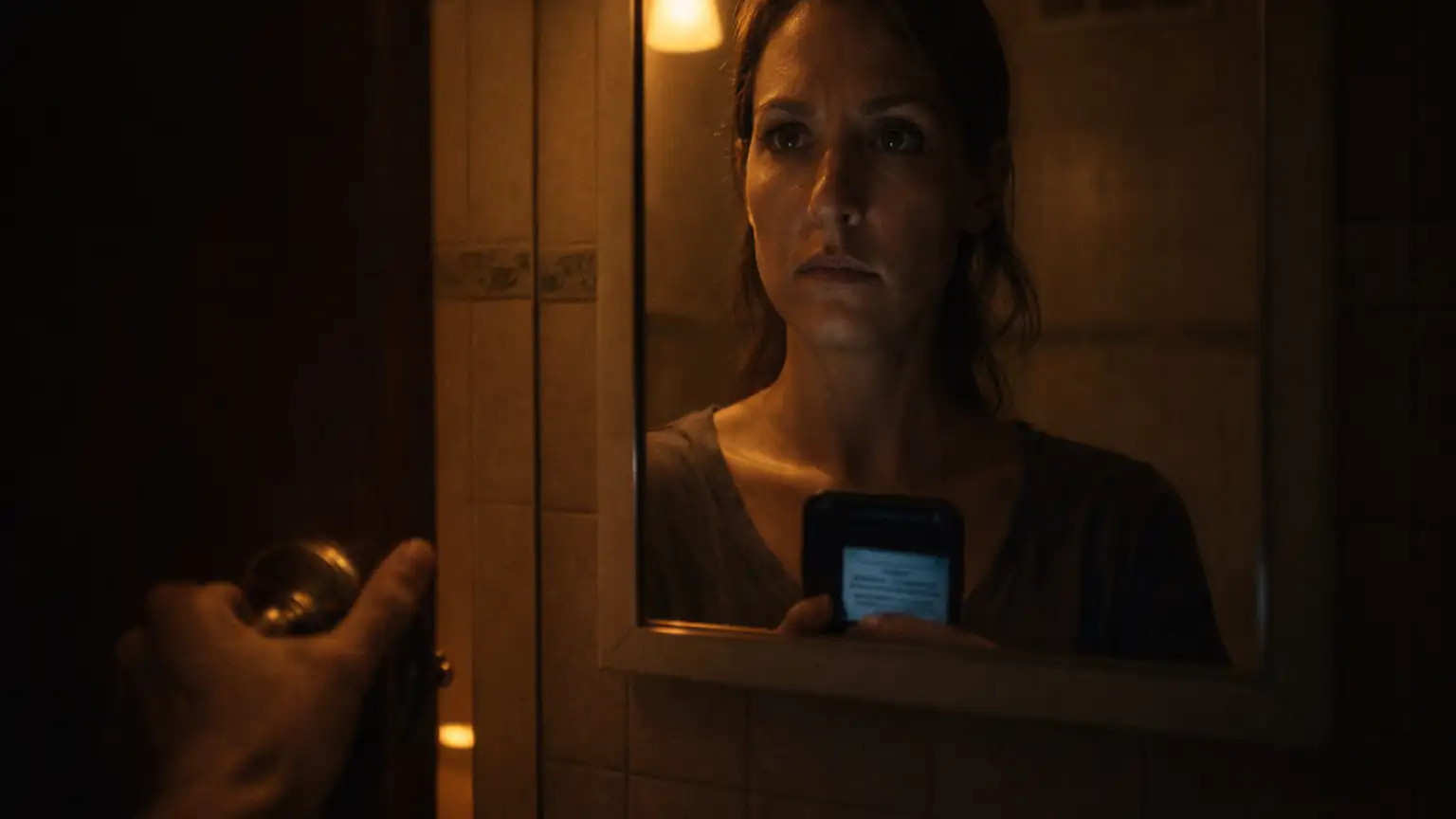
I excuse myself. I walk down the hallway past Marisol on her wedding day with Alejandro's arm around her waist, lock the bathroom door, and sit on the edge of the tub.
I open my phone. I type a message. I text the funeral director — the real one, the one whose name Alejandro borrowed for eighteen months — and I attach the cropped screenshot and I type five words:
'Was this your account?'
I press send. I set the phone on the edge of the sink. I wait.
The Text She Sent
The response comes in forty-three seconds.
I know because I count. I count the seconds the way I counted the seconds of silence when Danielle from the bank paused before saying 'pattern.' The way I counted the four seconds between reading Alejandro's text and pressing send on a twenty-eight-hundred-dollar transfer the night my sister died.
Forty-three seconds. The phone buzzes once against the porcelain edge of the sink and the screen lights up and the funeral director's response is seven words:
'No ma'am. We don't take Paylink.'
I read it twice. Seven words to dismantle a man.
I slide the phone into my back pocket. I turn on the faucet. I wash my hands with my mother's lavender soap.
I look at myself in the mirror. I don't know what I expected to see. A different face, maybe. The face of a woman who has decided something. But the face is the same face. In sixty seconds or six minutes, this same mouth will either say everything or say nothing.
I hear Alejandro through the door — he's laughing at something my mother said, a full laugh, the kind that fills a room and makes people feel safe.
I put my hand on the doorknob. Brass, cool, familiar. The knob my sister turned ten thousand times in the years she lived in this house.
I hold it.
I have not decided yet whether I am going to walk back to the table and sit down and finish my mother's flan and drive home and make the call tomorrow from a kitchen table covered in evidence. Or whether I am going to walk back to the table and set the phone face-up next to his wine glass and say nothing and let him read it himself.
The doorknob is in my hand. The dining room is on the other side. My sister's husband is laughing.
I hold the knob.
I hold it.