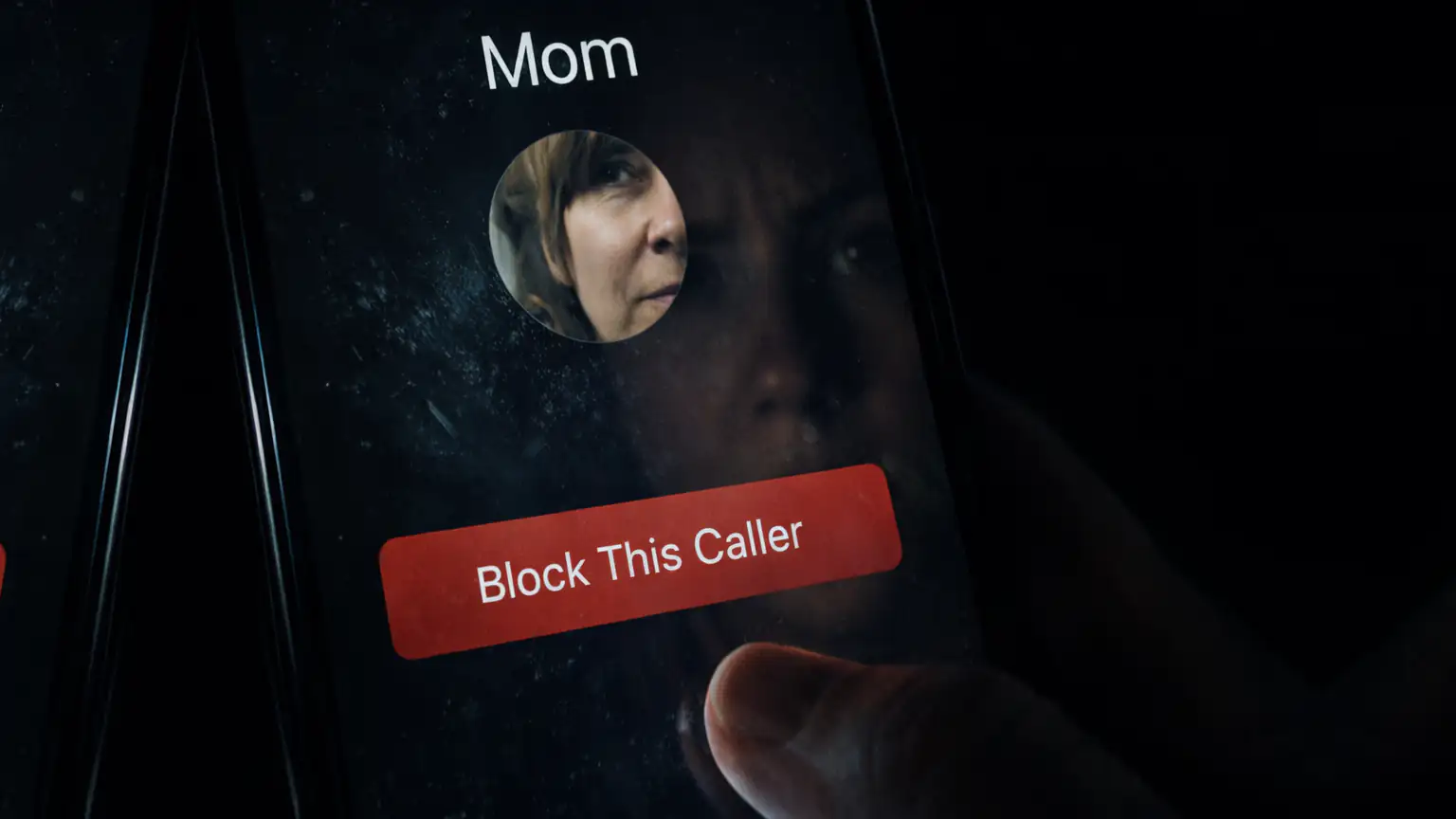
Mom Warned Me About Him
I Called Her a Liar
A daughter cut off her mother for three years because she couldn't explain why the man was dangerous. The mother had already reported him once, to police who weighed her word against his standing in town and chose his. She chose to be hated over being silent, and her daughter called it jealousy. Then the daughter saw her husband type a four-digit pin, used it to open a safe bolted into the basement floor, and found a system of names that had been running longer than she had been alive. Her mother's name was there. Hers was already filed before the first date. She took the baby, drove forty minutes to a porch light that had never been turned off, and called the police from her mother's kitchen. Neither the old report nor the new evidence would have been enough alone.
The Doorstep
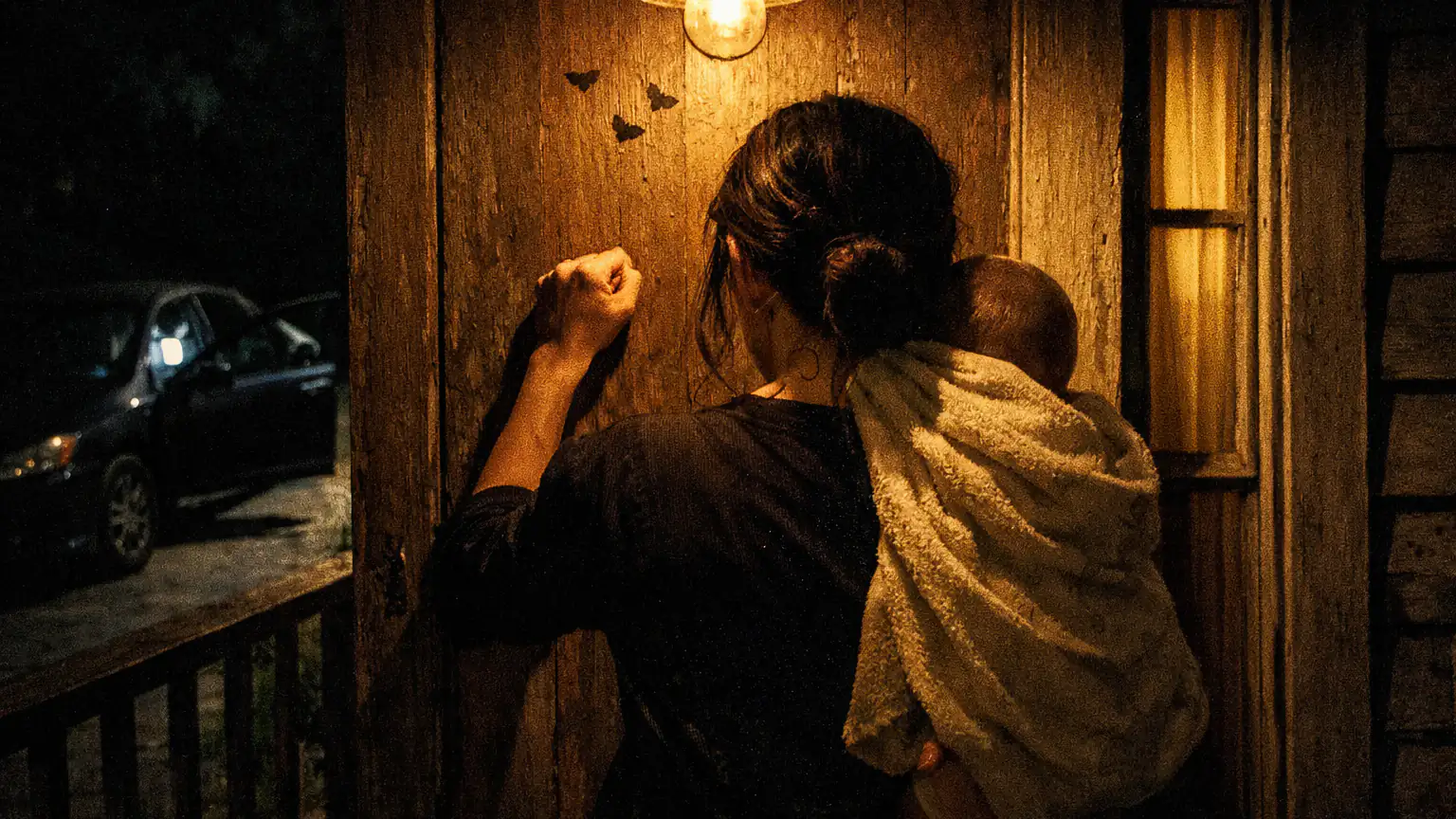
I'm standing on my mother's porch with my daughter in my arms, and I haven't spoken to my mother in three years.
I left the car running. I didn't pack a bag. I brought my baby, the clothes I was wearing, and a four-digit number I can't get out of my head.
I'm about to knock on the door of a woman I called a liar. She wasn't. She was right about everything, and I have proof, because an hour ago I opened a safe in my husband's basement and I found her name inside it. And then I found mine.
I'll start at the beginning. You can decide for yourself when I should have listened.
The Falling
He came into the restaurant where I worked. I was twenty-three, bartending four nights a week, taking classes during the day, living in an apartment where the hot water worked sixty percent of the time.
He was there with business people. I noticed him the way you notice someone who takes up space without trying. The laugh that carried. The waiter brought him a drink before he ordered it. He left his card with the tip. I almost threw it away.
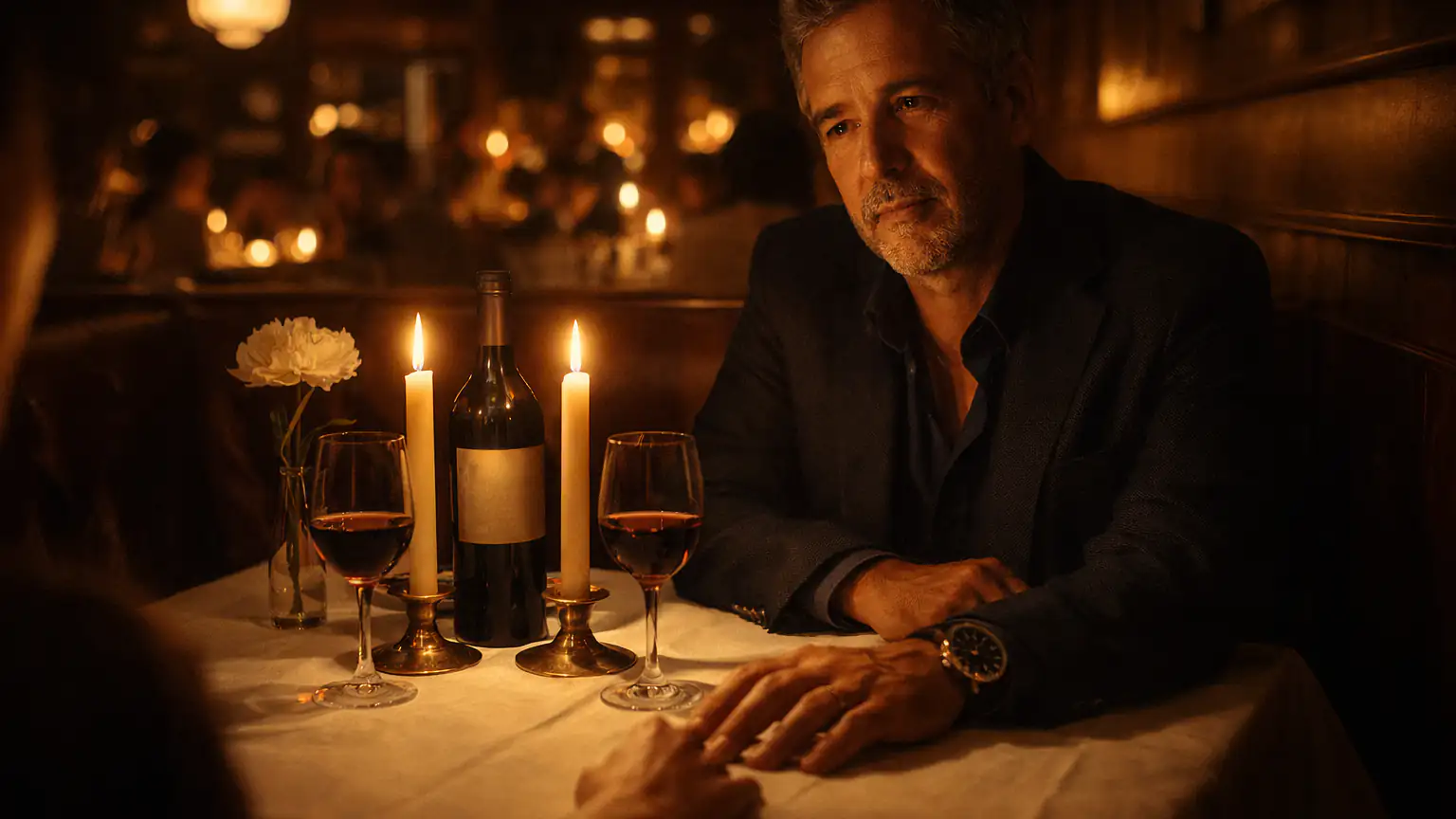
The first date was at a place I'd walked past a hundred times and never gone into. He ordered for both of us. The wine was French, the bread came warm, and he asked me about school and remembered the answers. He remembered the name of my professor. He remembered my schedule. I thought: this is what it feels like to be chosen.
He drove a black Audi. The leather smelled new. He played jazz in the car, something with a saxophone, and he turned it down when I talked. I grew up in a house where I had to say things three times to be heard. He turned the music down.
The first time he touched my hand across the table, I felt it in my chest. Not butterflies. Something heavier. An anchor dropping.
On our second date I said I didn't like roses. Too obvious. He showed up on the third with peonies. White ones. I didn't know what they were. He said, "You said not roses."
My father met him a month later. Clapped his shoulder. Pulled me aside and said, "That's a man with a plan."
I brought him home to my mother on a Sunday. She made arroz con pollo. I was so proud. I was bringing a life home to show her.
I didn't know then what I know now. That he'd sat at a different table in a different restaurant years earlier and watched a woman walk by with a little girl. That he'd remembered the name on the woman's credit card. That when he saw me bartending in this town he'd known exactly whose daughter I was before he ever left his card with the tip.
But I'm getting ahead of myself.
The Warning
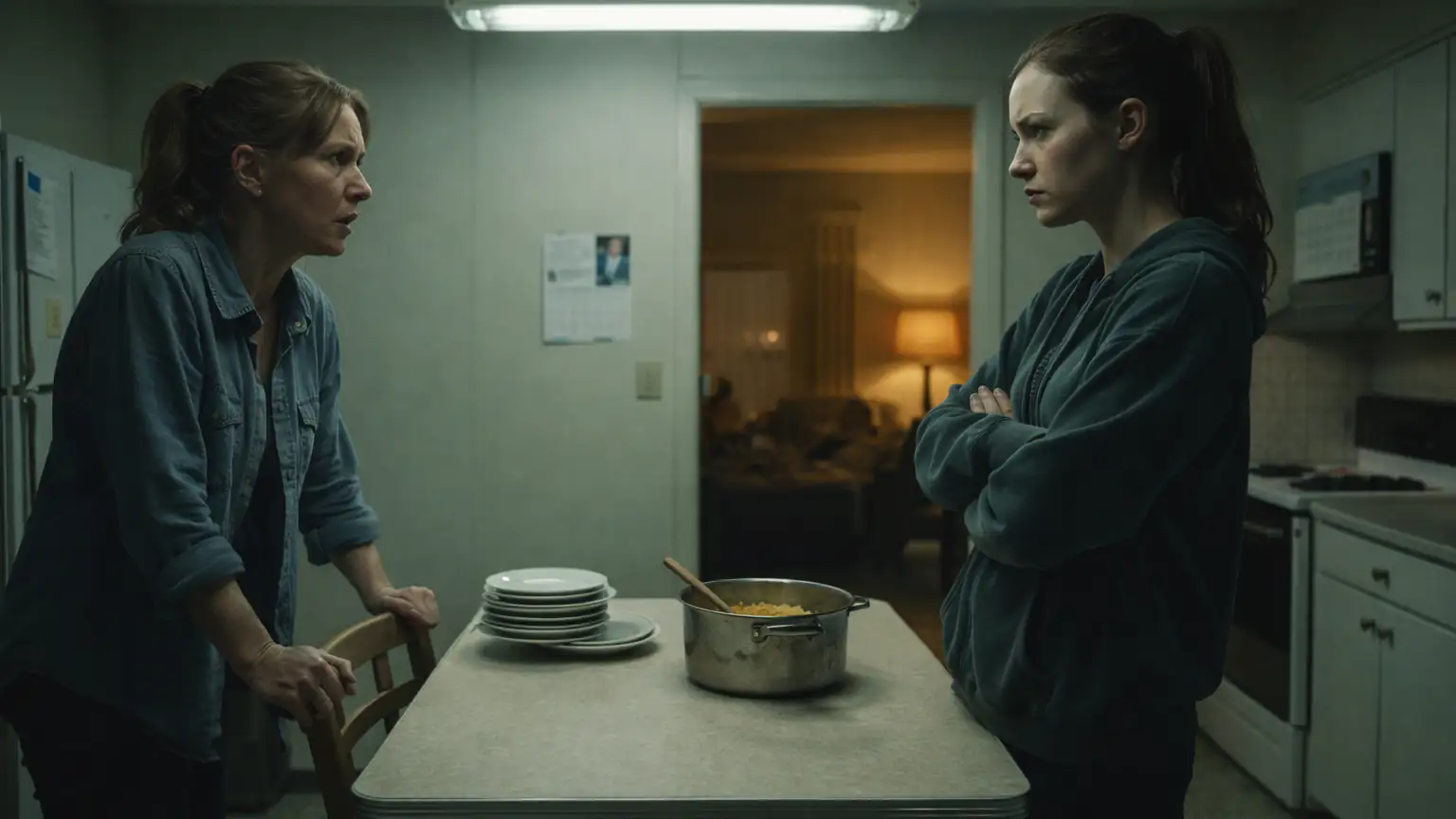
My mother pulled me into the kitchen while he was laughing with my father in the other room. She had her hand on my wrist. Not gentle. Not like a request.
"Elena, I need to talk to you."
"So talk, Ma."
She closed the kitchen door. My mother never closed the kitchen door. She was the kind of woman who cooked with the whole house open.
"Don't get involved with this man."
I laughed. "Ma. Are you serious?"
"I have never been more serious about anything in my life."
"Why? What's wrong with him?"
She opened her mouth and nothing came out. Then she closed it. Then she opened it again and what she said was: "Please. Just trust me. Please."
"Ma, you can't just say don't see him and not tell me why."
"He's not who he looks like."
"That's not a reason. You don't even know him."
Her eyes changed. Something moved behind them, a door opening and closing fast. "I know him."
"You met him two hours ago."
"Elena."
"No. For once in my life something is going well. For once someone is treating me right, and you're standing in your kitchen telling me to throw it away over a feeling you can't explain."
"It's not a feeling."
"Then tell me. Give me one real reason."
Silence. Fluorescent light buzzing. My father's laughter through the door. My mother standing there with her mouth full of something she couldn't spit out.
She couldn't tell me. I understand that now. Saying what he did to her out loud meant saying it for the second time in her life, and the first time had cost her everything and changed nothing. And saying it to me, the daughter she'd spent twenty-three years protecting from it, meant admitting she'd already failed.
I didn't see any of that. I saw a woman being unreasonable. I saw control. I saw the same mother who'd questioned every grade and every boyfriend, now questioning the best thing that had ever happened to me.
"If you can't give me a reason," I said, "then I don't want to hear it."
I opened the kitchen door. I walked back to the living room. I sat down next to the man who would become my husband and I put my hand on his knee. My mother came back in and arranged her face into something she could survive dinner with.
She made it through dessert. Barely.
The Severance
The fight didn't happen all at once. It happened in stages.
First the phone calls. She'd call at work, at dinner, while I was falling asleep. Always the same thing. Never the reason. "I'm asking you to trust me." "Elena, please."
Then the showing up. At my apartment. Once in the parking lot outside my job, sitting in her car, waiting. I saw her through the window and I felt embarrassed. Embarrassed of her.
Then the texts. Long ones. I stopped reading after the first few lines because none of them ever said why.
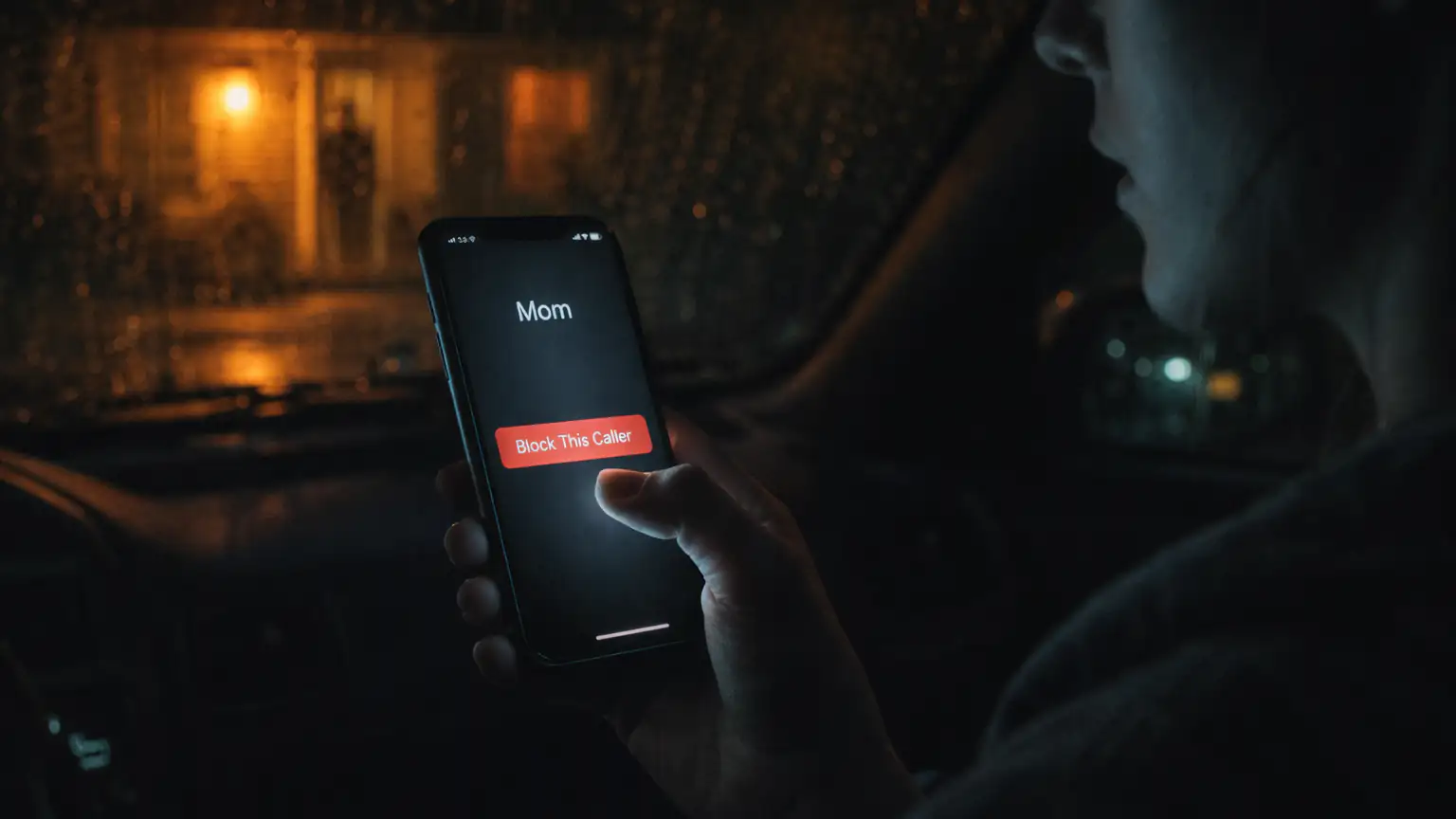
The last conversation was on the phone. A Tuesday. I was sitting in his car outside my apartment, and my phone rang, and I almost didn't answer.
I said something I can never take back. I said: "You're jealous. You're jealous because I found someone and you never did. You're jealous that I'm going to have the life you couldn't give me. I'm done letting you ruin this."
Silence on the other end.
And then my mother said, very quietly: "I hope you never find out why I'm calling."
I hung up. I blocked her number. I chose him.
Not because he asked me to. He never said a word against my mother, not once. I built the wall myself. I chose him over her with my own hands, and I have to live with that.
The Surface
We were married seven months later. A small ceremony, his preference. My father came. My mother didn't. I hadn't told her.
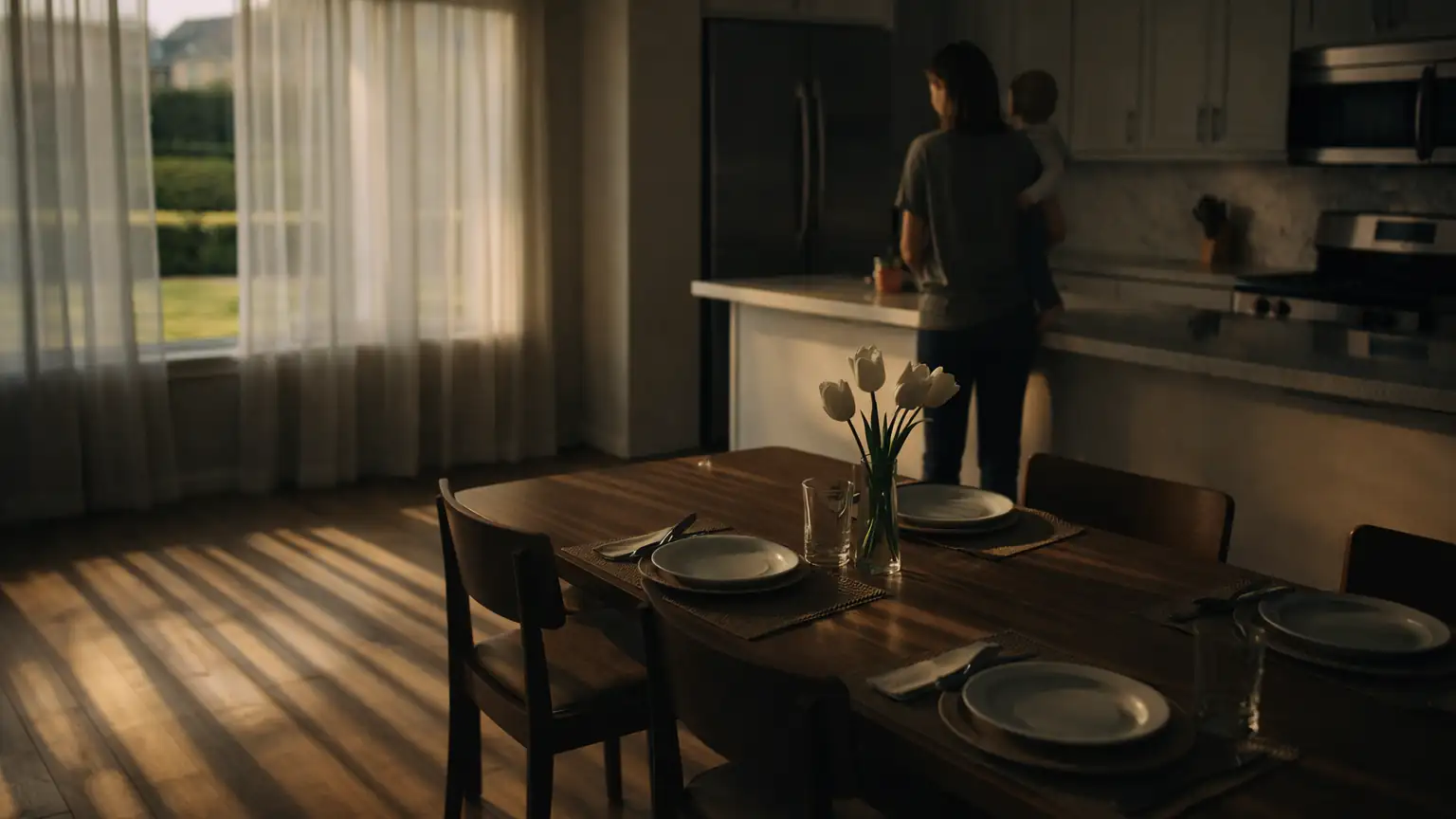
The house was beautiful. Three bedrooms, a backyard with a fence, a kitchen with an island and pendant lights. The deed was in his name. I didn't think about that then.
He liked dinner at seven. Not around seven. Seven. He liked knowing where I was, which he said was because he worried. He liked when I wore my hair down because that's how he first saw me. He liked when I answered on the first ring.
The baby came a year in. Our daughter. She had his eyes, and I thought: this is it. This is the life I found on my own.
I called my father to tell him. He cried. I picked up the phone to call my mother. I'd unblocked her by then, I don't know when.
I hovered over her name and I put the phone down. Not yet. Not until I could call her and say: you were wrong. Look at my life.
I didn't see my friends much anymore. He never said don't see them. He said: "I missed you today. Stay in tonight." He said: "You're different around them. I like who you are when it's just us."
I chose just us every time. Because he made just us feel like enough.
The house was clean. The baby was healthy. The man came home at seven and kissed my forehead and sat down to eat what I'd made.
It looked like a life.
The Cracks
The charm had an off switch. I didn't notice at first because it was smooth. It was a dimmer being turned down so slowly you don't realize you're sitting in the dark until you try to read.
In public he was the same man I married. Attentive. Warm. People in town loved him.
He was on the chamber of commerce. He donated to the Little League. He shook hands at the farmer's market on Saturdays. He was the kind of man people described as a good guy and meant it.
At home the temperature was different. Not cold. Regulated. He set the thermostat. He chose the channel. He decided when the lights went off. He walked through the house at night checking locks, and I told myself that was safety, except the locks were on the inside.
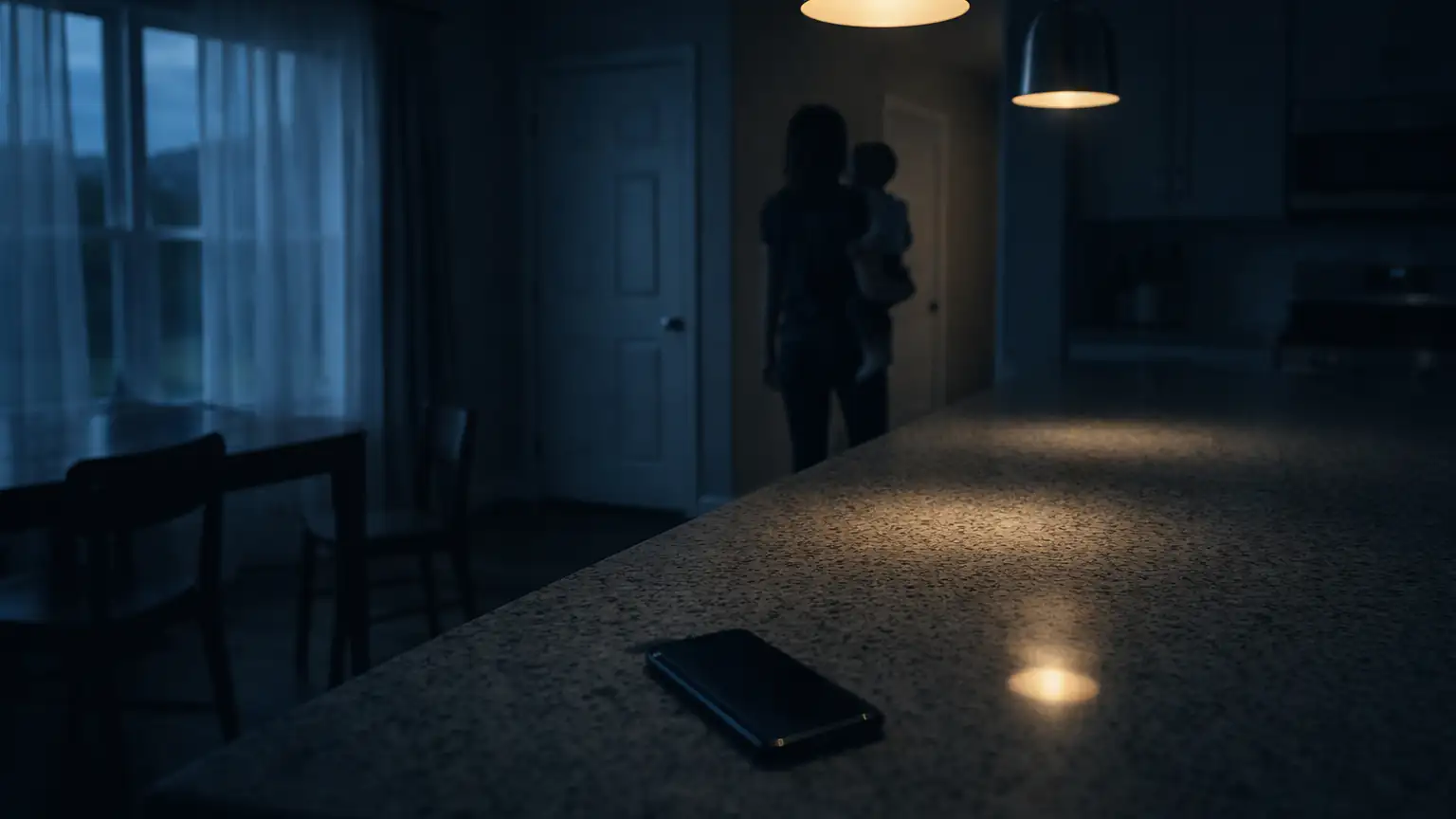
The phone was always face down. Always locked. If it buzzed at dinner he'd glance at it and flip it back without a word. If I asked who it was, he'd say, "Work." One syllable. A door closing.
The basement. He kept it cluttered. Boxes from his old office, furniture from his bachelor apartment, the accumulated mess of a man who said he just hadn't gotten around to it. "Don't bother with it," he said. "It's just junk."
There was a door at the bottom of the stairs that he kept locked. I asked about it once. He said it was storage and the key was somewhere and he'd find it eventually. The conversation moved on. I let it.
I let so many things move on.
Then the baby. Watching him hold her activated something in me. Not fear, not yet. A filter. A lens that ran every piece of data through one question: is she safe?
The answers started coming back wrong.
I started watching him. His hands. His eyes. The flash that crossed his face when I said something he didn't expect, not surprise, not amusement, closer to recalibration. Like he was adjusting a script.
He said it was nothing. He always said it was nothing. I started keeping count of the nothings.
One Thursday night he came home late from poker with friends, and I was up with the baby, and I watched him from the top of the stairs. For the three seconds between the front door and the hallway light, I saw his face without the performance on it.
Blank. Not tired. Not relaxed. Blank. Like a screen between apps.
I went back to bed. I didn't sleep.
The Pin
I saw it on a Wednesday.
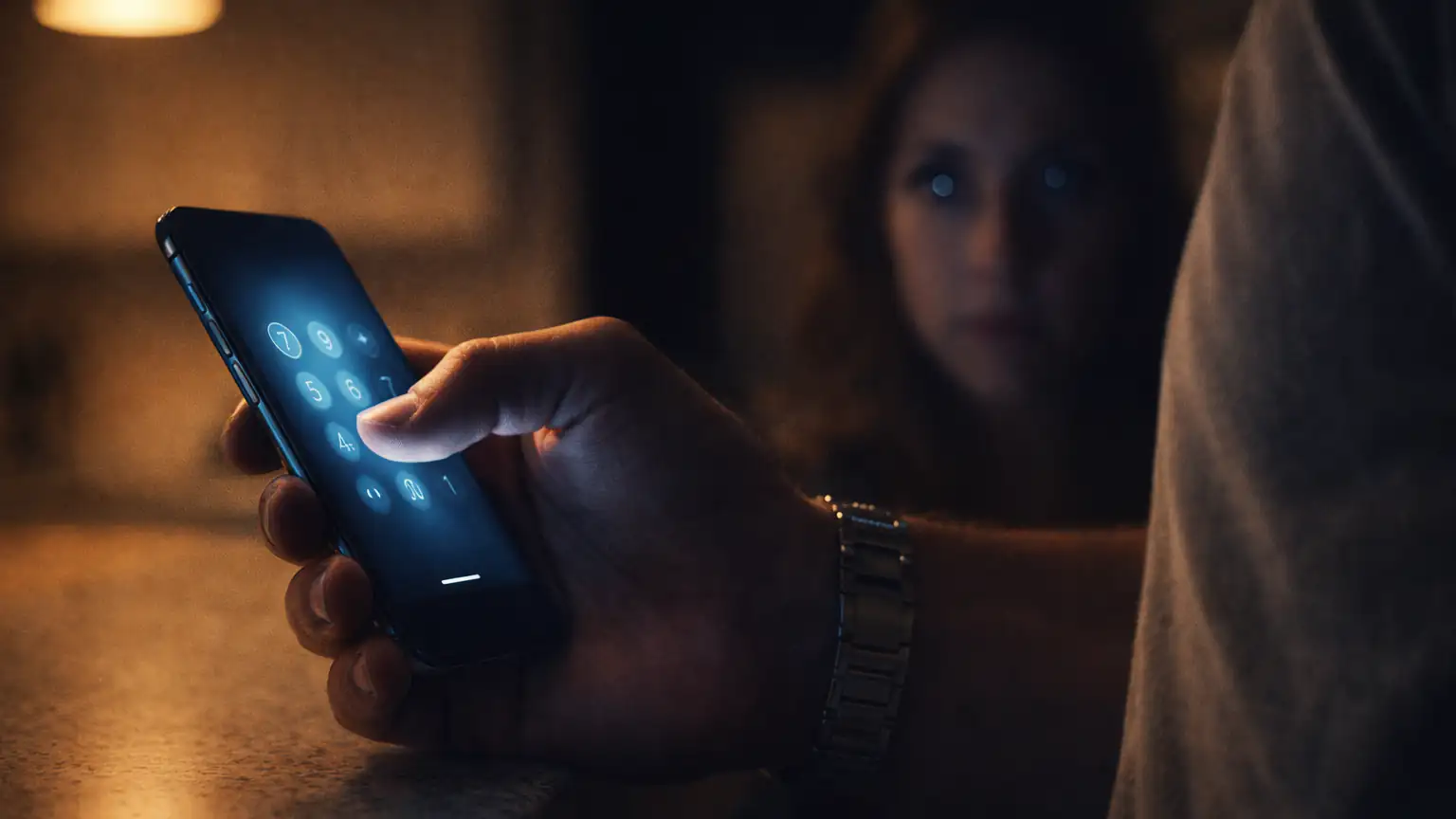
He was at the kitchen counter, his back to me, the baby in my arms. He picked up his phone and typed in the code without thinking. Four digits, the way you type a number you've typed ten thousand times.
He didn't turn around. He didn't know I was watching. Or he did, and it didn't matter, because it had never mattered before. No one had ever watched. No one had ever needed to.
Four digits.
I caught them the way your hand catches a railing when you trip. Not a decision. A reflex. My eyes saw and my body kept.
I didn't know yet that those four digits opened everything.
The Basement
He was in Columbus for the weekend. A business thing. He called when he landed, told me to keep the doors locked, told me he loved me. I said it back. I meant it. I also meant the four digits I'd been carrying in my head for eleven days.
The baby went down at eight. I waited until nine. I don't know who I was performing for. The house was empty. But I waited, like I needed the extra hour to become the version of myself who could do this.
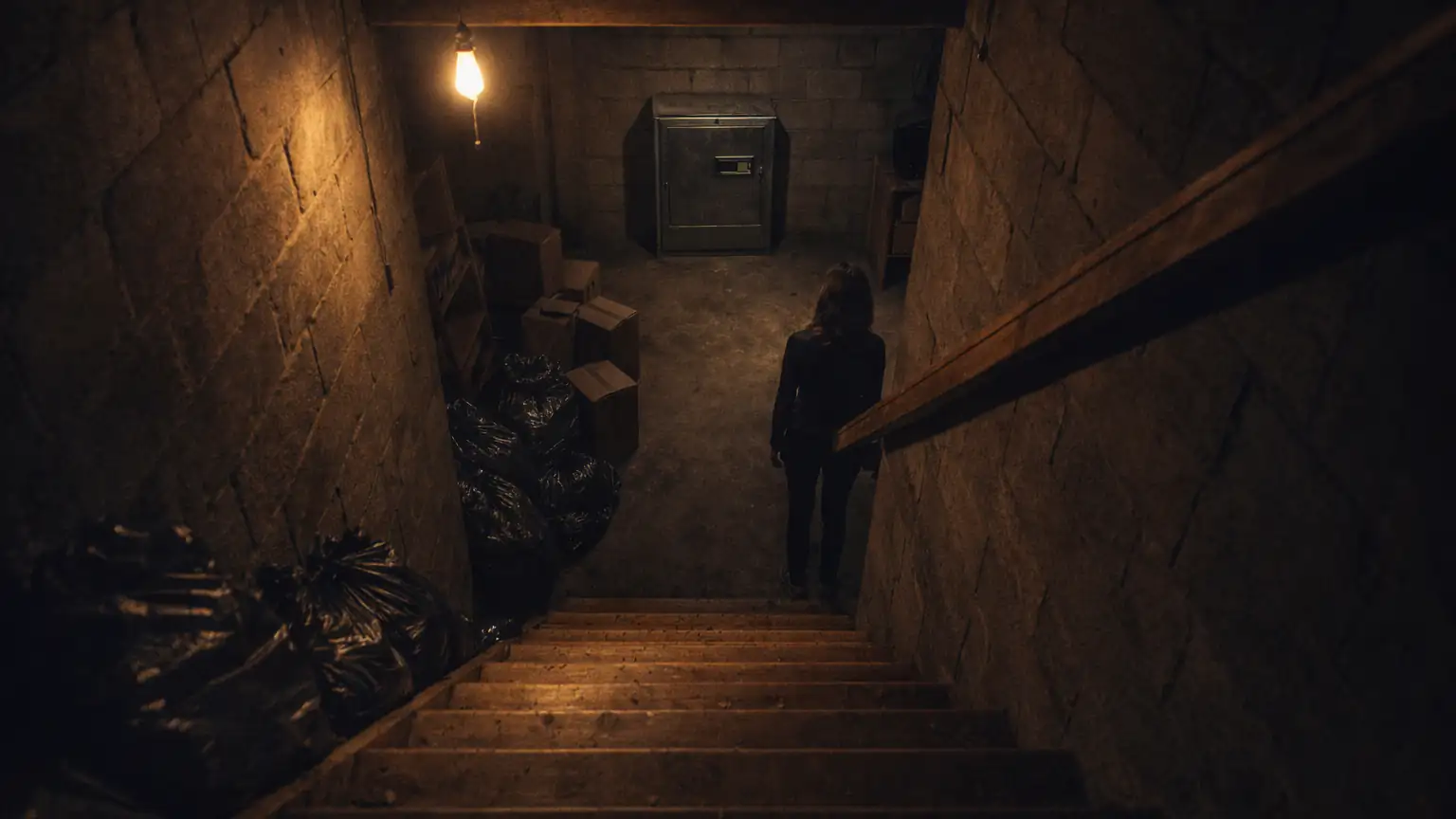
The basement stairs were steep. I'd been down there twice in two years, once for Christmas decorations, once for a noise that turned out to be the water heater. Both times I didn't go past the first few feet. The clutter stopped you. That was the point, I understand now. The mess wasn't laziness. It was architecture.
I pulled the chain on the bare bulb. The light swung. The shadows moved.
I moved the boxes systematically. Setting each one behind me. Clearing a path toward the back wall I'd never seen.
The safe was behind the desk. A floor safe, bolted into the concrete. A digital keypad with a faint green standby light.
I typed the four digits. The same code. Phone and safe. His arrogance was so complete that he used the same combination for all of it because it had never occurred to him, not once, that anyone he let close enough to see him type would ever have a reason to try it on a safe in a basement he told them not to visit.
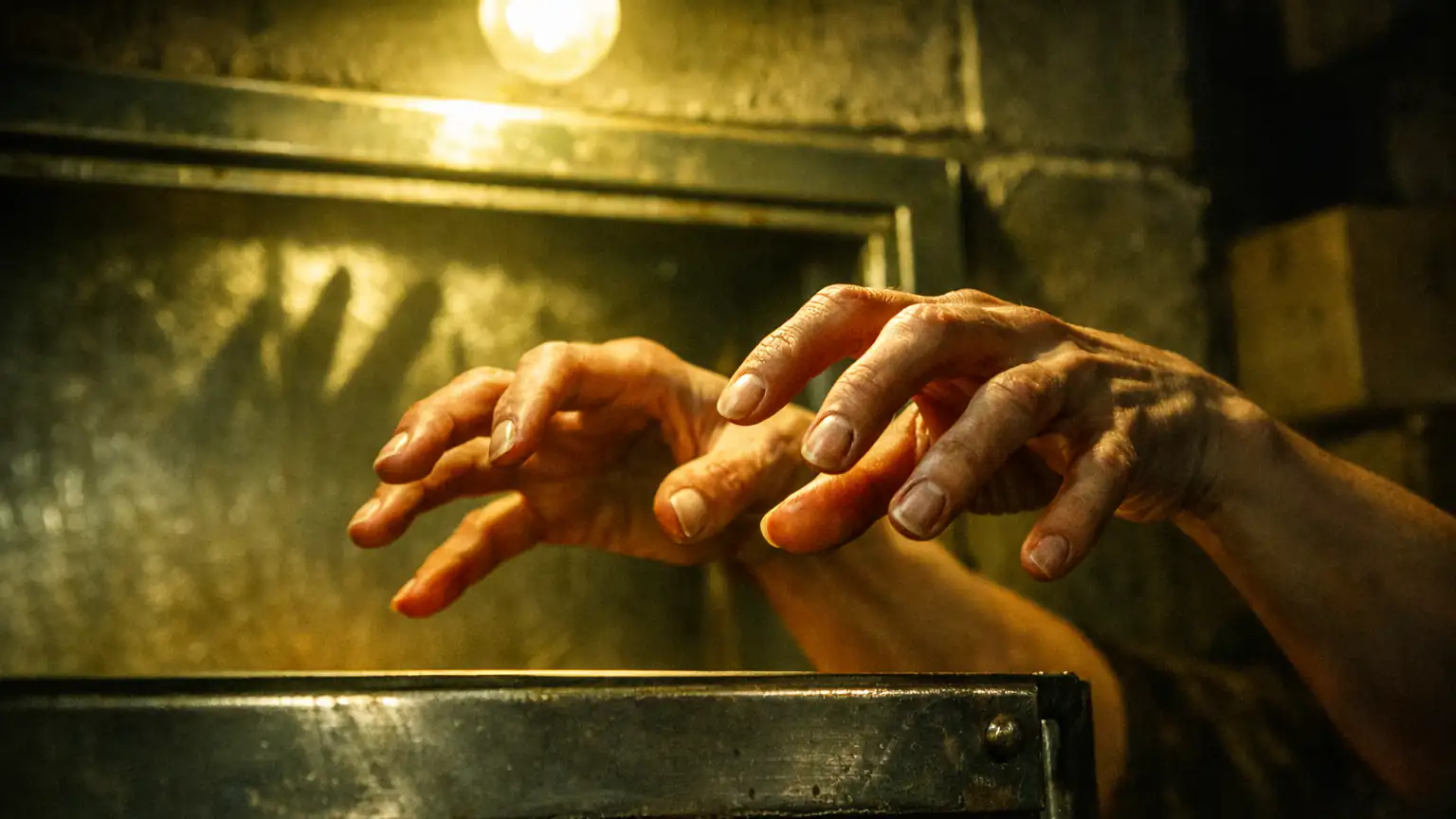
Four small beeps. A mechanical click. The door swung open with weight.
And inside.
I won't describe what I found. I'll describe what I understood.
Each one had a name. Each one was a person. Documented. Labeled with a system. Dates, locations, details my brain shut down before they could register.
What I counted was: many. Not a few. Not a mistake. A practice that had been running longer than I'd been alive.
The man I married was not a man with a secret. He was a secret wearing a man.
And then I saw a name I recognized.
The Names
My mother's name. In his handwriting. Filed in his system. Dated, and the date was before I was born.
I don't know how long I knelt there. Time did something. It didn't stop. It became irrelevant.
My mother knew him. She knew him before I brought him home for Sunday dinner. She knew what he was because she was one of the names.
And she tried to tell me. Standing in her kitchen with her knuckles white on the back of a chair, and I called her jealous. I told her she was bitter and dead to me because she couldn't explain why I should run from a man who had already.
She couldn't tell me. She had said it out loud once, to the police, to a room that looked at her, a woman with nothing, and looked at him, a man with a business and a seat on the chamber of commerce, and decided her word wasn't enough. She was not going to break herself open a second time. Not for a daughter who had already chosen him.
My mother chose to be hated. She chose my rage and my silence and three years of blocked calls over being silent. She said please and trust me, and I said jealous, and I walked out.
I was still kneeling on the concrete. My hands wouldn't stop shaking.
I looked back into the safe.
I found mine.
My name. Already there. Already labeled. Filed before the first date. Before the restaurant, before the peonies, before the jazz and the hand across the table.
He didn't find me. He looked for me. He chose me because I was her daughter. The whole performance, the remembered professor, the turned-down music, the not-roses, it wasn't for me.
It was for her. It was the second half of something he'd started before I was born. I wasn't in the collection by accident. I was in it by design.
I closed the safe. I stood up. My knees ached.
I looked at the stairs leading up to where my daughter was sleeping, and I understood what I was going to do next.
We leave. Now.
The Return
I didn't pack a bag. I didn't leave a note. I took my daughter.
She made the small wet sound babies make when you move them. I held her to my chest and said, "I know. We're going."
I walked past the perfectly set table. Past the phone on the counter. Past the front door with its locks on the inside. I put her in the car seat. I turned the key.
I didn't look at the house in the rearview. If I looked, some part of me might try to explain it away. Find the version where the safe was something else, where the names were something else, where the man I married was still the man from the restaurant.
There is no version where the names are something else.
The drive was forty minutes. Route 9, the streetlights turning the dashboard orange and then dark and then orange again. The baby's breathing steady in the back seat. My hands shaking on the wheel.
And the memories. Every word my mother ever said, every look, every late-night call I silenced, replaying with the sound turned up. The way her face broke in the kitchen. The way she said I know him. The way she said I hope you never find out why I'm calling.
Every holiday she spent alone because her daughter chose a man with a safe full of names over the woman who was trying to save her from becoming one.
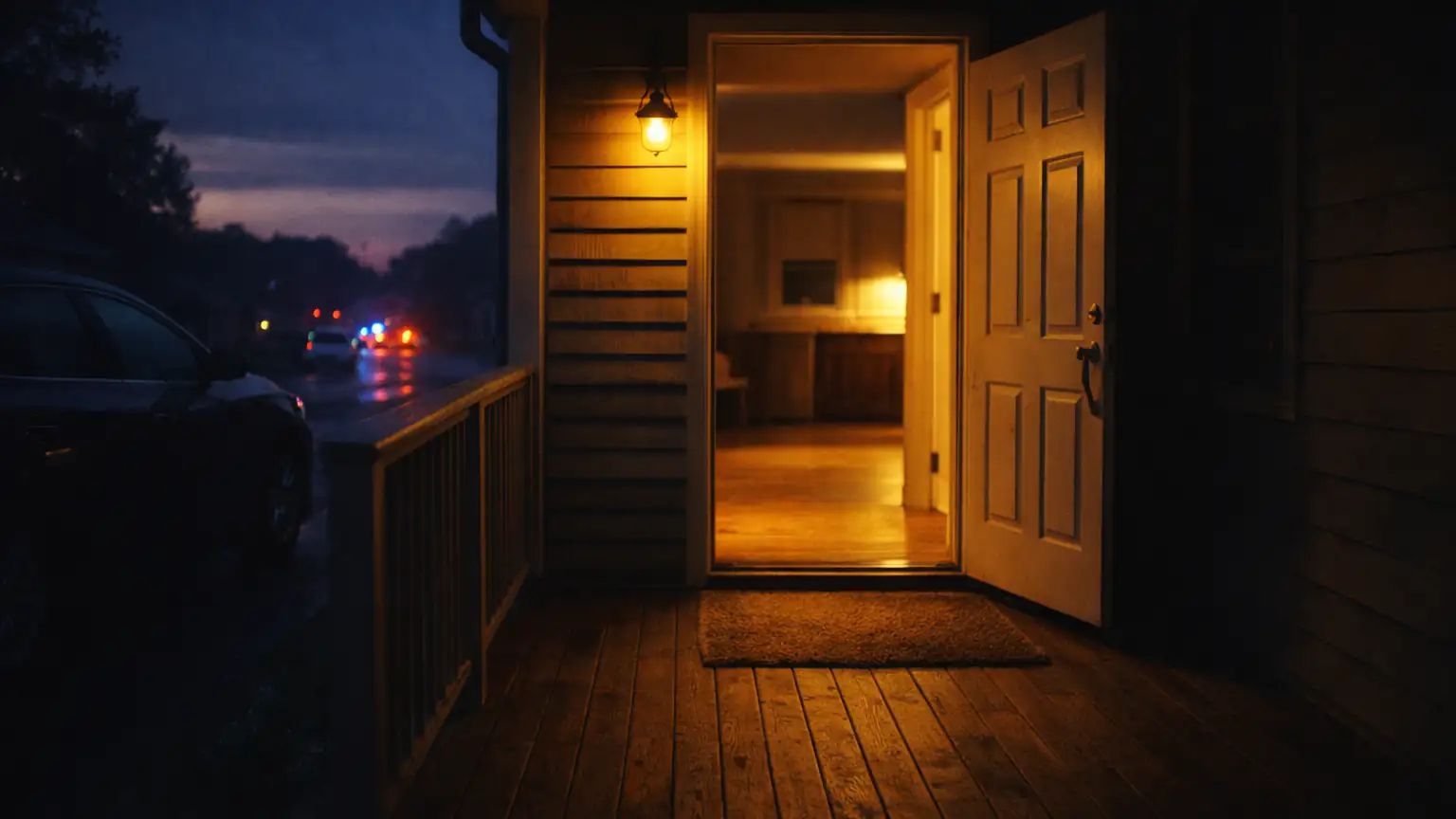
I pulled into her driveway at ten forty-seven. The porch light was on. It's always on. I know that now. She never turned it off.
I stood on the porch. Same porch where this story started. Baby against my chest. Moths around the light.
I knocked.
The door opened. My mother in her bathrobe, reading glasses pushed up on her head. She looked at me. She looked at the baby. She looked at my face.
She didn't ask what happened. She didn't say I told you so.
She stepped aside.
She opened the door the way you open a door for someone you've been expecting. She was always going to be ready.
I sat at her kitchen table. The same table, but she turned on the lamp instead of the overhead, and the room was warm in a way the memory wasn't. I put the baby in her arms. For one moment I watched my mother hold my daughter, and I thought: this is the first thing I've done right in three years.
Then I picked up the phone.
I called the police from my mother's kitchen. I gave them the address. I gave them the code. The same four digits that opened his phone, his safe, and his entire life. I told them there was an old report in their system, filed years ago by a woman whose word wasn't enough.
I said: "It's enough now. Go look."
The dispatcher asked me to stay on the line. I heard her typing. I heard her voice change when the old file came up. The recognition. This wasn't a new case. This was an old case that finally had what it was missing.
Neither one alone would have been enough. My mother's word without the safe, inadmissible. The safe without her report, a first offense. Together, a combination. The code that opens everything.
I hung up. Sirens, far away, getting closer. Not to this house. To the other one.
My mother sat across from me. The baby asleep in her arms. She still hadn't said a word.
I wanted to say I'm sorry. I wanted to say it for the word jealous, for every blocked call, for every empty chair at every holiday.
What I said was: "I found your name."
My mother closed her eyes. Not in surprise. In relief. The kind that looks exactly like grief, because it comes from the same place. The place where you've been holding something alone for so long that releasing it feels like the wound, not the healing.
"I know," she said.
Two words. The first she'd spoken. And in those two words was everything she couldn't say three years ago.
I owe my mother three years. I owe her every argument I started, every call I didn't answer, every holiday she spent alone.
My mother's name was in that safe. Mine was in that safe. The difference between us is that she tried to warn someone. That someone was me. I didn't listen.
The porch light is still on. She never turned it off.
Not once.