Their Parents Died in a Hoarder House
Inside They Found Photos of the Family They Were Stolen From
Their parents died in a hoarder house full of garbage and secrets. They were told they were adopted. Cleaning out the mess, they found a Peruvian passport, photographs of a couple they'd never seen, and two children who looked exactly like them. The adoption was a lie. The house was a crime scene. And the family they were stolen from had been searching for thirty years.
Them
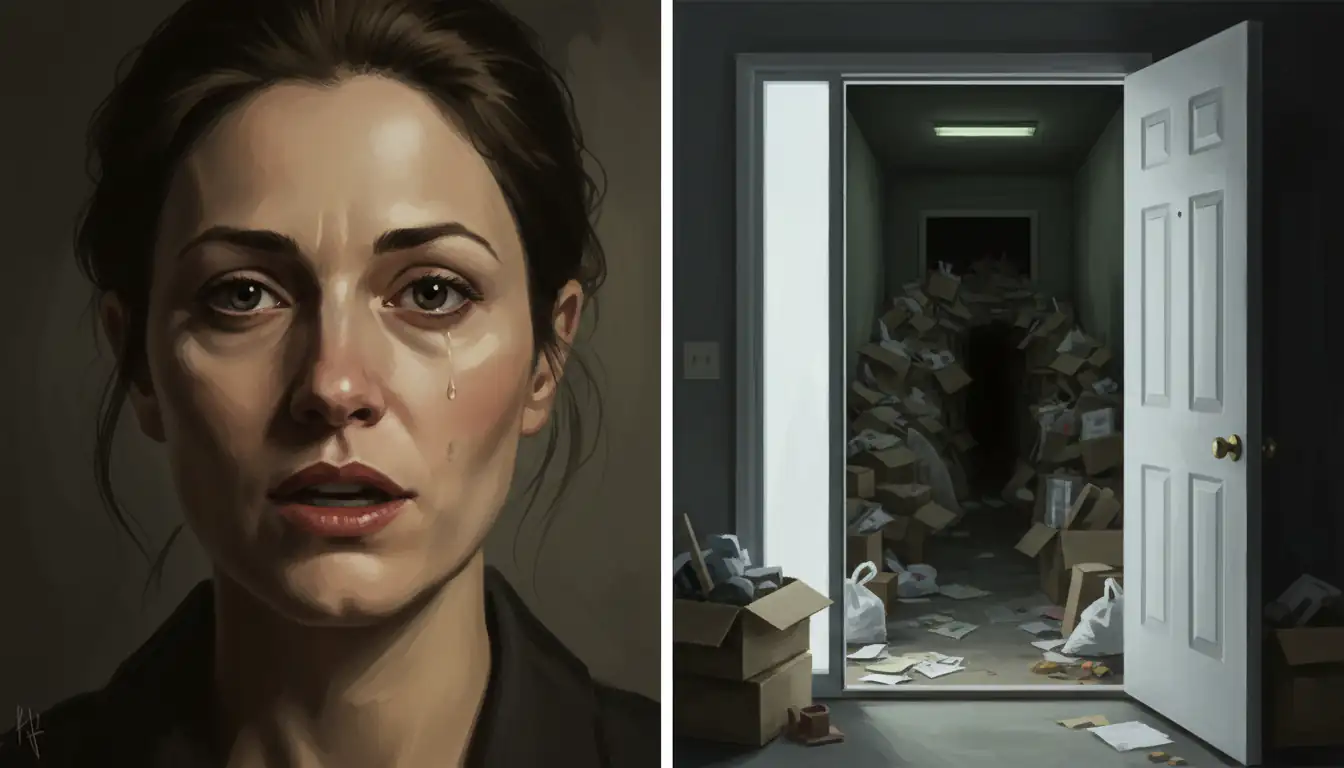
Our parents died the way they lived — surrounded by garbage and alone. The coroner said it was the father's heart first. The mother, maybe a week later. Maybe more. Nobody checked. Nobody came. Nobody had been allowed inside that house for thirty years, so nobody noticed the silence was different from the usual silence.
The funeral was us and a priest who kept checking his phone. No neighbors. No coworkers. No one from any part of their lives before us, because there was no one. They made sure of that.
My sister and I went to clean the house out. Sell it. Split whatever it was worth after the dumpster fees and be done. Two, maybe three days of work.
Bag the garbage. Call a truck. List the property. Move on.
That's not what happened.
Because the thing about a house no one has been allowed to enter for thirty years is that when you finally open the door, the house has things to say. And our parents' house had been holding its breath since before we could walk.
The Cleanup
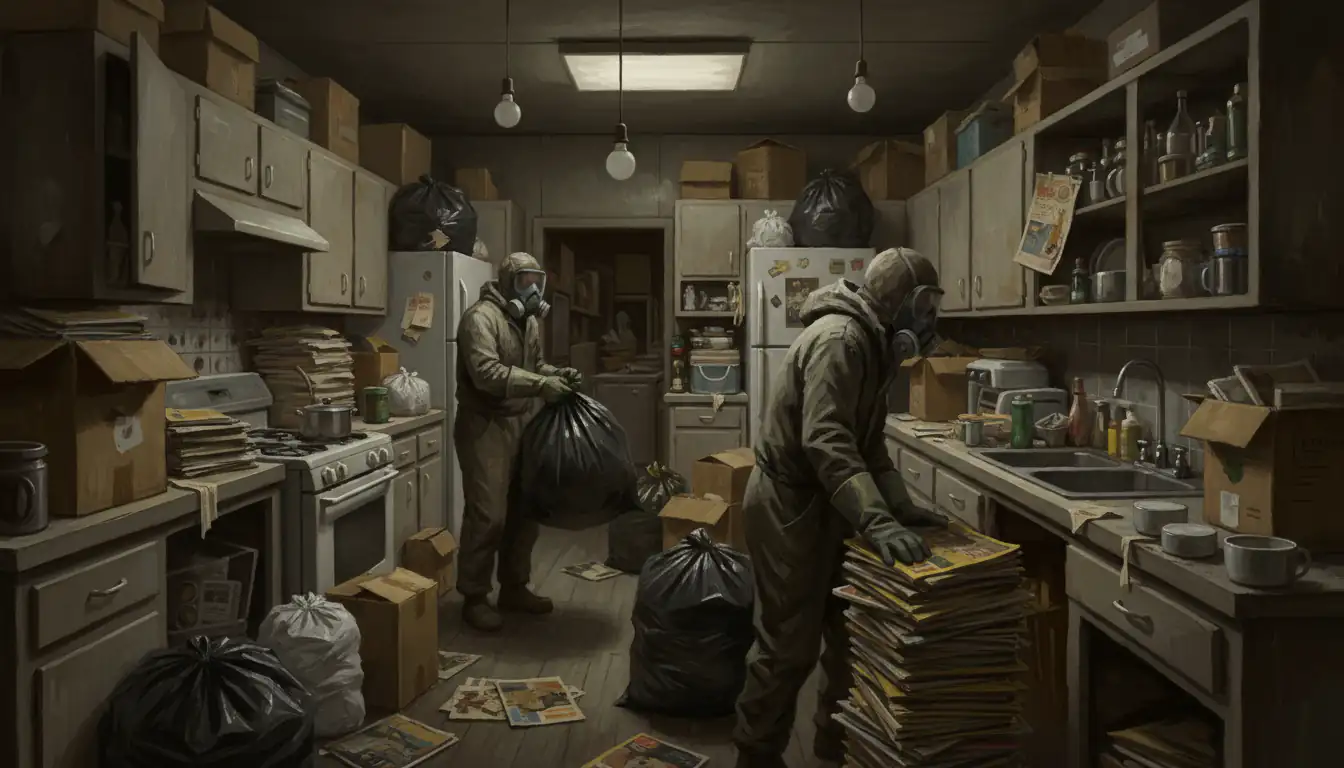
I started in the kitchen. Fourteen bags of garbage before I found the counter. The stove hadn't been used for cooking in years — it was a shelf. The refrigerator was running but there was nothing inside you'd call food. Expired cans. Takeout containers from restaurants that had closed. A carton of milk with a date from the previous administration.
The system was simple: trash, donate, keep. The keep pile stayed empty.
I worked room by room. Bag, haul, bag, haul. Don't look at anything too closely. Don't read the mail.
Don't open the boxes that might have something personal inside. Just move the mass. Get it out. Let the house breathe for the first time in decades.
The wallpaper was the same. Under everything — under the stacked boxes, the bags of clothes no one wore, the newspapers no one read — the same wallpaper from when I was eight. Yellow flowers. Small ones, repeating. She picked it. That was the only thing in this house she ever chose that had any color in it.
He didn't notice the wallpaper. He wouldn't. He came here to empty the house, not to feel it.
But I walked that hallway every day for eighteen years. I ate at that table — somewhere under whatever's piled on it now. I did homework on the floor of the living room because the floor was the only surface that stayed clear, and even that was temporary.
They weren't hoarders when we were kids. Not like this. The house was clean — or clean enough. Controlled. Everything had a place and everything was in it and God help you if you moved something without asking.
The hoarding came later. After we left. Like the house exhaled when we moved out and never inhaled again. Like they stopped pretending.
She's doing that thing where she stands in the middle of a room and doesn't move. I've seen her do it at every family event for twenty years. She goes somewhere inside her head and the rest of us wait.
I don't have time to wait. The dumpster company charges by the day.
The house was always wrong. I knew it as a kid and I know it now. No visitors. No friends over.
Not once. Not a single time in eighteen years did another human being who wasn't us walk through that front door. She'll tell you they were private. I'll tell you the word is 'sealed.'
The Childhood / No Baby Photos
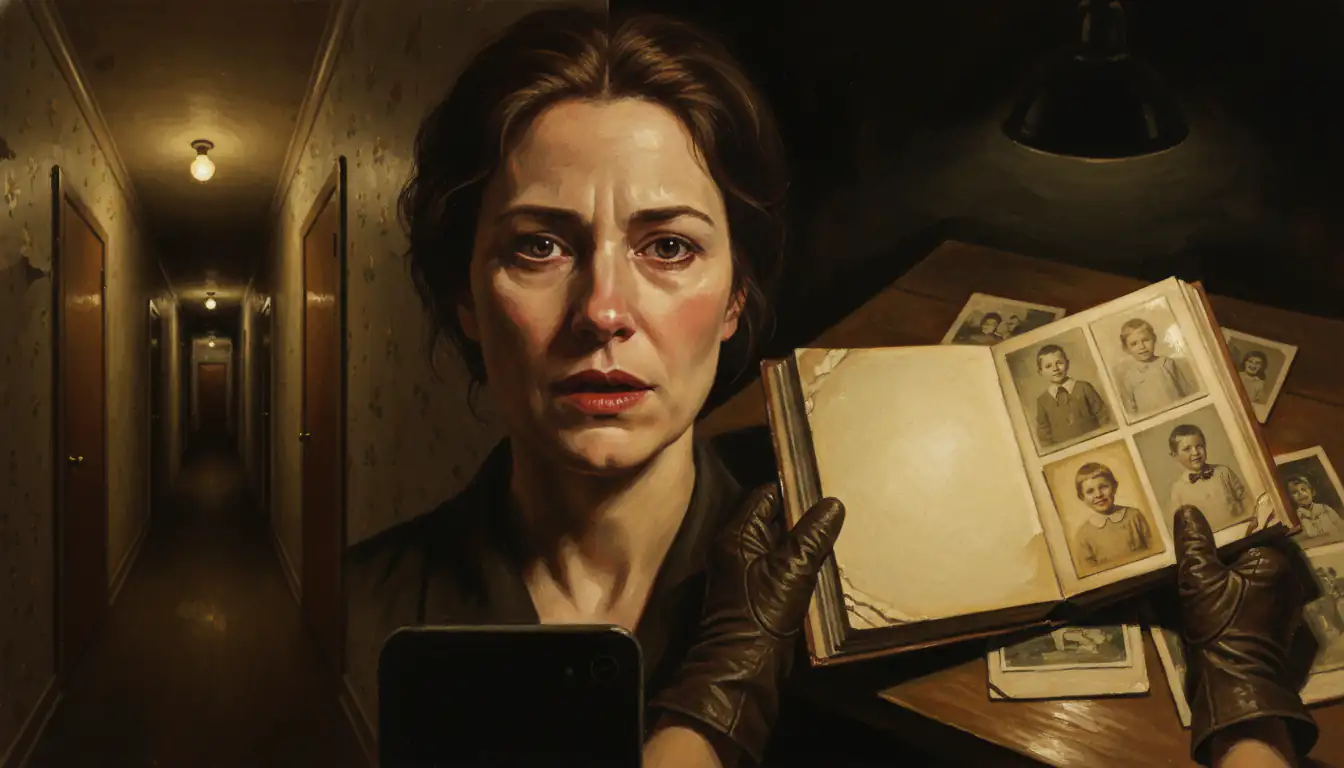
The doors were always locked. The basement. The back bedroom. The room at the end of the hall that was always called 'storage' as if that explained anything. Storage of what? We never asked. You don't ask, when you're a child. You learn the geography of permission — where you can go, where you can't — and you navigate it like it's natural. Like every house has rooms the children aren't allowed to enter.
Other kids had friends over. We had rules about why they couldn't come. There was always a reason. The house isn't clean enough. Your father has a headache.
We're not feeling well. Next week. Not this weekend. Not today. Eventually you stop asking, and your friends stop expecting, and you become the kid who never has anyone over, and that becomes who you are.
They told us we were adopted when I was maybe five. Maybe six. Young enough that the word didn't mean anything yet. We were babies when they got us, they said. No agency. No paperwork from before.
No records. The adoption wasn't — what's the word — formal. It was private. A private arrangement. The kind that doesn't leave a paper trail.
I believed that for thirty years. Why wouldn't I? Your parents tell you a thing. You build a life on it. You make it true by living inside it long enough.
She's leaving out the part where we weren't allowed to answer the phone. She's leaving out the part where they checked the mail before we could see it. She's leaving out the part where, if someone came to the door — a neighbor, a delivery driver, anyone — we were told to go to our rooms and stay quiet until they left.
She'll say they were private. I'll say they were running a perimeter.
I didn't know the word for what this house felt like until I was thirty. The word is 'perimeter.' Every locked door was a boundary. Every rule about visitors was access control. Every time we were told to stay quiet was noise discipline. I spent my childhood inside an operational security protocol and I thought it was just a strict household.
I'm going through the photographs now. Every box. Every album. Every loose stack held together with a rubber band that crumbles when I touch it.
I'm looking for a baby picture. One. Just one photo of me or my brother before the age of three.
There's nothing.
Four years old, five, six — the albums pick up. Birthday parties with no guests. School portraits. Stiff Christmas photos in front of a tree with no presents underneath from anyone outside the house, because there was no one outside the house.
But before that? Before the life in this house began?
Nothing. Not a hospital bracelet. Not a footprint card. Not a single blurry Polaroid of a newborn wrapped in a blanket.
I never asked the right question. The right question wasn't 'why don't we have baby photos.' The right question was 'why don't we have any proof we existed before this house.'
The First Crack
The closet in the back bedroom hadn't been opened in years. The door was swollen shut — humidity, age, the house settling around it. I had to put my shoulder into it. When it gave, the smell was different. Older. Not the garbage smell of the rest of the house. This was paper. Old paper. The smell of a time capsule that nobody intended to make and nobody was supposed to open.
Boxes inside. Cardboard gone soft. I opened the first one and found documents.
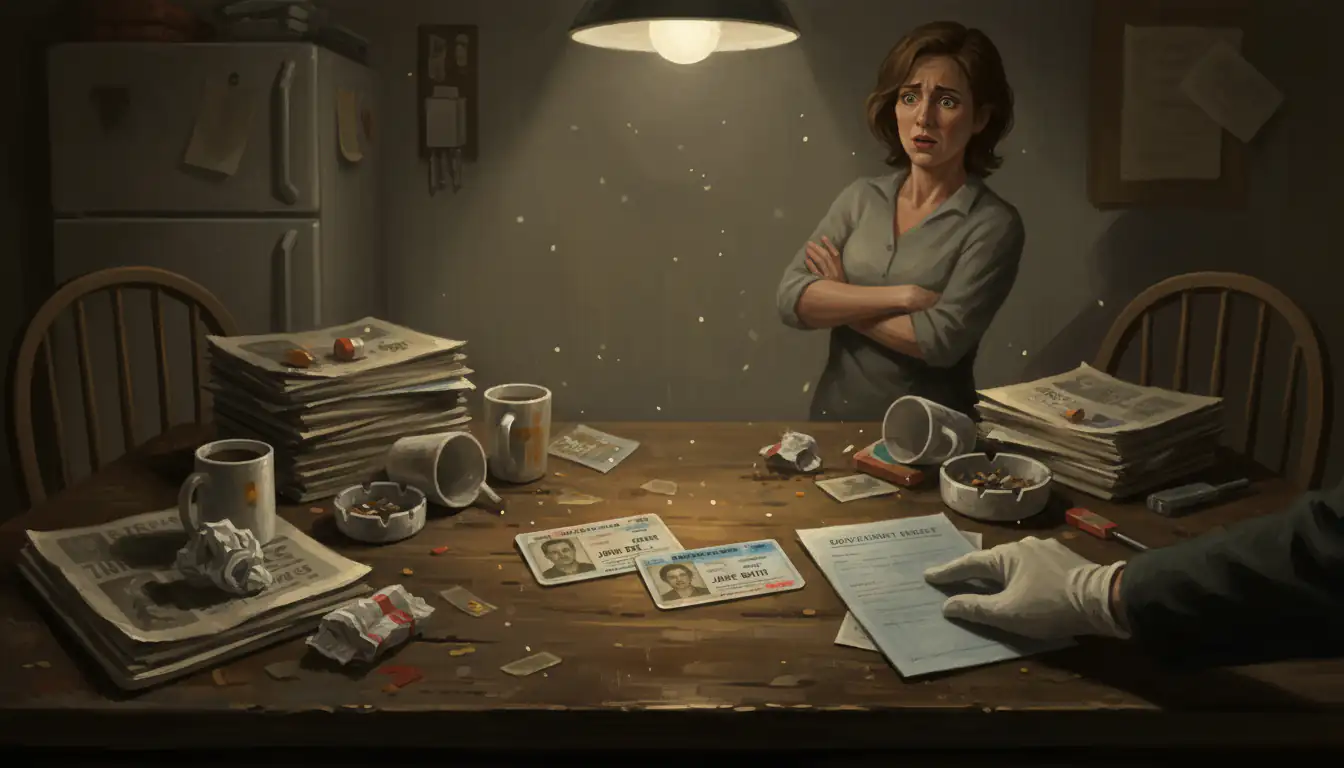
Driver's licenses. Two of them. My father's face. My mother's face. Names I had never seen before.
Not their names. Their faces, but not their names.
I brought them to the kitchen. Put them on the table. Called my sister in.
He laid them out like evidence. Like he was already building a case. Two IDs on the table, faces up, and he just looked at me and waited.
I looked. I saw.
People change their names. People do that all the time. Before the adoption, maybe. A maiden name. A legal thing. It doesn't have to mean—
He didn't argue. That's the thing about my brother. He doesn't argue. He just goes and gets more.
I went back to the closet. Second box. An old wallet. Cards from a different state — not the state we grew up in. Same name. The same wrong name, consistent across everything. Social security card. Library card. A gas station rewards card from a chain that doesn't exist anymore.
This wasn't a clerical error. This wasn't a maiden name. This was a previous identity. Complete. Lived in. Used long enough to accumulate the small, pointless cards that real people accumulate when they're really living somewhere.
I put it all on the table next to the licenses.
There's an explanation. There has to be an explanation that isn't the one his face is telling me he's already reached.
I didn't say anything. I didn't need to. The table was talking.
The name on the ID was not my father's name. The face was. And there were enough documents with that name to fill a life — a life that happened before us, before this house, before whatever story we were told about where we came from.
I went back to the closet. There was more.
The Passport and the Photographs
The bottom box was different. Heavier. Older. I knew before I opened it that whatever was in here was what the house had been sitting on.
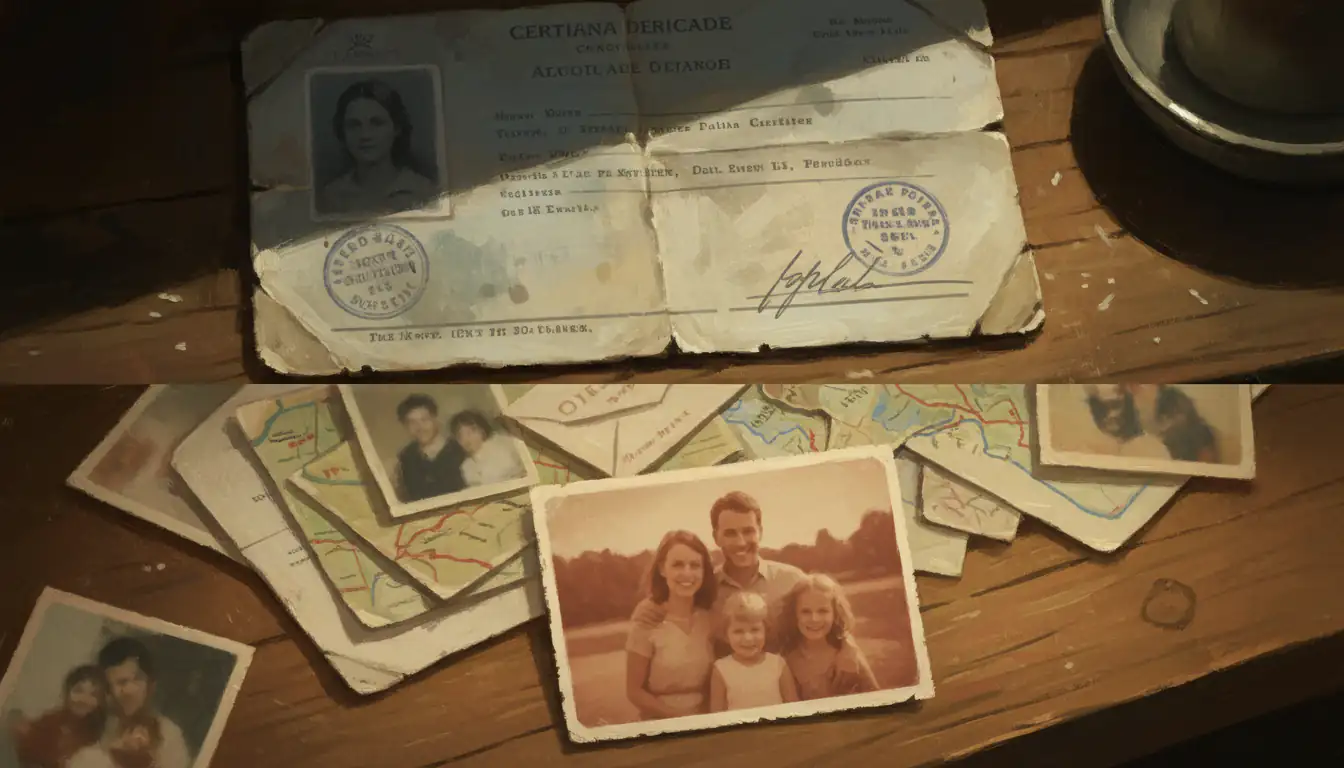
A passport. The cover was dark — not American. I didn't recognize the design at first, then I did. Peruvian. The coat of arms. The lettering. I opened it to the photo page.
A woman. Young. Mid-twenties, maybe less. Dark hair. Dark eyes.
The flat expression everyone wears in a passport photo, but underneath it — even in that institutional blankness — a face that was alive. A person who walked into a government office and sat for this photo because she was going somewhere. She had plans. She had a future she was documenting.
The name was Spanish. I couldn't pronounce it on the first try.
Under the passport: photographs. Not official. Personal. A young couple standing in front of a building — it looked like a consulate or a municipal office, something civic. They were dressed nicely.
They were smiling. Between them: two children. Small. Very small. Toddlers barely standing on their own.
I looked at the children.
I looked at them for a long time.
He brought them to the table and he didn't say a word. He didn't need to say a word. He put the passport down. He put the photographs down. And he looked at me.
The children in the photographs were — I could see — they were—
The boy had his forehead. My brother's forehead. The specific line of it, the way it's wider at the temples. The girl — the girl had my hands.
Small, square palms. I have my mother's hands, everyone always said. My mother. The woman who raised me.
But the woman in the passport had the same hands.
Maybe they knew them. Maybe — maybe the parents helped this family. Maybe they kept the documents as a favor. People do that. Immigrants sometimes leave important papers with—
She's talking, but her voice is thinner. She's reaching for explanations and they're getting further away each time. She knows. She's known since I put the photos on the table. But knowing and admitting are different doors and she's standing in the hallway between them.
I put the passport next to the IDs with the wrong names. I put the photographs next to the passport.
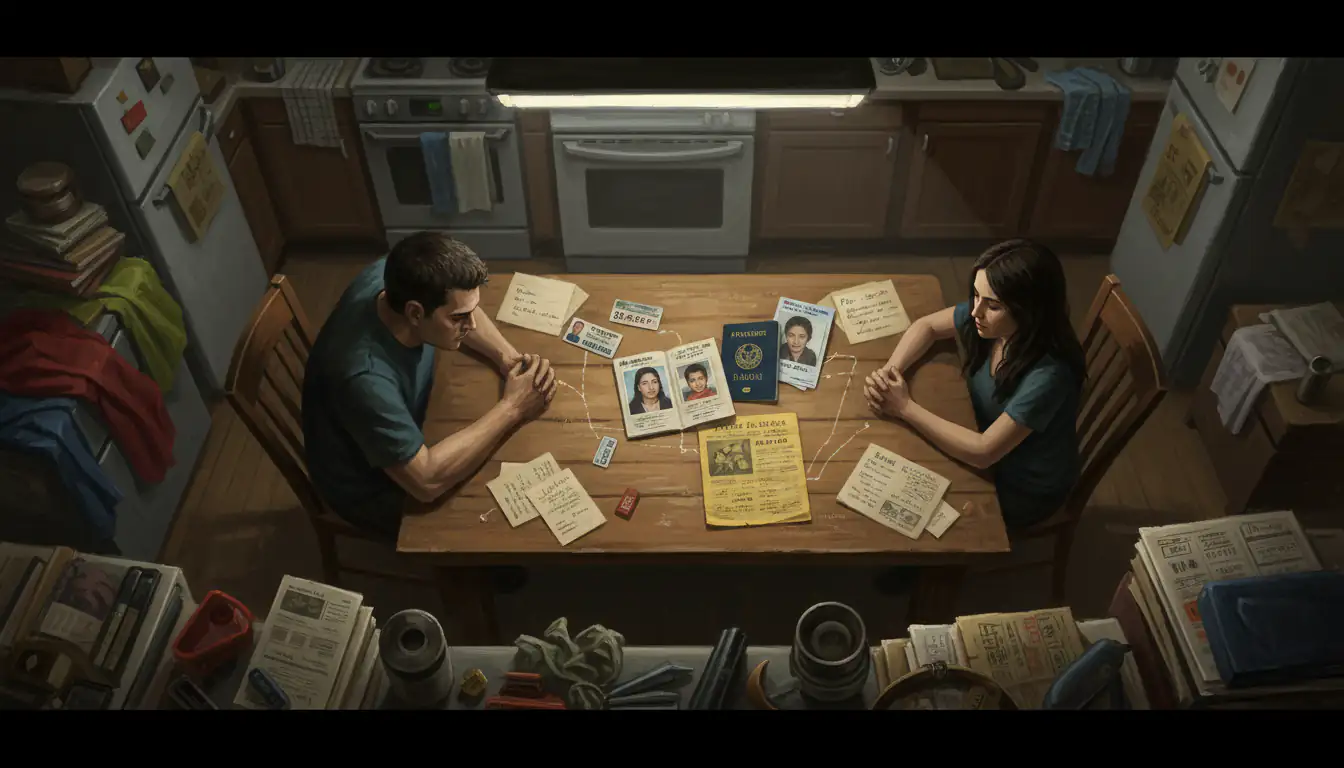
The table was filling up. The case was building itself. I didn't need to say what it was. The evidence was saying it.
A couple. Young. Peruvian. Two small children. Documents kept in a sealed house by people with fake names who told the world they'd adopted two babies through a private arrangement.
Maybe they—
I couldn't finish. I opened my mouth and the explanation I was reaching for wasn't there. It had been there a minute ago. Five minutes ago there were a hundred explanations. Now there was one, and it was the one I couldn't say.
The Letters and The Truth Assembles
I found the letters in a shoebox under a stack of water-damaged encyclopedias. Who keeps encyclopedias? Who keeps anything? They kept everything. They kept everything because they couldn't throw it away and they couldn't face it and so they buried it and they buried it and they kept burying it until the burial was the house and the house was the burial and they died inside it.
The letters were handwritten. Spanish. I can't read Spanish. Neither can he.
But I could see the handwriting — small, careful, the letters of someone writing to someone they loved. The return address was in Peru. A city I'd never heard of. A street name I couldn't pronounce.
In the same box: a newspaper clipping. Local paper. Small article, maybe three inches of column. Yellowed. Creased from being folded and unfolded and folded again — someone had read this article many times. Someone had taken it out and looked at it and put it back.
A family reported missing. A couple from Peru, recently arrived. Two young children. Last seen in the area. Date: visible.
Ages: visible. The ages matched. The dates matched. Everything matched.
I was holding a newspaper clipping about a family that disappeared. I was standing in the house of the people who took them. And I was one of the children they took.
We sat with it. The table between us. Everything on it.
I'm going to say it once. The whole thing. Because someone has to say it out loud.
The parents — the people who raised us — they traveled to South America. We knew that. They mentioned it once or twice — a trip, years ago, before we were born. Before we existed, as far as we knew.
They met a young couple there. Peruvian. Recently married. Two small children. The couple wanted to come to the States.
The parents offered to help. Sponsored them. Brought them here. Welcomed them.
The couple came to America with their children and they disappeared.
No investigation found them. They were new to the country. They had no network here, no extended family nearby. No one to notice quickly enough. No one to push when the police moved on. By the time anyone in Peru realized they were gone — truly gone, not just busy, not just adjusting — the trail was cold.
The parents took the children. Changed their names. Moved to a new state. Built a new identity — the one we found in the IDs.
Settled. Had a story ready: we adopted them. A private arrangement. No paperwork from before.
The hoarding. The locked doors. The no visitors. The phone rules. The silence.
Not mental illness. Not personality.
Operational security for a thirty-year crime.
They kept the passport because they couldn't destroy a person's passport. They kept the photographs because the photographs were children's faces — their children's faces, the ones they took. They kept the letters because the letters were written in love and even monsters can't burn love letters without knowing what they're burning.
So they buried it all. Under newspapers and boxes and broken furniture and expired food and the accumulating mass of a life spent trying to outweigh a crime with garbage.
The house wasn't a mess. The house was a grave.
Every birthday. Every dinner. Every time she told me she loved me. Every time I defended them — to my brother, to anyone who asked why our family was so private, to myself when I lay awake at three in the morning knowing something was wrong and choosing not to name it.
All of it was sitting on top of a grave.
And I helped maintain it. Every excuse I made for them. Every explanation I offered. Every time I said 'they're just private people' — I was pouring more dirt on top.
The Split
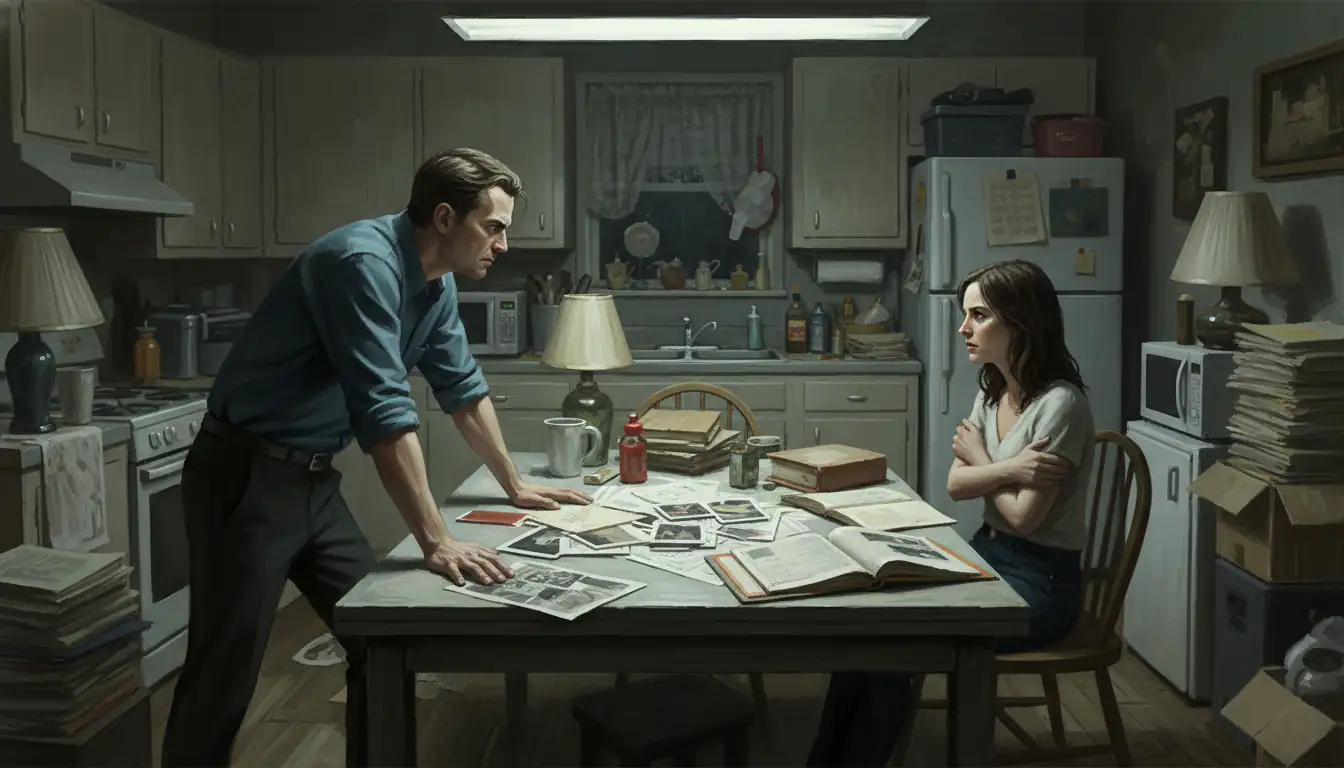
We go to the police.
And say what?
We say what happened. We give them the documents. The passport. The clipping. The IDs with the wrong names. We let them—
They're dead. Both of them are dead. There's no one to arrest. There's no one to—
There's a family in Peru that doesn't know what happened to their daughter and her husband and their two grandchildren. There are people alive right now who have been waiting thirty years for an answer.
I know that.
Then we go.
I'm not — I'm not saying they were right. I'm not defending what they did. You hear me? I am not defending them.
But.
But I can't erase thirty years in one night. You can, because you never — you kept your distance. You always kept your distance. You never tried to make it work with them. You left the first chance you got and you didn't look back.
Because something was wrong.
And I stayed. I stayed and I tried. I called every week. I came for holidays. I brought food when they got sick. I sat in that living room and pretended the smell wasn't there and the mess wasn't there and the locked doors didn't matter because I needed — I needed them to be my parents. I needed the story to be real.
The story was never real.
That's my life you're talking about.
It's their life. We just lived in it.
Silence.
I know we have to go. I know that. I'm not arguing about whether. I'm arguing about — about the speed of it. About how fast you can turn your whole life into evidence. You're ready because you never believed in it. I'm not ready because I built everything on it. Every relationship I have, every way I understand myself, every reason I gave for why I'm the way I am — 'I was adopted, I was chosen, they wanted me' — that's gone. All of it. In an afternoon.
They killed two people.
They raised us.
On top of the bodies.
Silence. Long.
I'm not asking you to stop grieving. I'm asking you to grieve the right people.
She doesn't answer that. There's no answer for that. Not yet. Not in this room, not tonight, maybe not for years.
The house settles around us. The evidence sits on the table. The fluorescent light buzzes. Somewhere in the walls, something moves. The house is alive with small, hidden things. It always was.
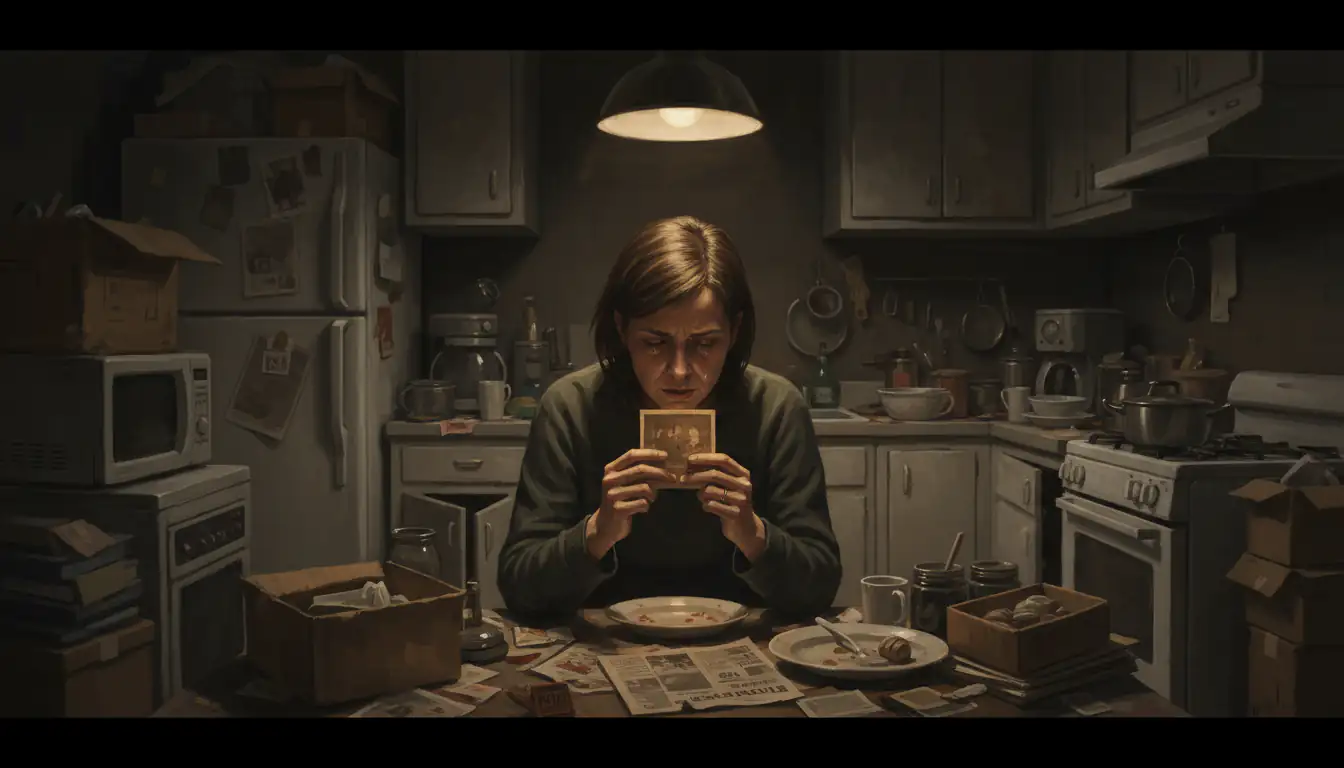
The Photograph
He went outside. I don't know if he was angry or just done. I sat with the table. The evidence. The passport with her face. The photographs. I picked up the one of the couple with the children. I held it under that ugly light and I looked at her. She was smiling. She was holding me. She was wearing a white blouse with small flowers on it and she was smiling because she was standing in front of an office that was going to help her start a new life and she had her children and she had her husband and she had every reason to believe the world was opening up for her. Someone told her it was safe to come here. Someone offered to help. Someone she trusted. I don't know her voice. I don't know what she smelled like. I don't know if she sang to me. But I know her face now. And her family doesn't know mine. That's the only thing that matters. Not what I've lost. What they've lost. What they're still losing, every day, not knowing. I put the photograph down. I found my brother. I said: we go.
The Door
We filed the report. We gave the police everything — the documents, the IDs, the passport, the photographs, the letters, the clipping. We submitted DNA. We searched. It took months. Dead ends and false leads and databases that don't talk to each other across borders. But we found a name. An address. A city in Peru. A grandmother. We flew into Lima on a Wednesday. I remember because the airport smelled like rain and citrus and something I couldn't identify — something the air carries there that it doesn't carry here. We rented a car. We drove. The country we were born in looked like nothing and everything. I kept watching the faces on the street, looking for ours. Looking for the line of my sister's jaw or the shape of my hands on a stranger walking past a market stall. We found the address. A street in a town I'd never been to that was also the first place I'd ever existed. A painted wall. A wooden door. Flowers on the windowsill. I looked at my sister. She looked at the door.
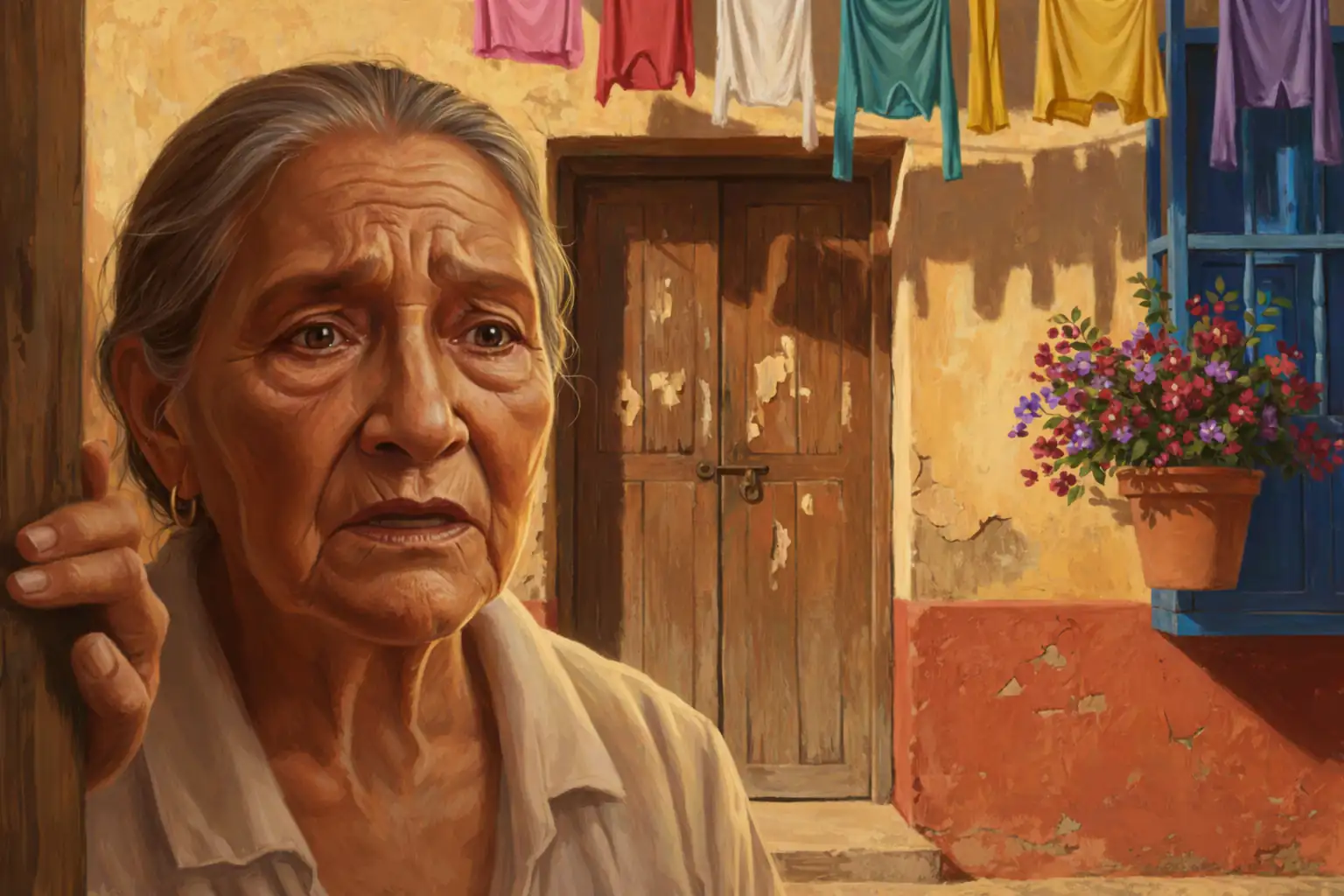
I knocked. A woman opened the door. She was old. Seventy, maybe more. Small. Her hair was white. She was wearing an apron. She had flour on her wrists. She opened the door the way you open a door when you're not expecting anyone — already half turned back toward whatever she was doing. Then she looked at me. She stopped. Everything stopped. Her body, her breath, the hand still on the door. She looked at my face the way you look at something impossible — not with surprise, not with confusion, but with recognition so deep it bypassed her mind entirely and went straight to her chest. Her eyes filled. Not slowly. All at once. Like thirty years of waiting hit her in a single second. She said a name. One word. Quiet. Almost to herself. Her daughter's name. My mother's name. She wasn't asking if it was me. She wasn't asking who I was. She was seeing her daughter's face come back to her on a stranger's body, standing at her door on an ordinary afternoon, thirty years too late and exactly on time. Her hand went to the doorframe like she needed it to stay standing. Her other hand reached for my face. She didn't touch me. She held her hand in the air between us, shaking, like she was afraid I'd disappear if she made contact. My brother stepped forward. She looked at him and made a sound — not a word, not a cry, something older than language. She saw her daughter's son. She saw both of us at once and her legs gave and my brother caught her and I caught her and we were all three holding each other in a doorway in Peru and none of us had the right words because the right words don't exist in any language for this. I don't know how long we stood there. I mean — I was there. But the part of me that narrates, the part that turns things into stories, the part that says 'and then' — that part shut off. Whatever happened on that doorstep was not a story. It was just three people finding each other.
The house is still standing. Back in the States. Empty now. The evidence is with the police. The parents — the people who raised us — are dead and will never answer for what they did. The couple from Peru is still missing. We may never know where they are. That is a sentence I have to live with and it does not get easier with repetition.
I spent thirty years in a house built on a lie. I was told I was adopted. I was told there were no records. I was told that the life I had was the only life available to me. All of that was true. None of it was the truth. My name — my real name — I'm still learning to say it. It doesn't sound like me yet. But it sounds like her. The woman in the photograph. The woman at the door. It sounds like the person she wanted me to become before someone took that away. I'm saying it now. Quietly. To myself. In a language I'm learning. It doesn't sound like me yet. But it will.