A 7-Year-Old Found a Ruler in the Trash
His Father Slapped Him So Hard He Couldn't Breathe
A man recalls growing up in a tiny rural village where his father was the most respected person on the street and the most dangerous person in the house. Behind the public performance of competence and authority, there was a drunk who controlled his wife into silence and turned his son into a target. The episode moves through the specific moments that defined a childhood: pineapple plants that could never grow, a broken ruler found in the trash that became the greatest treasure a kid ever owned — and was destroyed in one afternoon — and a nine-year-old who boarded two buses alone to get back to the one person who ever protected him. He got one day. Then he was returned.
The Father
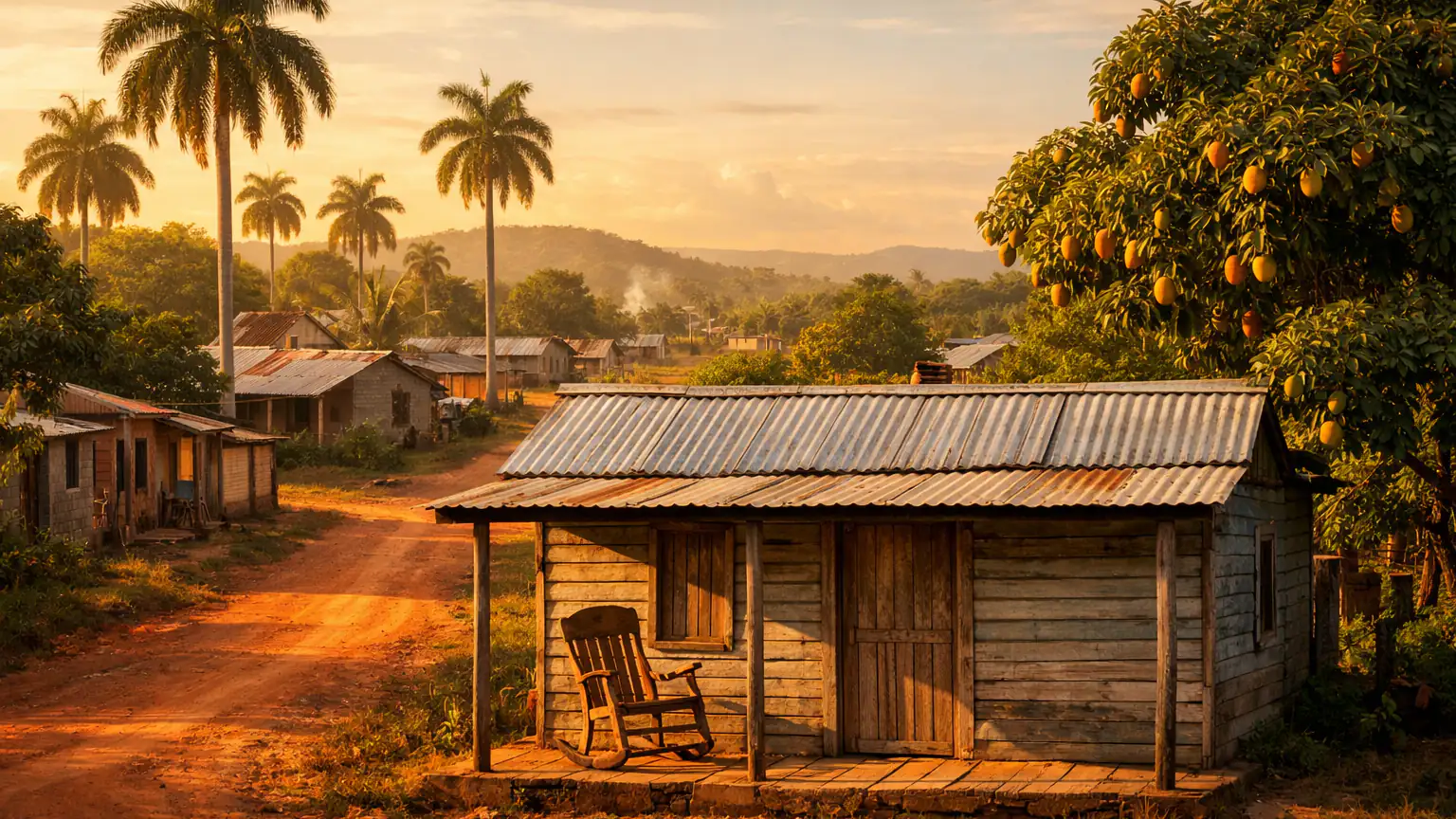
My father was the most respected man in our village. He helped the neighbors carry water when the well ran low. He offered opinions on everything — crops, fences, politics — and people nodded, because in a village of forty families, confidence passes for intelligence. He walked the single street like it was a stage, and the village watched, and the village approved. He was also the most dangerous person in our house. The same hands that helped a neighbor fix a gate would close around my mother's arm hard enough to leave fingerprints.
The same voice that advised the town council on drainage would call her esta — this one — like she was an object he was pointing at. Nobody outside ever saw both. That is the trick of men like my father. They don't hide what they are. They perform something louder.
The Paradise
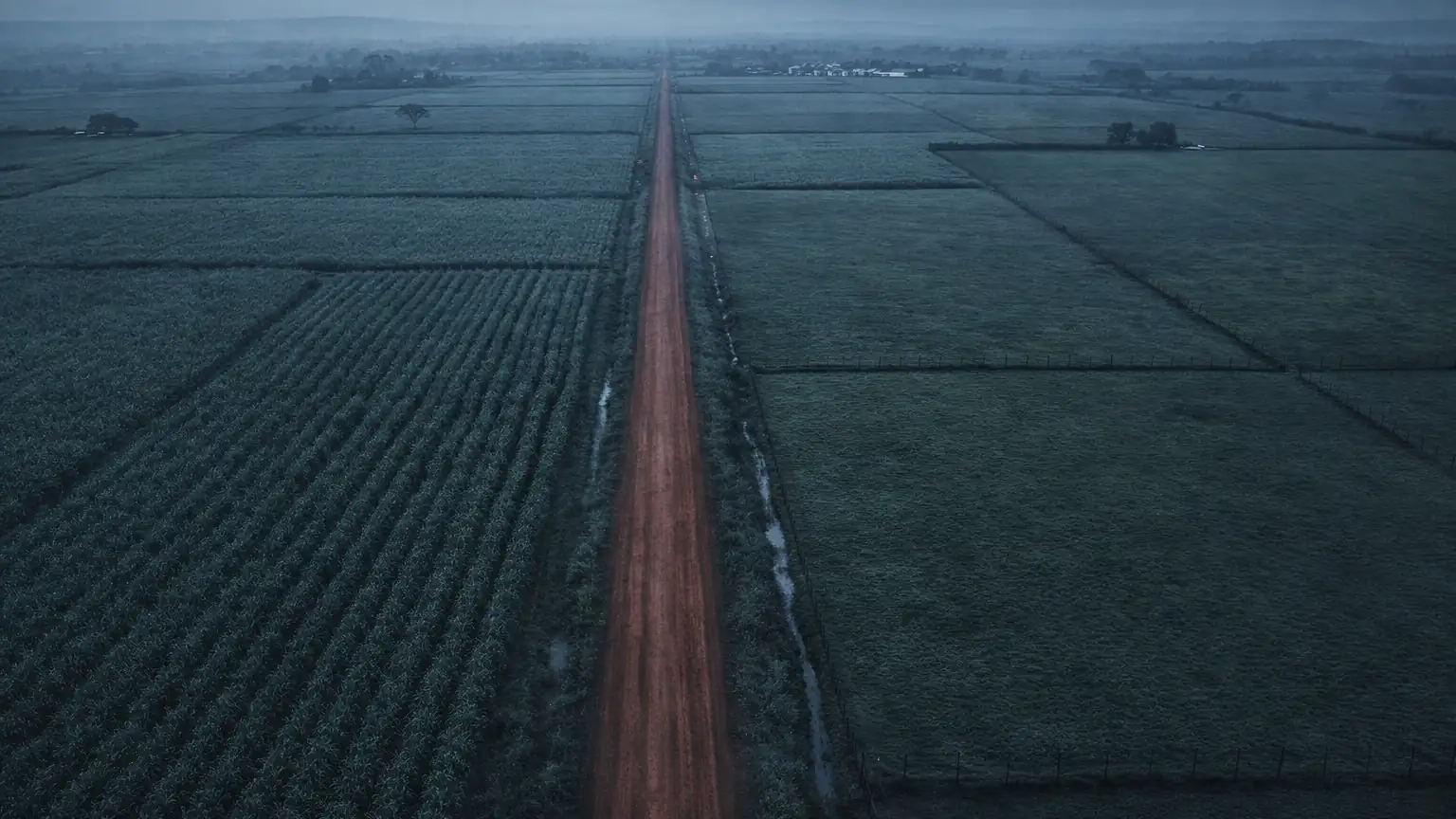
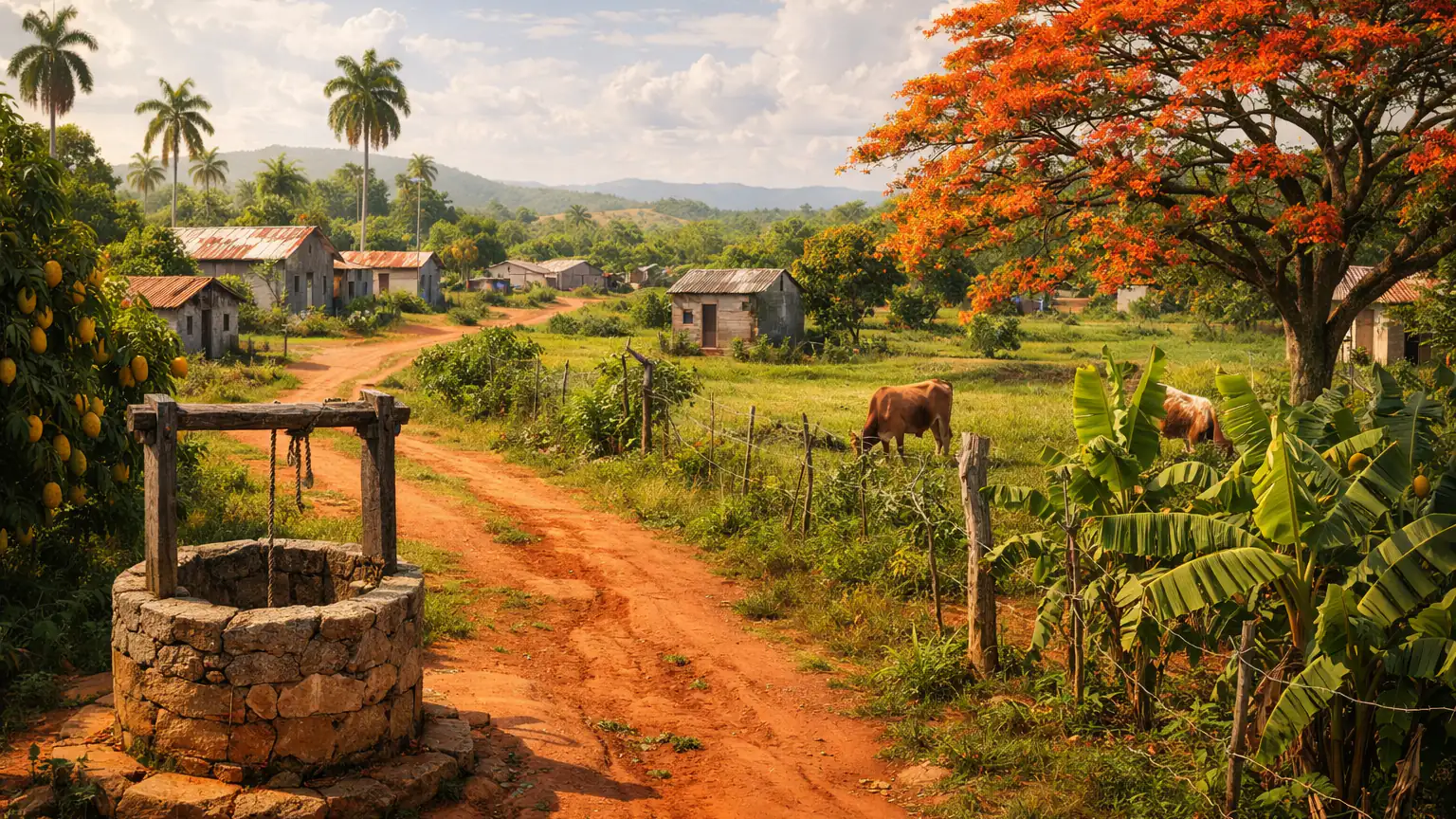
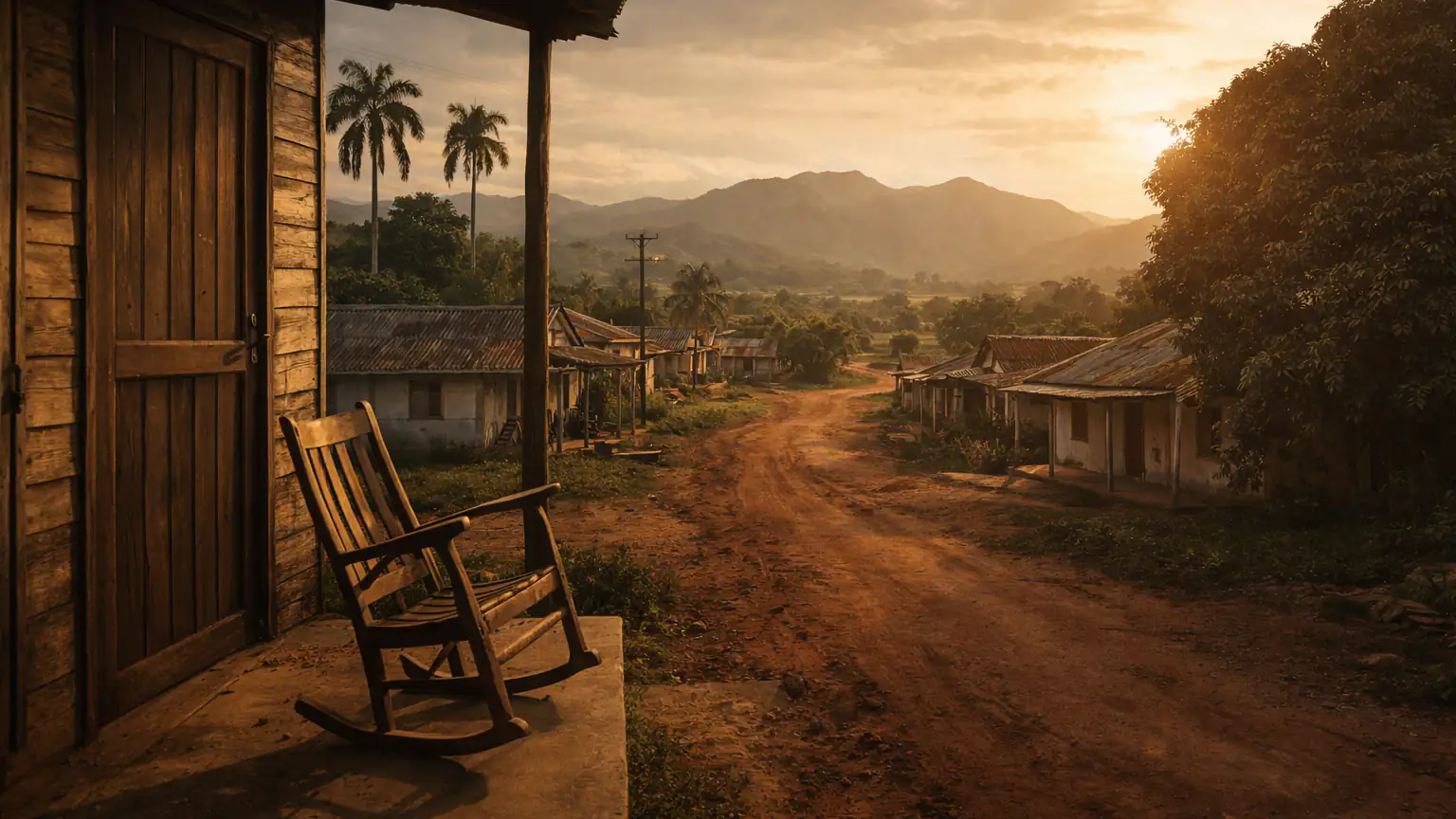
I need you to understand the village first. Before him. Before any of it. Because the village was real, and what happened in it was real, but they were not the same thing. We lived in the countryside — the deep countryside, where the nearest proper town was an hour by bus and the road turned to mud after three days of rain. We had cows.
We had horses. We had mango trees so heavy with fruit that the branches bent down to where a kid could reach. We had guava and papaya and plantain and everything that grew because the soil was rich and the rain came when it was supposed to. I had cousins — a pack of us, climbing trees, chasing animals, inventing games from nothing because nothing was all we had and it was enough. I loved to learn. I loved the names of things.
The way a mango seed looks like a small, hairy heart. The way ants carry things ten times their weight in a perfect line. The village was small enough that every adult knew my name and I knew theirs, and the countryside around it was large enough to get lost in for an entire afternoon and still hear my grandmother calling me home for dinner. That world was real. Remember that.
The Public Man
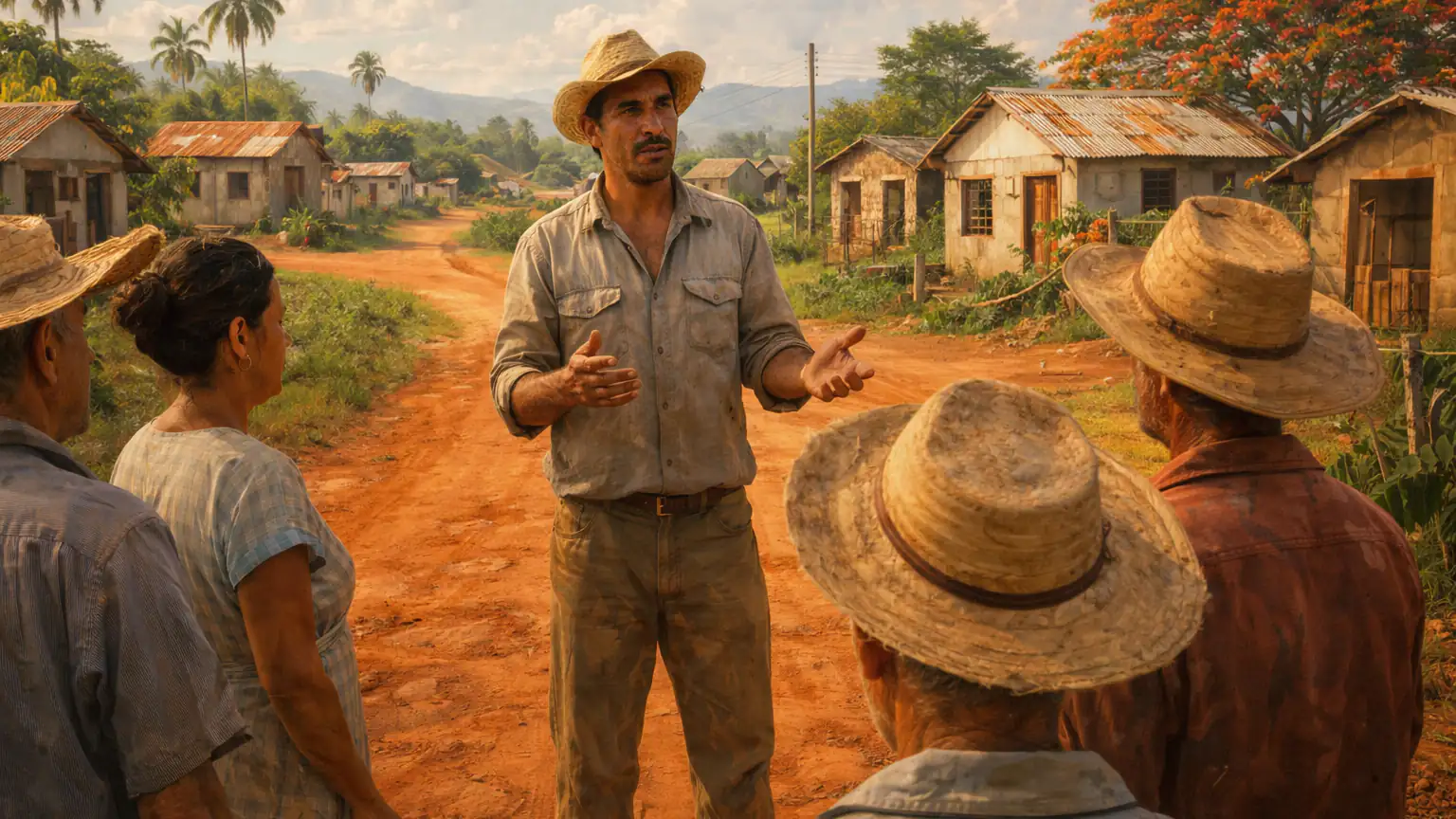
Now — the man. My father stood at the center of that village the way a monument stands in a plaza. Not because anyone placed him there, but because he placed himself and no one told him to move. He was the man who helped. He was the man who knew. He fixed things, opined on things, inserted himself into situations that had nothing to do with him and made them about his judgment.
Machista — but performed as competence. He wasn't aggressive in public. He was authoritative. The village saw confidence. His voice was always the loudest at any gathering, not because he shouted, but because he never left room for anyone else to finish speaking. He had friends, for a while.
None of them lasted. Eventually — and this was a pattern I would only recognize decades later — eventually people saw enough. A comment that went too far. A favor that came with a leash. The performance would slip for half a second, and whoever was watching would quietly pull away. His own brothers and sisters wanted nothing to do with him.
On the rare occasions they visited, I could feel the hate in the way they held their shoulders — rigid, angled away from him, as if his presence was a draft they were trying to block. They tolerated him. They tolerated us by extension. The village never saw that. The village saw the man who helps, the man who knows, the man who leads. And because the village was forty families and a single street, that performance was enough.
The Mother's Cage
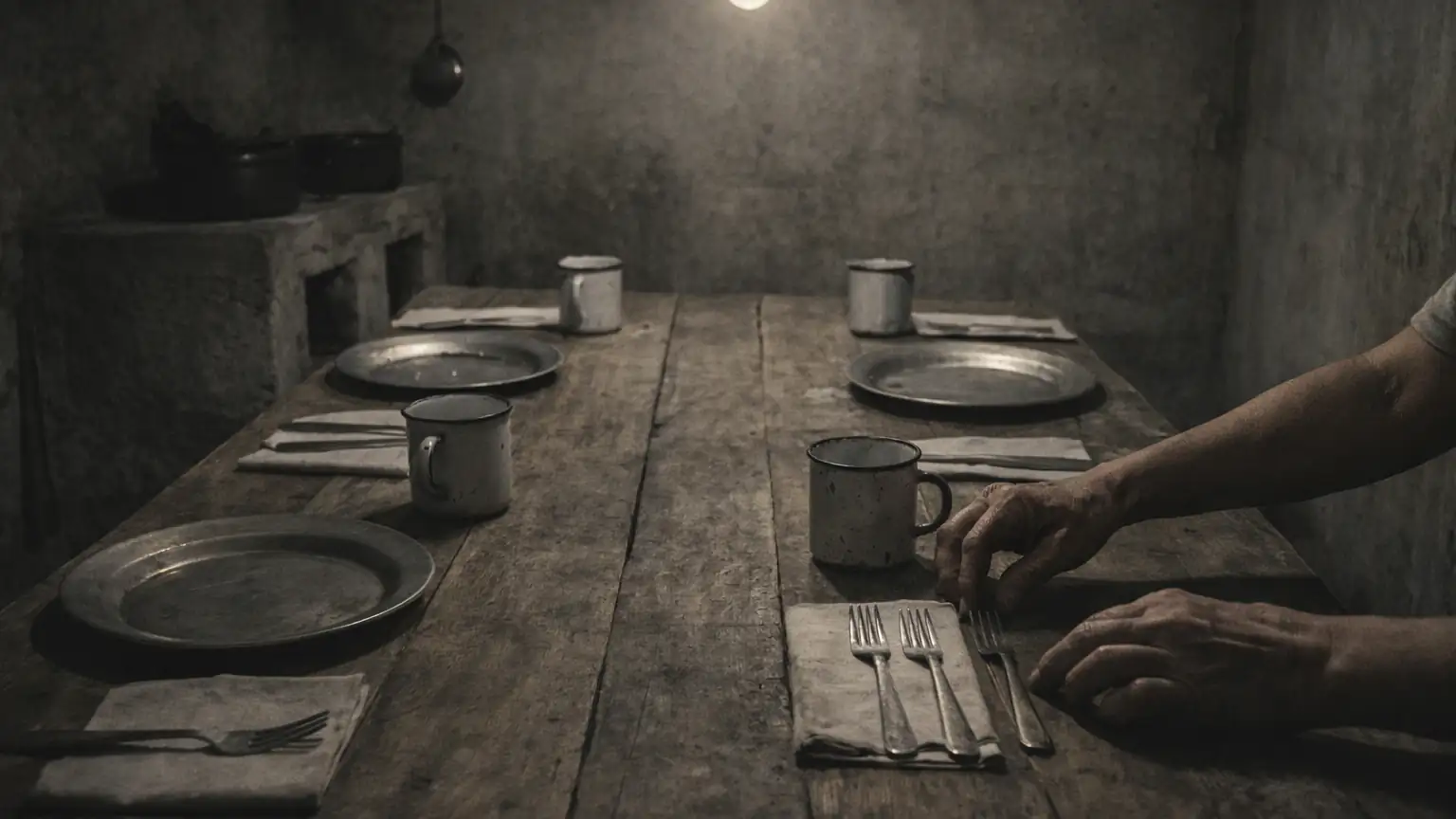
Behind the door, the village disappeared. Inside our house, my father was a different country with different laws, and the only citizen who had rights was him. My mother set the table the same way every evening. The plates had positions. The glasses had positions. The napkins were folded in a specific way that I never understood but she did, because she had learned — through years of correction — exactly what he expected. The word for what she did was servir.
To serve. When he was home, she could do nothing else. Not rest, not sit until he sat, not speak unless spoken to. He called her esta — this one. He called her muchacha — girl. Never her name. Never a name that acknowledged she was a separate person with a history and preferences and a mind that worked.
She was not allowed to work. She was not allowed to have opinions about money, about the house, about how I was raised. If she expressed one, he didn't argue with it. He didn't dismiss it. He simply continued talking as if the sound of her voice had not occurred. She was erased while standing in the room. Sober, he was verbally cruel — controlled, precise, the cruelty of a man who knows exactly what each word does and chooses it anyway.
Drunk, the precision left. Plates broken. Pushing. Slapping. And always — always — it was her fault. She provoked it. She didn't listen.
She embarrassed him. She wore the wrong thing. There was a blouse. I remember the blouse because I remember the sound. A small rip in the neckline — the fabric showed her shoulders. She had worn it that day, maybe to the market, maybe just around the house.
He saw it. And the man who smiled at the neighbors, the man who helped carry water, the man who gave advice on crops — that man ripped the clothes off her body. He called her a puta. She was flaunting herself, he said. She was showing herself to the village men. Provoking them.
Inviting them. A woman's shoulders in a torn blouse — that was all the evidence he needed to convict her of a crime she had not committed. His paranoia about her appearance was not jealousy. It was ownership. The same man who performed respect in the street could not tolerate his wife having shoulders that other men could see. She stopped wearing that kind of clothing.
She stopped wearing a lot of things. At village events, she stood in the background, silent. Or she was not there at all. Both outcomes were his. She was erased either way. And I stood in that kitchen, small enough that no one thought I was watching, and I watched everything.
The Kid's Cage
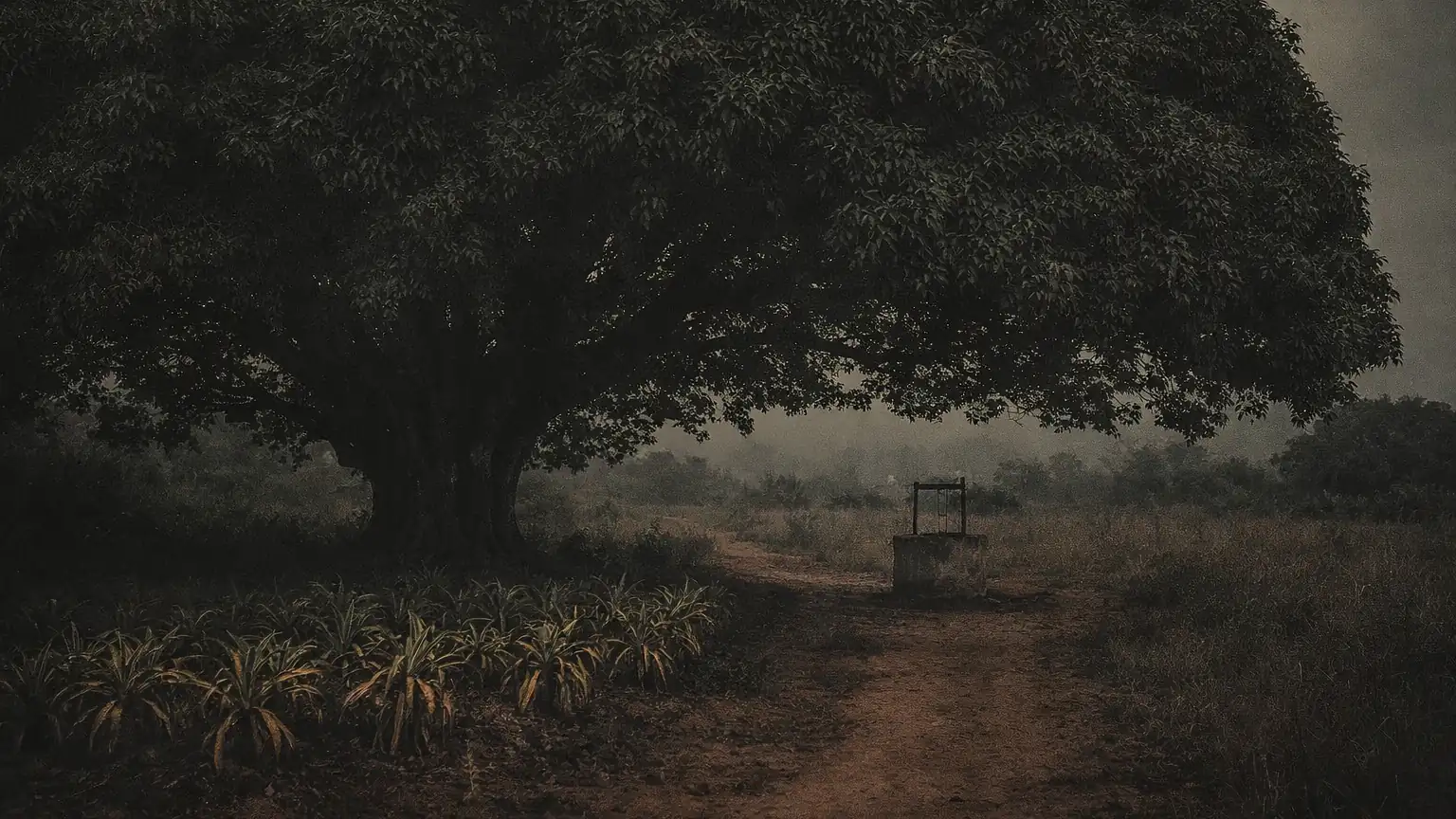
The pineapples were his idea. He planted them under the mango tree — a huge mango, the kind of tree that owns the ground beneath it and doesn't share. Not enough sun. Not even close. But my father said they would grow, and when my father said something, that was the end of the conversation. My job was the water. A well — not close, nothing was close — and a bucket.
Carry the bucket to the well. Lower the bucket. Pull it up. Carry it back. Pour it on the pineapples. Walk back to the well. Again.
After all the water needed for the house was collected — for cooking, for washing, for drinking — there were still the pineapples. Bucket after bucket for plants that could never grow, under a tree that would never let them. I was seven. My arms were the size of the rope. Maybe he wanted to toughen me up. Maybe he wanted me tired enough to stop asking questions. Maybe he planted the pineapples so he could watch me carry water and feel like a man who commands things.
I don't know. The plants died. I carried the water until they did. Our house was made of guano — dried palm fronds. Beautiful to describe, terrible to live in. No real rooms. No doors on the inside.
I slept on a small bed against a wall, and from that bed I could see through the open doorway into my parents' space. I could hear everything. The fighting. The crying. The silence after, which was worse than the sound. There was no space in that house that was mine. No corner, no closet, no door I could close.
The Grandmother
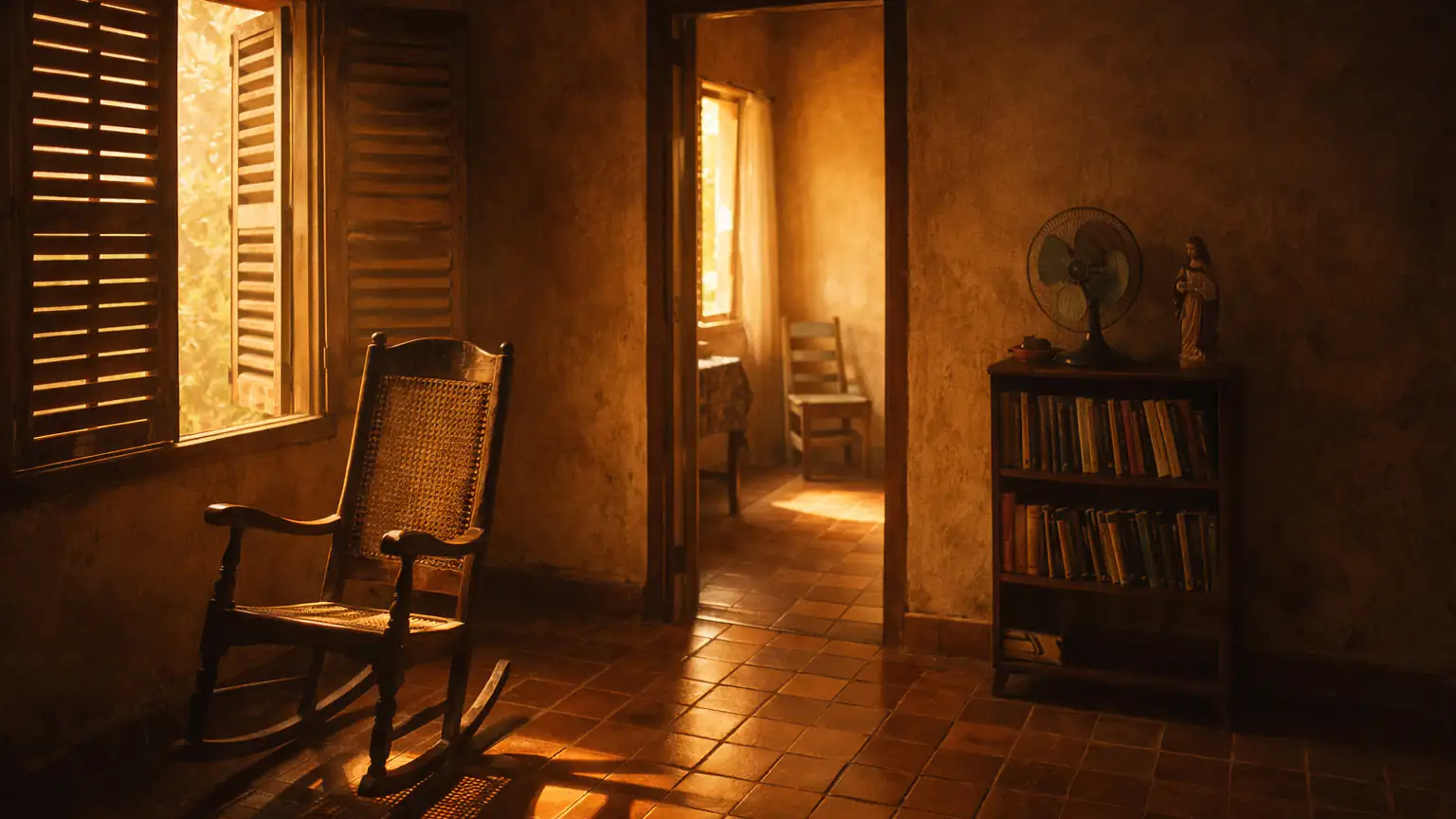
Every afternoon, the moment I heard my father arriving — his voice on the road, greeting a neighbor, performing — I left. I went to my grandmother's house. It was the only place the performance didn't reach. I don't mean the house was far away. I mean my grandmother was a wall he could not climb. She knew what he was. He knew she knew.
They didn't speak. Not about it. Not about anything. Her house was different — the light was different, the air was different, the doorway was open because it wanted to be, not because there was no door. She was a conscious protector, and I knew it the way a child knows which tree has fruit and which has thorns. I didn't have to think about it. I went there.
Once — and I will not describe this in detail, not yet, because her story deserves its own telling — once, during a beating of my mother, my grandmother stepped in. She didn't just intervene. She fought him. She beat him and she humiliated him in the specific way that only a woman who is not afraid of a violent man can. He hated her for it. He never forgave it. My mother went back to him anyway.
Every time, she went back. My grandmother couldn't save her daughter. She couldn't stop the performance or change the script. But she could give a kid one place where the air was clean. One doorway that meant safety. One table where a broken ruler could be hidden, and a few days of joy could exist without being watched.
Fear Made Visible
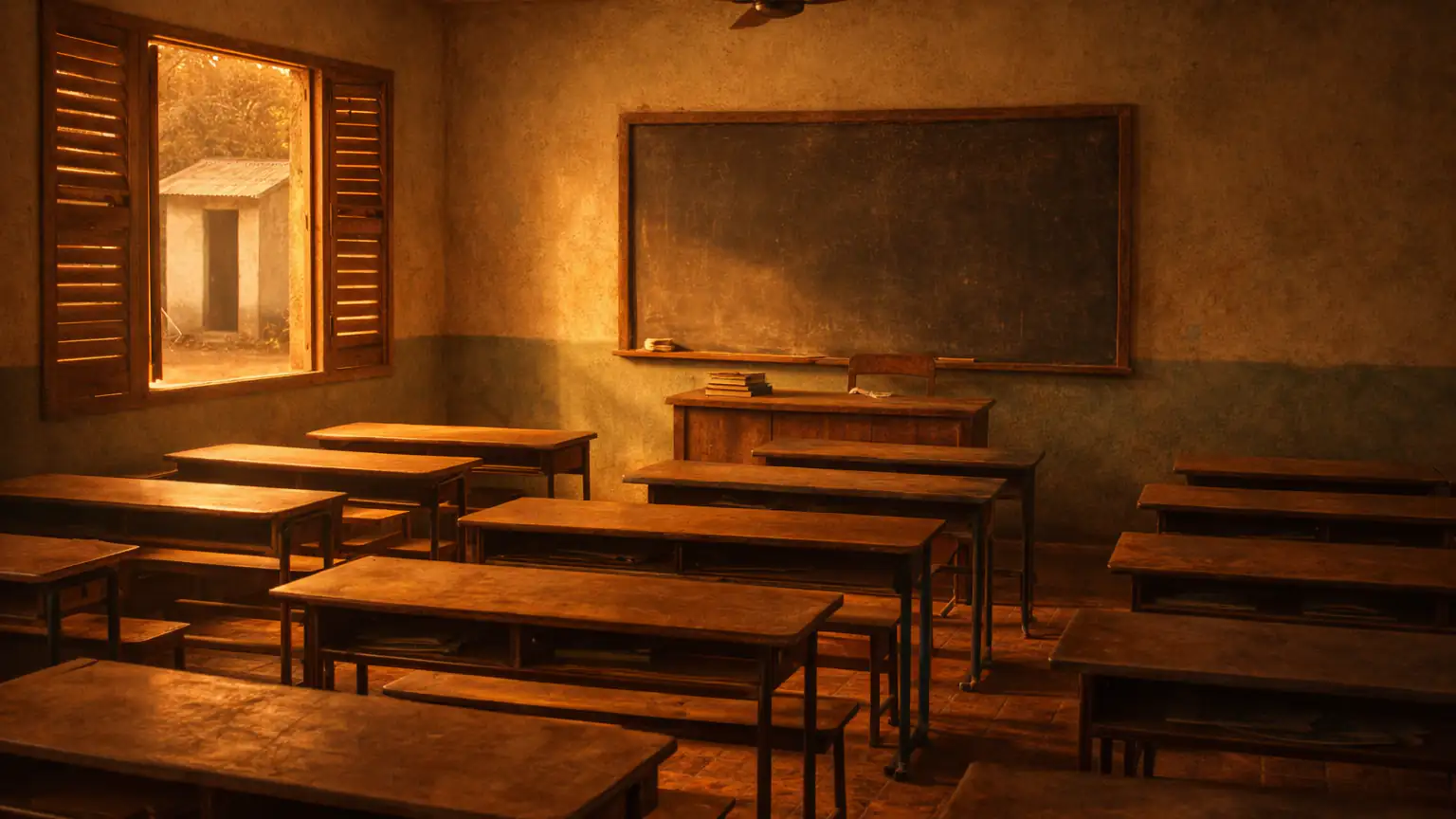
I need to tell you about the school, because the school is where you can see what he did to me without being in the room. One teacher for first and second grade. A small building, wooden desks, a latrine outside in the yard. I hated school but I loved to learn — the building was just another place with authority figures who could not be questioned, and I already knew what authority figures did when questioned. I was shy. I was small. I was already, at seven, a person who had learned that the safest thing to do in any room was to take up as little space as possible and wait for it to be over.
One of the first days. I needed to use the bathroom. The teacher said no — I'd gone recently. She didn't say it cruelly. She said it the way teachers say things: with the casual absolute power of an adult speaking to a child. No. The latrine was outside.
I could see it through the window. Twenty meters. Maybe less. I could have stood up. I could have walked out. I could have said, please, I can't wait.
I did not. I want you to understand why I did not, because this is the center of everything. I was terrified — not of the teacher. The teacher was a woman in a small school who would forget my name by summer. I was terrified that the teacher would tell my father. That she would say, your son misbehaved.
Your son disobeyed. Your son made a scene. And I knew — with the complete certainty that only a child who has been hit knows — I knew what would happen next. My father was not in that classroom. He was not in the building. He may have been kilometers away.
And he was still the reason I could not stand up. He was the invisible wall between me and the door. The authority in the room was hers. The fear in my body was his. I held it as long as I could. I couldn't hold it.
I peed on my desk. In a room full of other children. On one of my first days of school. A seven-year-old boy who loved to learn, who loved the names of things, who found wonder in mango seeds and ant highways — that boy peed on his desk because a man who was not there had already broken something in him that should never have been touched. The father was not in the room. He was still the reason.
The Ruler
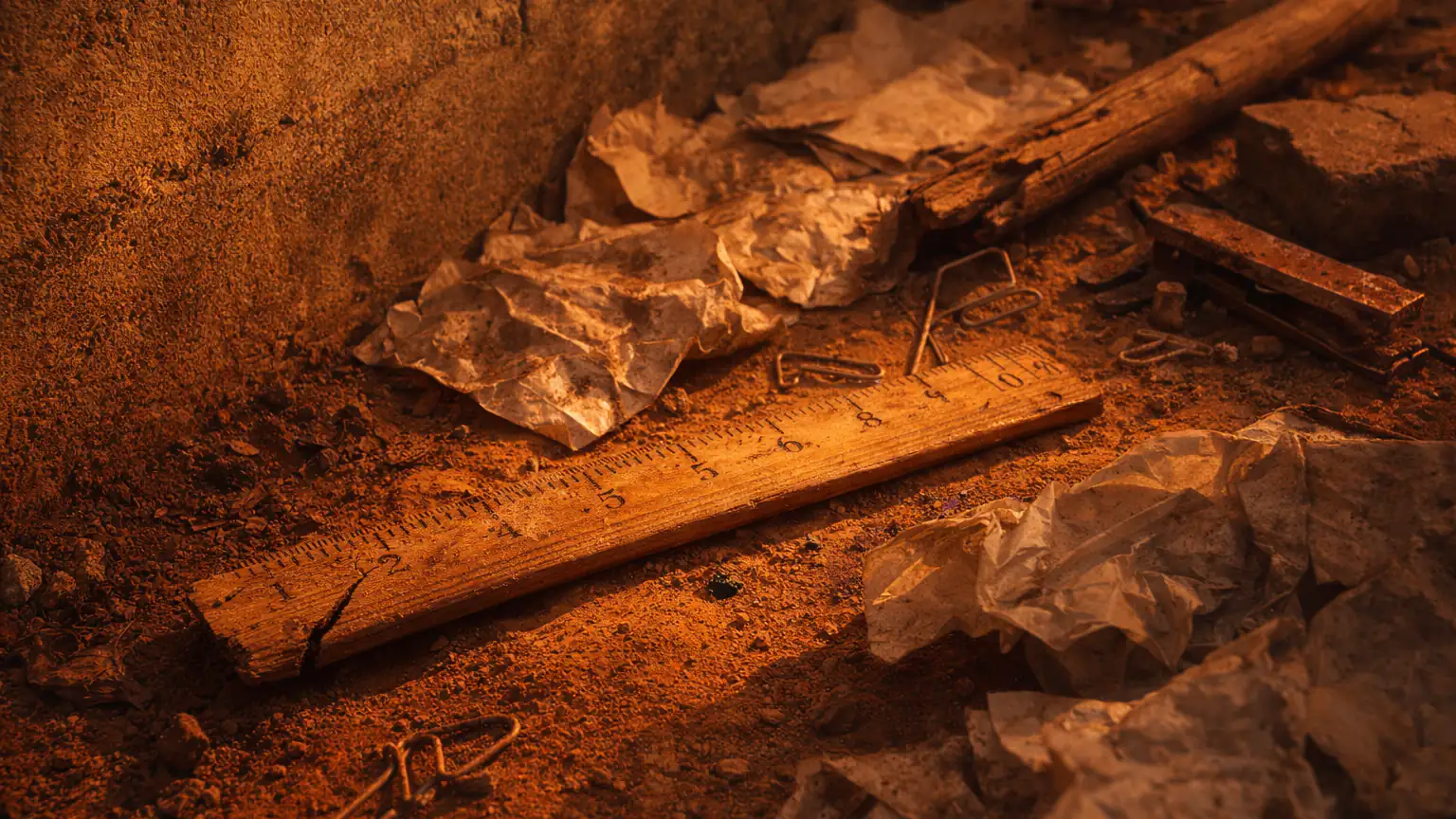
The municipal office was the closest thing our village had to a government building. A small structure where official things happened — papers, stamps, the business of a town too small to need much business. Beside it, where the path turned to dirt, there was a pile. Garbage. Discarded things. Broken chairs, old papers, the debris of a tiny bureaucracy. I went through that pile the way other kids went through toy stores.
I was looking for paper — clean paper, any paper — because I liked to draw and there was no money for paper, no money for pencils that weren't already shared between three cousins and worn down to a nub. I dug through it. And I found a ruler. Broken. One end snapped off. The numbers — the printed centimeter markings — had been worn away by use or weather or time. It was, by any objective measure, garbage.
Somebody in that office had used it until it broke and thrown it away, and that was the correct thing to do with a broken ruler that no longer has numbers. But I held it. And it was straight. And it was mine. I had never owned a tool. I had never owned anything that existed for the purpose of knowing something — of measuring, of answering a question about the world. How long is this table?
I don't know. Let me measure it. The ruler couldn't give me numbers because it had no numbers. But it could give me comparisons. This wall is three rulers long. The door is four.
The path from my grandmother's gate to her front door is twenty-six. I measured everything. I measured the table, the doorframe, the well cover, the width of the mango tree's trunk. I ran my fingers along it while I walked, feeling the wood, feeling the straightness of it, the tool-ness of it. I was a kid who loved to learn, and I had found something that let me learn about the size of the world. I hid it at my grandmother's house — because of course I did.
The grandmother's house was where things were safe. I shared it with my cousins. We measured things together. We argued about whether the kitchen was longer than the porch. We were doing math without calling it math, science without calling it science, and nobody had told us to. For a few days — maybe a week, maybe less, time is imprecise when you're seven and happy — I owned something that made me feel like the person my father only pretended to be.
Someone who knows things. Someone who can answer questions. Someone whose curiosity is not a burden but a gift. The ruler had no numbers. It didn't need them. It measured everything that mattered.
The Accusation
Someone told him. In a village of forty families, a kid cannot own a new thing without the village knowing, and the village cannot know without someone mentioning it to the father, because the father was the man everyone talked to. A neighbor — maybe from the municipal office, maybe someone who saw me with it, it doesn't matter who — mentioned the ruler. My father came home. He found me. He asked me where I got it. I told him.
I found it in the garbage by the municipal office. It was broken. It was thrown away. Nobody wanted it. He wasn't listening. He had already decided what the truth was, because the truth was never about the ruler.
It was about how it looked. His son, carrying something that belonged to the municipal office. In a village where everyone knows everyone. His son, a thief. His reputation. His performance.
The yelling started. "Why did you steal this?". I didn't steal it. "Why did you steal this!?".
I swear I didn't steal it, I repeated and repeated. The shaking — both hands on me, gripping my arms, shaking me the way you shake something broken to see if it still works. I was looking at my mother. She was in the room. She was standing against the wall, or by the stove, or in the doorway — I don't remember where exactly, because what I remember is her face, and her face was looking at the wall. I was looking at her.
She was not looking at me. I was asking her with my eyes. I was asking her the way a child asks — not with words, because words were already useless with him, but with the specific desperate eye contact that means please, please, somebody, please. She did not move. She did not speak. I started to cry, I was powerless.
The Slap
Then one slap. His full hand against the side of my head. Not my cheek — my whole head. A grown man's hand on a seven-year-old's skull. I couldn't breathe. Not because of the impact — because the shock sealed my lungs. The air went away.
He stepped back. Not remorse. Not guilt. He stepped back because he recognized what had just happened to him: his anger had been completely exposed, and for a man who controls everything, that loss of control was the real emergency. He saw himself for half a second. Then he buried it. Nothing was said.
Nothing was acknowledged. The ruler was taken from me. It was returned to the neighbor, or to the municipal office — I was never told which because it didn't matter. What mattered was the performance. I was marched to wherever the ruler needed to go and I was made to stand there while my father explained that his son had taken something that wasn't his. I performed the role of the thief. In front of the village.
At seven years old. I did not steal the ruler. I found it in the garbage. It was broken. It had no numbers. And it was the most valuable thing I had ever owned.
Sent Away
Not long after the ruler, I was sent away. The practical reason: there was no teacher for third graders in our village. A second aunt had a farm in a distant village with a school that went higher. The practical reason was real, and it was also a door that my father was glad to close. I was eight. Maybe nine.
I walked two or three kilometers to school every morning, alone, on a dirt road that cut through fields where nobody could see me and nobody was watching. My second aunt and her family weren't cruel — they had their own lives, their own children, their own problems. I was a guest who stayed too long. Nobody checked if I ate before school. Most days I didn't. Nobody checked if I arrived on time or arrived at all.
The road had kids on it — two of them, older, who figured out quickly that the new kid was small, quiet, and had no one to tell. Every day, the same road, the same threat. I kept my head down and I walked faster and sometimes I ran, and sometimes running wasn't enough, and nobody asked about the dirt on my clothes because nobody was looking at my clothes. My father's only connection to this world was through teacher reports. A bad report was the one signal that traveled back to him, and I knew — I already knew, my body already knew — that the signal had to stay clean.
I behaved perfectly. I was invisible. I was the quietest child in a school that didn't notice quiet children. Back in the home village, the abuse on my mother was at full speed. The inconvenient witness had been removed from the house.
The Cloth at the Table
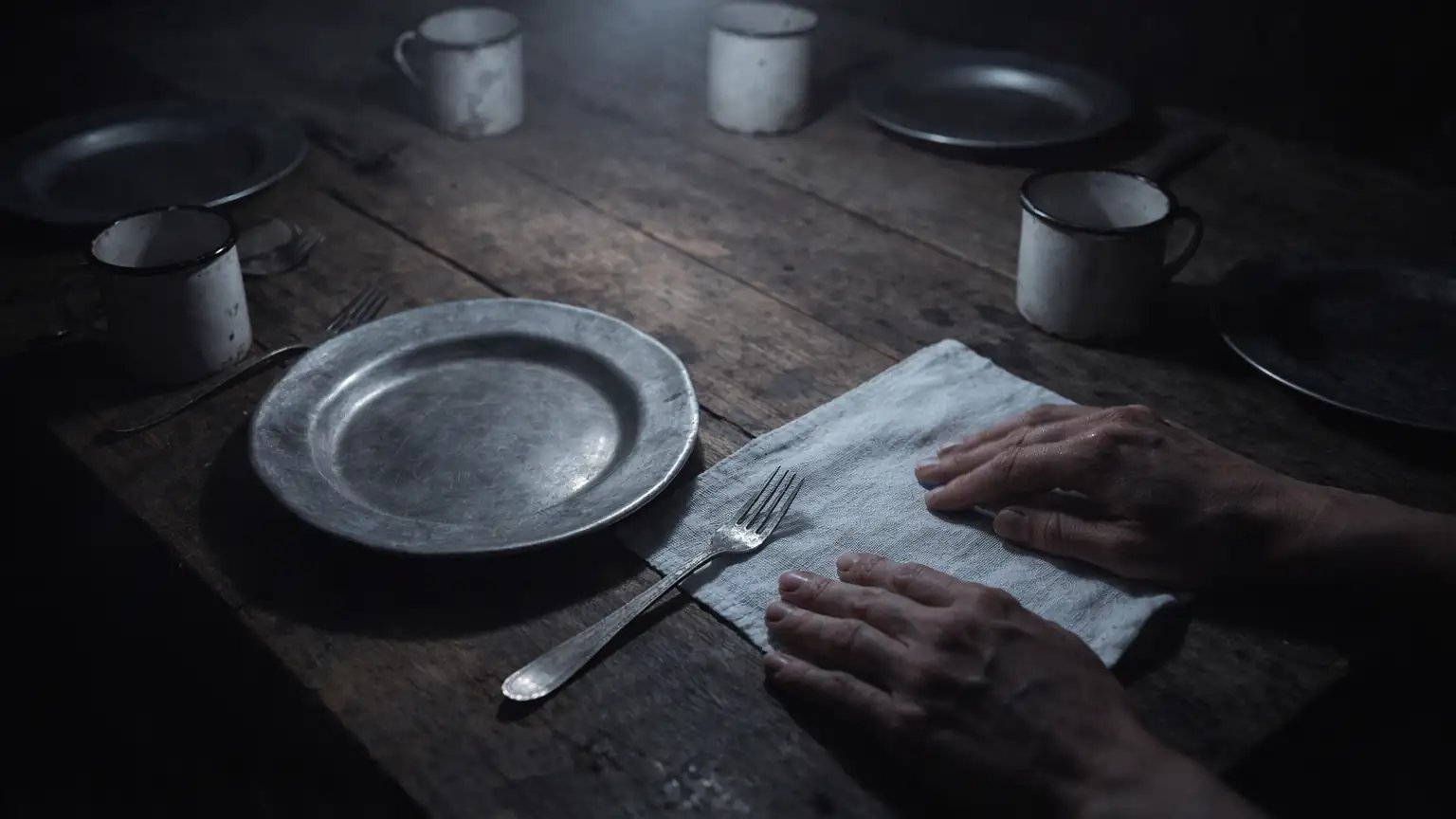
During one visit — my parents came to the second aunt's farm, one of the few times — there was a dinner. My mother, with her careful hands, with her need to control the small things because she could control nothing large, placed a cloth under my plate. A small square of fabric. So I wouldn't spill food on the table. So the table would stay clean. So her son would eat with the dignity she could still give him, even here, even now, even after everything.
My father — drunk, performing for the second aunt and her family — erupted. He looked at the cloth, and he looked at me, and he said the word. Maricón. He'll turn out a maricón with all that, he said. He wasn't worried about my development.
He wasn't angry at the cloth. He was performing toughness for an audience of relatives who did not challenge him, who absorbed his cruelty the way the dinner table absorbed the sound of his voice, and who continued eating. The cloth was removed. The dinner continued. The performance resumed.
The Escape
After about a year, I couldn't take it anymore. I don't know what broke on the specific day — maybe nothing broke, maybe I just woke up and the distance between me and my grandmother's house became unbearable for one more second. I told no one. Not the second aunt, not my cousins. Nobody noticed when I left, because nobody noticed most of what I did. I walked to the bus stop. I had enough coins — I must have, though I don't remember where they came from, only that I had them.
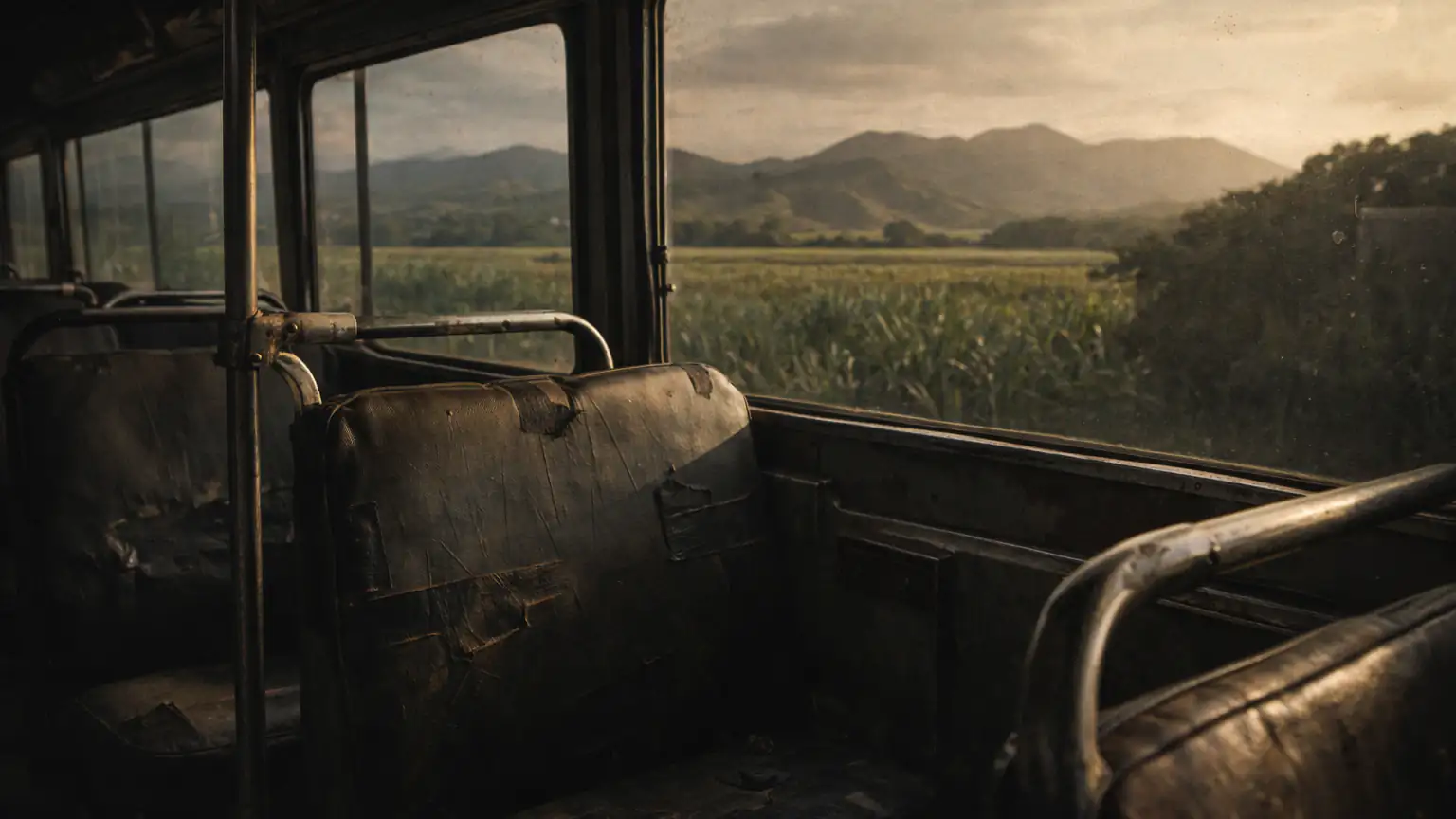
I got on a bus. The first bus took me to the city — a place I had been maybe twice in my life, loud and enormous and terrifying in the way that only a nine-year-old alone in a city for the first time can find terrifying. I found the second bus. I don't know how. I must have asked someone, or read a sign, or followed the direction of the road home. The second bus was the one that mattered. The second bus pointed toward my village, and as the landscape changed — the flat farmland of the distant village giving way to the hills I recognized, the specific curve of the road where the mango trees started, the first rooftop I knew — as the landscape became mine again, I felt something I had not felt in a year.
I was choosing. For the first time in my life, my body was moving through the world because I had decided where it should go. The bus stopped. I got off. I walked the road I knew. I passed the houses I knew. I did not go home.
I went to my grandmother's house. Of course I did. Of course I went to the only person who had ever stood between me and him. Of course I went to the doorway that meant safety, the table where the ruler had lived for a few days, the one place in the world where I didn't have to watch the door. For a few hours — maybe a night, I don't remember how long, only that it was not long enough — I was home. My father found out. He came.
I imagine the rage, but I don't remember it. What I remember is the next day. He took me back. The same road. The same bus. The same distant village. The one act of agency in this entire story — the one time I chose where my body would go — was erased in twenty-four hours.
Grief
The pineapples never had a chance. The ruler was never stolen. The kid who peed on his desk wasn't misbehaving — he was surviving a man who wasn't in the room. The cloth under the plate wasn't weakness. It was the last form of love my mother could fit through the bars of her cage. The boy who took two buses alone at nine years old wasn't running away. He was running toward the only person who ever protected him.
And he was sent back. That boy grew up. He got out. He left the village and the country and the continent and he built a life on the other side of the world from that man. That is not a victory. That is a cost. The man who did all of this is still alive somewhere — maybe in that village, maybe in another, maybe performing for different neighbors in a different street.
Maybe alone in a house where no one is left to control and the audience has finally emptied out. I don't know. I stopped watching. What I know is this: there was a kid who loved to learn, who found a broken ruler in the garbage and measured the world with it, who carried water to plants that could never grow, who ran to the one person who made him safe. That kid deserved better than what he got. The ruler had no numbers.
It didn't need them. It measured everything that mattered. And it was taken from him. And he was seven. And that is the story. And I am done telling it.