Her Mother Rehearsed Her Apology Every Morning
Thirty Years Later She Heard That Voice Leave Her Own Mouth
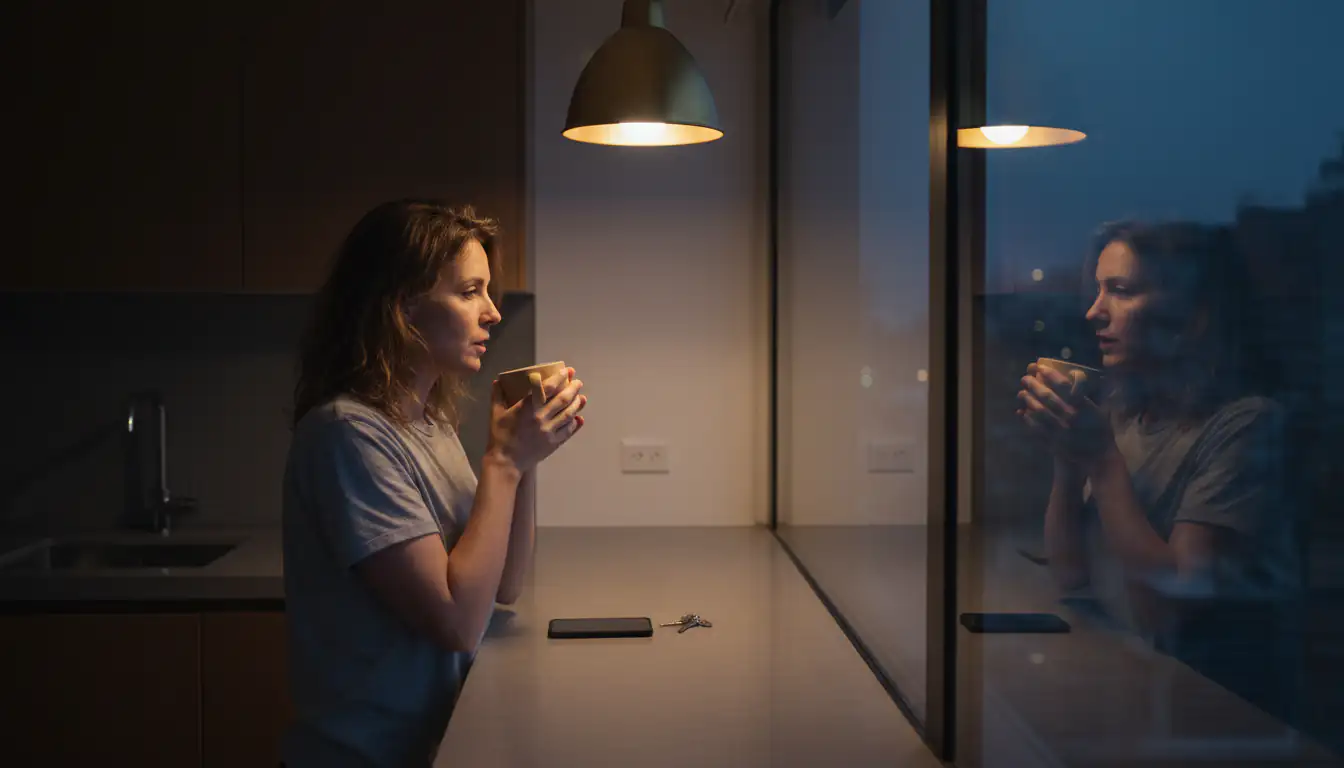
Elena learned to apologize before she learned to read. Every morning at a formica kitchen table, her mother rehearsed her: eyes down, voice soft, fingertips on his forearm, a script written in cursive on a napkin. The choreography kept the house peaceful for a night, paid for by a nine-year-old translating a man's cruelty into her own fault. Thirty years later, Elena bumped a stranger's elbow in a coffee shop, delivered the full routine in four seconds without choosing any of it, and sat down on the sidewalk because her mother, six years dead, was still directing her from a table that no longer exists.
The Toast Was Always Cold
The toast was always cold by the time she finished teaching me.
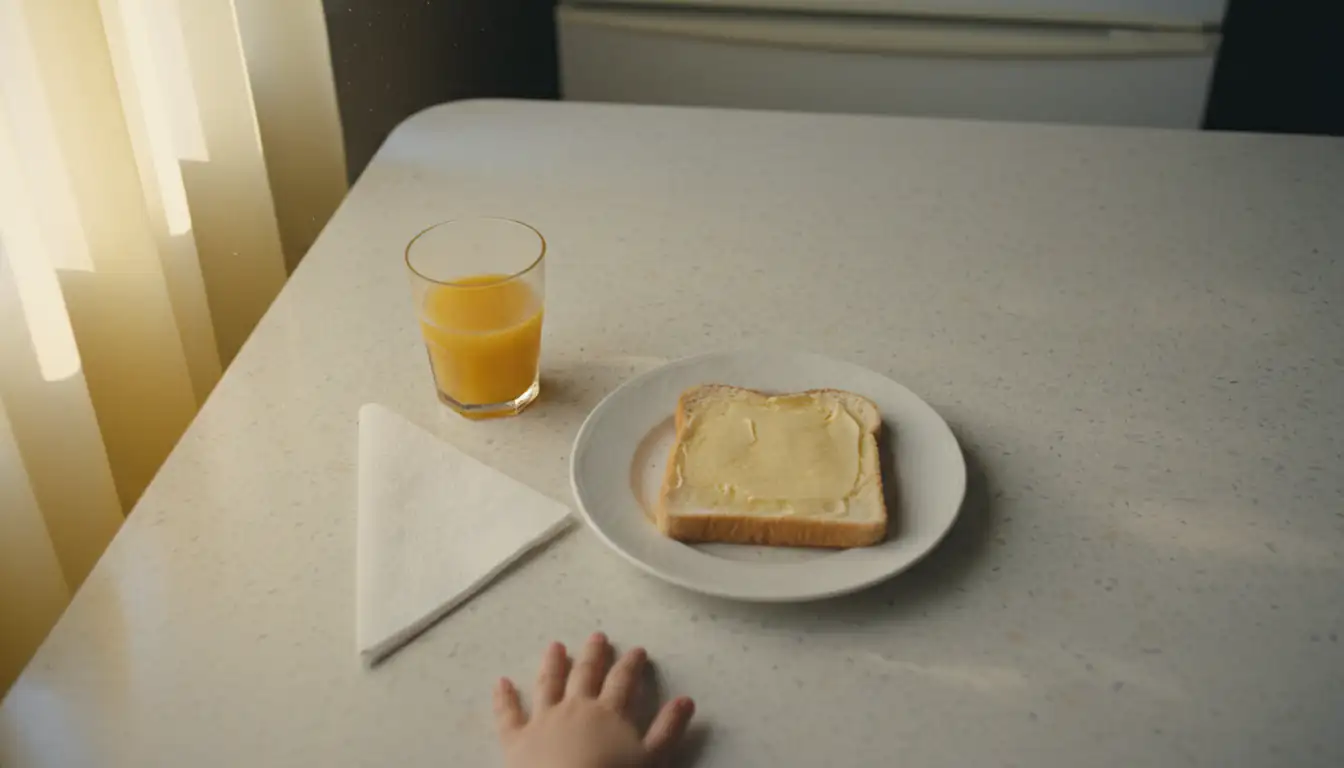
I need you to see the kitchen first. The table — formica, this greenish color that was supposed to look like marble but didn't look like anything except the nineties. Two chairs. One for her, one for me. My father was already gone by then, off to work, the house still ringing with the quiet that comes after a man like that leaves a room. You know the quiet I mean. The one where every surface is still bracing.
She'd make me toast. Butter it while it was hot so it would melt right. Set it in front of me with a glass of juice, and I remember thinking she looked so normal. Hair brushed. Coffee poured. Like the night before was something I'd dreamed, except I hadn't dreamed it because I could still hear it in the walls.
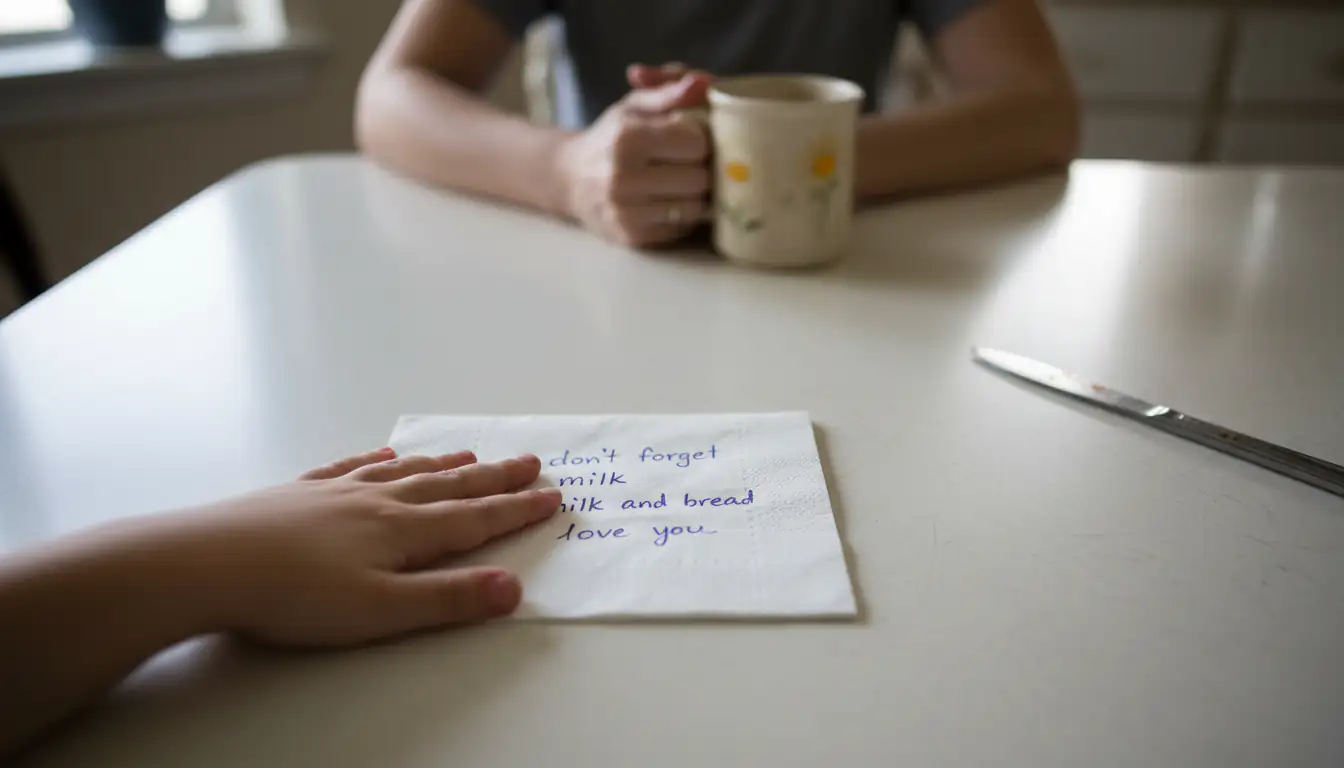
And then she'd sit across from me, and she wouldn't eat, she'd just hold her mug with both hands, and she'd say — not right away, she'd let me take a bite first, she was always careful about that — she'd say, *When he comes home tonight, here's what you're going to tell him.*
I was nine.
That was the first language I ever learned fluently. Not Spanish, not English. Sorry. I learned sorry the way other kids learn the alphabet — by repetition, by correction, by a woman I loved sitting across from me every morning and teaching me how to shape my mouth around words that were never mine.
I still speak it. That's why I'm here. Because thirty years later I opened my mouth to apologize to a woman at a coffee shop for bumping her elbow, and I heard my mother's voice come out, and I had to sit down on the sidewalk because my knees stopped working.
Before the Mornings, There Were the Nights
I need to build the house for you before I take it apart.
From the outside it looked like every other house on that street. Beige siding, chain-link fence. At parent-teacher conferences he'd put his hand on my shoulder and the teacher would smile and I would hold very still under that hand and smile too, because I had already learned that version of smiling.
I won't take you into the nights. What I'll give you is this:
A door slamming so hard the pictures in the hallway jumped.
A voice rising through the floor of my bedroom like heat.
And then quiet. The worst kind — the kind that means it's over, or the kind that means he's deciding.
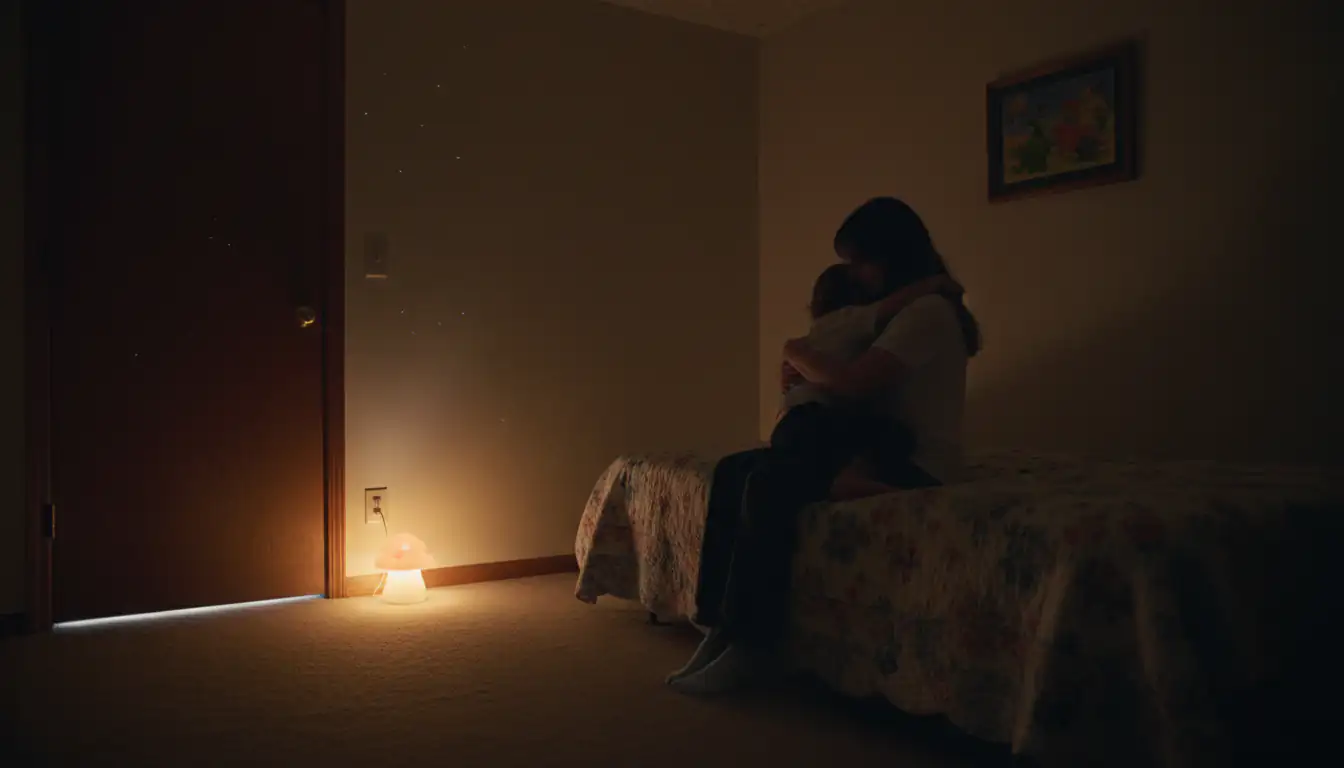
And then my mother. In my room. She came in without knocking because knocking would make sound and sound was dangerous after. She smelled like Ivory soap. She always washed her face first, I think because she didn't want me to see her crying, though the skin around her eyes was always pink and I always knew.
She'd get into my bed, too small for both of us, and she'd hold me against her chest, and I could feel her heart going. Not fast. Hard. Like each beat was costing her something.
I want you to hear me when I say this: the holding was real. It was the most real thing in my life.
Then morning would come, and she would become something else.
The Curriculum
Here's what the mornings looked like.
She'd already have the coffee made, my toast done, no trace of the night before on her face except sometimes a stiffness when she turned her neck — and I learned not to look at that.
She'd sit across from me and start with the reason. *Your father is upset because—* and she'd fill it in. Because I'd spilled juice on Tuesday and he was still carrying it. Because I'd asked him a question at dinner that made him feel stupid in front of my uncle.
I was nine. I asked what a word meant. That was the crime.
Then she'd give me the words. Not just *I'm sorry, Papi.* She had a curriculum.
Eyes down first. Look at your hands. Then up — not defiant, just enough that he can see you mean it. Say *I didn't mean to* even if you didn't do anything, because it's not about what you did. It's about what he felt, and his feelings are the only ones in the room that have weight.
Then reach out and touch his arm. Just your fingertips. The touch tells him you're not afraid, which is a lie, but it's the lie that lets him feel like a good man — and a man who feels like a good man doesn't hit anyone for a few days.
She taught me that. My mother, who loved me more than she loved being alive, taught me that.
And sometimes she'd write the words down. On a napkin, in her cursive, and I'd smooth it flat and read them back, and she'd correct my delivery like a voice coach correcting pitch. *Softer. Slower. Don't rush the part about being sorry.*
It was love. That's the thing I'll never get free of. It was love and the most precise erasure of my own voice, done with a cup of coffee in her hand and a patience I now understand was terror.
The Performance
Let me walk you through one. Just one, so you can feel it.
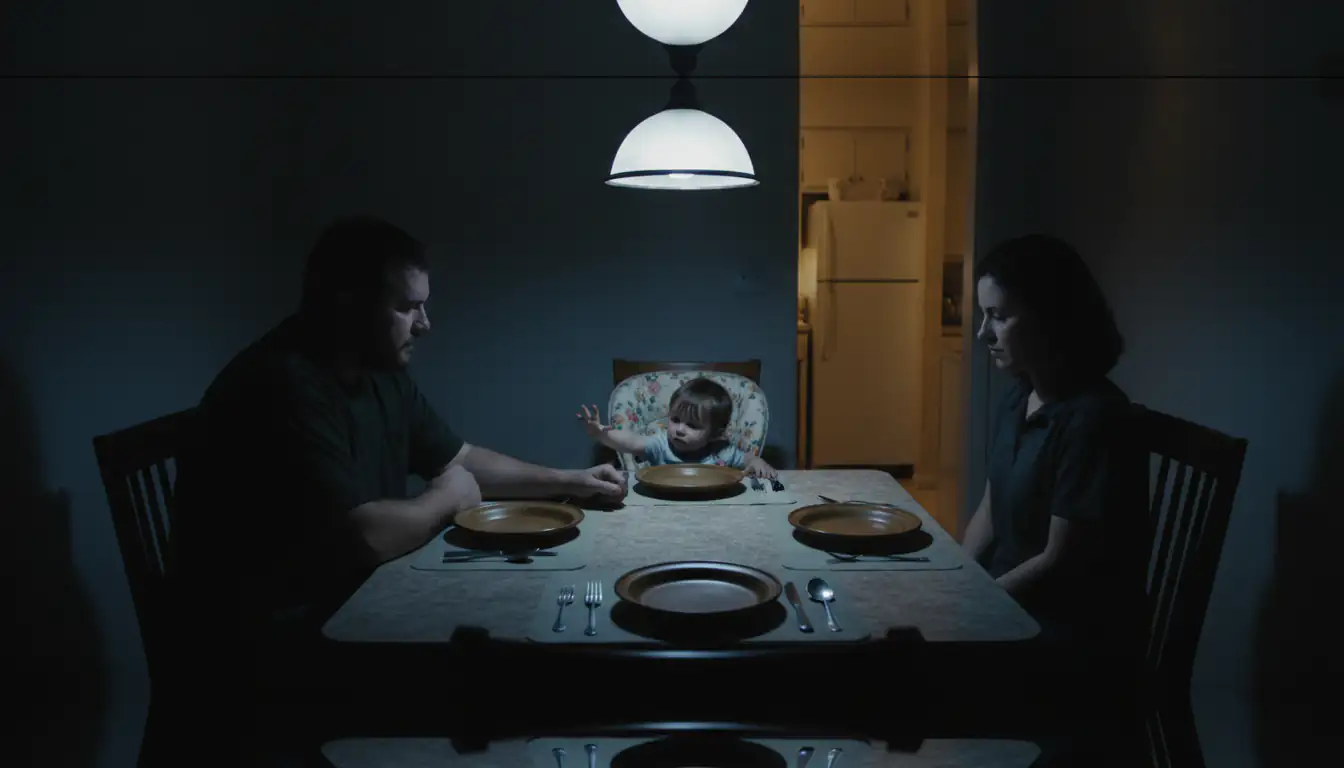
He came home at six. I heard his truck and my stomach dropped, like missing a step on the stairs. My mother was in the kitchen and I watched her shoulders change. By the time he walked in, she was making dinner calmly — not a woman who'd spent forty-five minutes rehearsing me at the kitchen table.
Dinner first. He talked about work, proud in a way that required us to be proud of it too.
Then the quiet part. Dishes cleared. My mother's signal — she touched her own collarbone, just once, like checking for a necklace she wasn't wearing. That was my cue.
I went to him in the living room. In his chair. I lowered my eyes and said the words from that morning. *Papi, I'm sorry I asked that question at dinner. I wasn't trying to make you feel bad.*
And I reached out and put my fingertips on his forearm, exactly the way she'd taught me.
He looked at me. And I watched his face do something I now understand was a man rearranging his own cruelty into magnanimity. He said *It's okay, mija. Just think next time.* He put his hand on my head, heavy, and the whole room exhaled.
My mother, in the doorway, let out a breath I could hear from six feet away.
And I felt — I need to be honest — I felt proud. The performance landed. Nobody was going to get hurt tonight, and that was because of me.
I was nine and I had already learned my primary value in the family was as a translator between a man and his own cruelty. Hired by the woman who loved me most. Paid in one peaceful evening. And I was grateful for the wage.
Thirty Years Later, in My Own Voice
A month ago. The jacarandas were dropping purple petals on my street, and I remember because I was looking at them when it happened.
I was at a coffee shop. I bumped a woman's elbow on the way out. Barely. And I said — exact, every word — these are the words that put me on a sidewalk: *I'm so sorry, I wasn't watching where I was going, that was completely my fault.*
Eyes down first, then up. I touched her arm.
I touched a stranger's arm in a coffee shop while apologizing for bumping her elbow, and the whole choreography played out in four seconds, and I didn't choose any of it. My mother's hand moved through my hand. And my mother has been dead for six years, and she is still directing me from a kitchen table that doesn't exist anymore.
I sat down on the sidewalk, put my coffee between my knees, and went through every apology I could remember.
The time I told my college roommate I was sorry for crying too loud after a phone call with my father.
The time I told my boss I was sorry for suggesting a better way to run a meeting, and I touched his arm — his arm — and I watched his face rearrange into generosity the same way my father's had, and I felt the same sick pride, and I went to the bathroom and threw up and told everyone it was the shrimp from lunch.
Most of my sorries have been in her voice. Most of the times I've lowered my eyes and made myself small and translated cruelty into my fault — that was the curriculum, still running, long after the classroom closed.
The grief is not for what he did. The grief is for what she taught me to do to myself.
The Woman Who Held Me
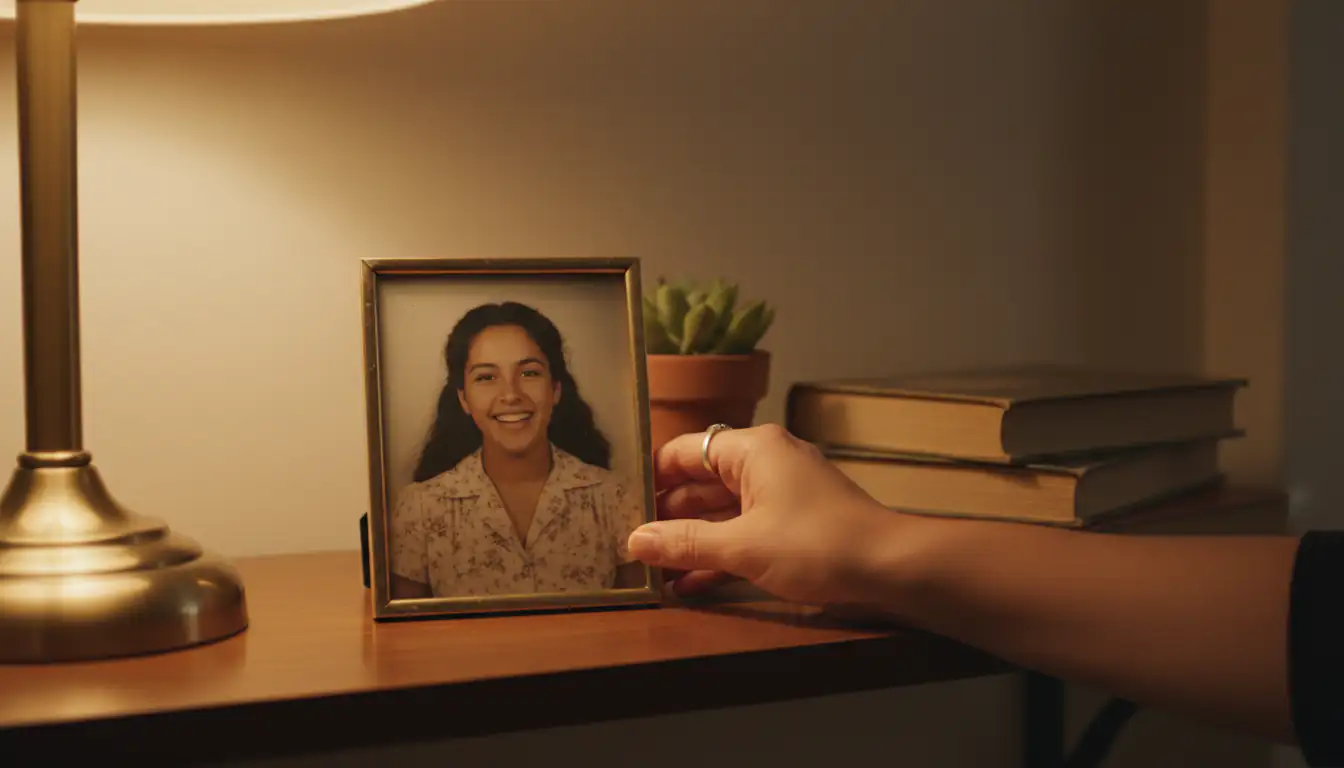
I have a photograph of her. Maybe twenty-two in it. Before my father. Cotton blouse with little flowers. Hair pulled back. Smiling — open. Like she hasn't learned yet to calculate what a smile costs.
Her mother — my grandmother — I never met her. My aunt told me once, at Christmas, that my grandmother's kitchen table had its own curriculum. Different man, same lessons. She said it like a joke. *All the women in this family graduate from the same school.* Then she stopped laughing.
My mother learned to apologize at a table too. From a woman who learned it from a woman who learned it from — I don't know where it starts. Maybe it's always been happening in some kitchen — some woman teaching some girl to fold herself small enough to fit inside a man's mercy, and calling it love because what else do you call what keeps you alive.
She didn't have money. She didn't have papers. She didn't have English. She didn't have a door that opened onto anywhere safe.
I am not excusing her. What she taught me cost me. It still costs me, in this room, with my voice. But I will not flatten her into the villain of this story. She was also the woman who held me at two in the morning and washed her face so I wouldn't see her cry. Both are true at the same time, and I cannot afford to lose either.
She loved me the way she was taught to love. With a script in one hand and her body between me and the door.
Stopping the Sentence
So here's what I do now.
It's not a cure. No mirror scene where I am enough. It works like this:
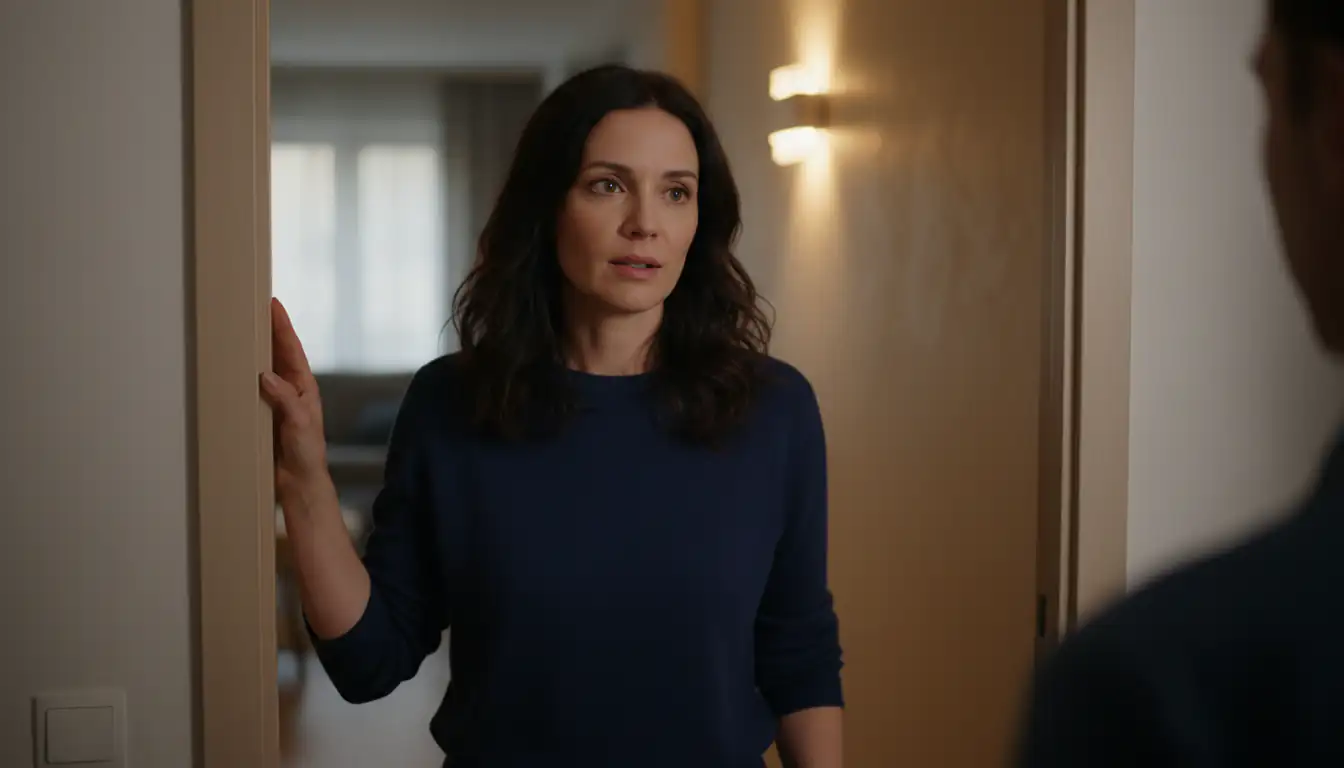
I catch myself.
Sometimes in time, sometimes not. Sometimes the words are already out and I think *whose mouth was that.* More often now I feel it first — a pulling in my chest, an invisible thread attached to a woman at a kitchen table saying *softer, mija, slower.*
When I feel the pull, I stop.
Mid-sentence sometimes. On the phone with a friend last week. She said something sharp she shouldn't have said. The words *I'm sorry, you're right, I shouldn't have—* lined up. I stopped.
The silence was horrible. Three seconds that felt like thirty. She said *hello?* and I said *I'm here. I'm just deciding if I actually want to apologize or if I'm running a program.*
She didn't understand. That's fine. I understood.
I am not trying to cut her out of my voice like a tumor. Some of what she taught me is kindness. Reading a room. The emotional intelligence people compliment at work. They're complimenting scar tissue and calling it a skill. But it is a skill. She gave me that.
I'm learning to choose. To feel the pull and ask: is this mine? Am I disappearing or am I choosing to be gentle? Those are different things, and for thirty years they felt identical.
Sometimes I still choose her words. Sometimes I close my mouth. Let the silence sit. Let someone else be uncomfortable. The discomfort doesn't kill anyone. That's the part she couldn't have known. She thought silence would kill us, and it didn't.
The Toast on the Plate
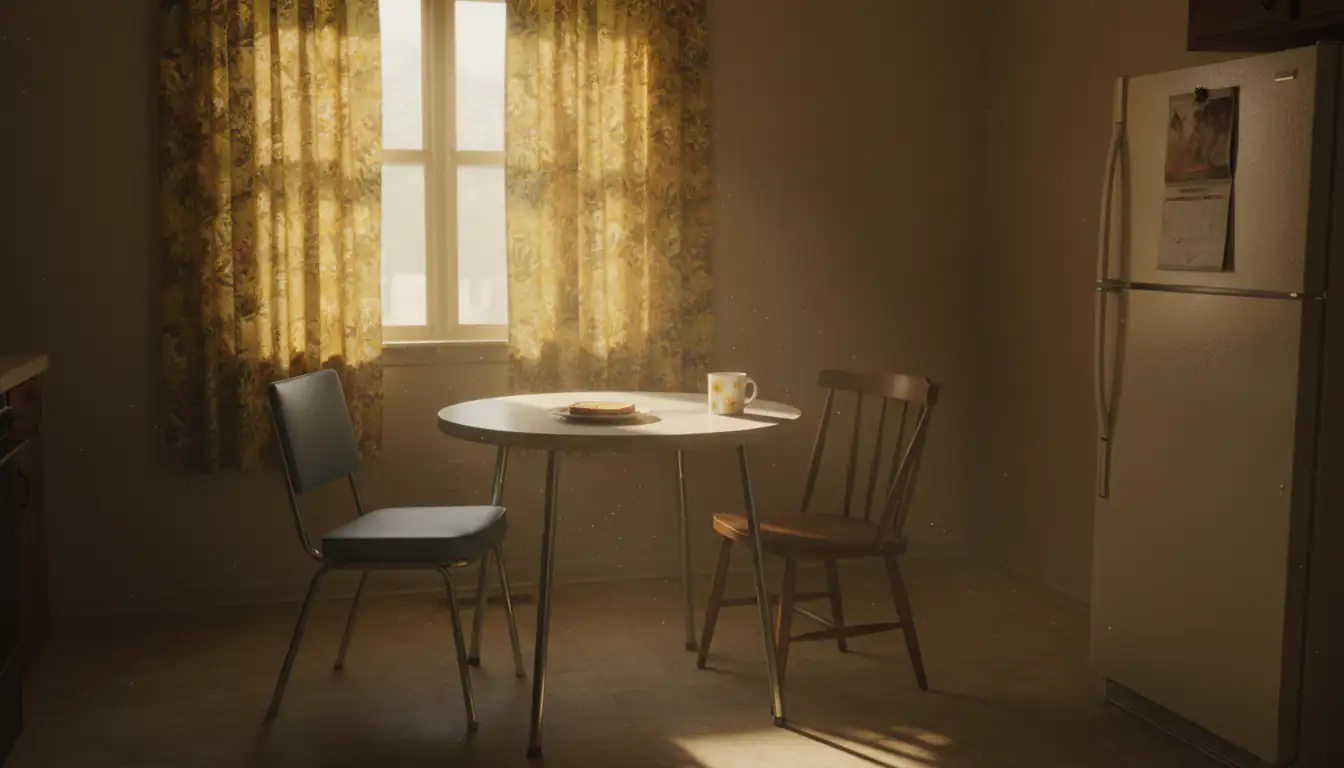
I go back to the table sometimes. Not the real one — that house is gone. But I go back the way you go back. Three in the morning, can't sleep, and you're there. The formica. The toast. The light through those curtains.
And I sit across from her. The me that was nine. I don't say anything. I used to try to give her some message from the future, *it gets better,* *this isn't your fault,* but that felt like another script. Another woman handing another girl her lines.
So now I just sit. I let the toast be cold. I let the napkin be there. I don't take it away. I don't smooth it flat. I just sit in the other chair and I am quiet, and she is quiet, and for once — for once — neither of us is rehearsing.
That's what this is. Not an indictment. Not forgiveness. Just the long slow work of hearing your own voice for the first time after thirty years of speaking in someone else's.
The toast is still cold. The next word out of my mouth will be mine.